
Departing for Greece
 August 13th, 2012 |
  Author:
 We had a great day yesterday exploring Mt. Etna, but we will write about that shortly.
However, we are departing this morning for a three day sail to Greece. And when we get there, we have to figure out how to connect. So we won’t be online for a few days.
We are headed for Corfu and Lefka where we will spend a few weeks.
Will be in touch when we can!
 Posted in
Mt. Etna and Catania
Current Position: 37°29'N, 15°5.43'E
Distance sailed since last post: 27 nautical miles
From Syracuse we took a couple of days to sail and motor north to Catania, stopping to anchor at Augusta on the way. Nice anchorage, sheltered from most points apart from south and SW – but not sheltered from dozens of macho men and their planing machines, so it was a bit bumpy until the evening when they all went home.
Just north of Syracuse we passed a big tanker aground on the rocks! Ooops. Looking at the way it was lying, our theory is that it was at anchor during the storm that hit while we were still in Cagliari, and that it broke free and was driven onto the rocks. Otherwise I don’t see how someone could have driven it onto the rocks from that angle. Anyway, looks like salvage efforts are sort of underway, but I wonder what it will take to get it off the rocks again.


Catania is a big grimy city. The harbor is large and industrial, with a mix of ferries, cruise ships (presumably to do the Etna tour), fishing vessels and some yachts. The first night we anchored just outside the harbor entrance in 3m on sand. We were out of the way, but the next day the coast guard cam and told us to move. After looking north of the harbor, where they told us to go, we then returned to where we started, and just moved down the beach a couple of hundred yards. Less shelter from the harbor walls, but still satisfactory in the calm conditions.

Saturday had us touring the city by foot. There is a well equipped chandler just on the main street outside the harbor (turn left, it is on your right a few hundred meters down.) But they didn’t have any C-map cartridges and it was going to be 5 day to order them in. Having seen that our charts do cover the western Greek islands in the Ionian, we decided that we would cruise there for a few weeks, and then return to Ragusa for the winter. That way, we don’t need any new charts this year.
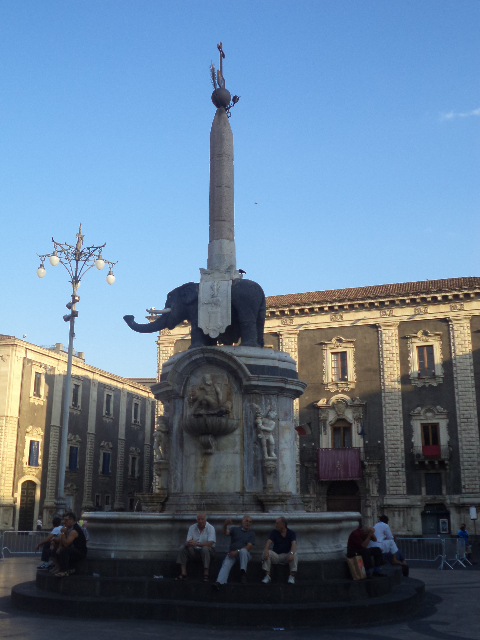
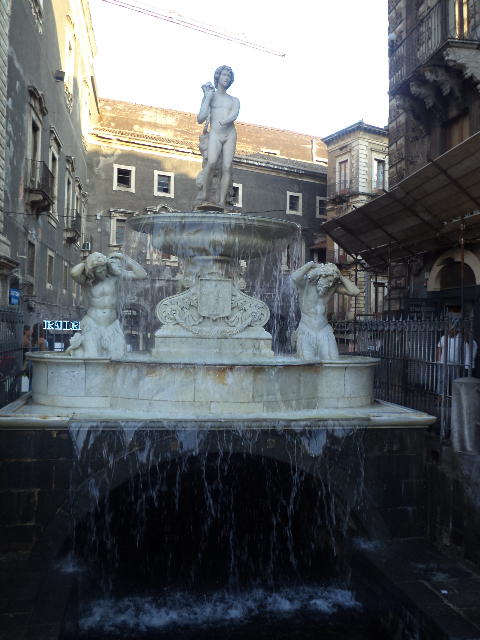
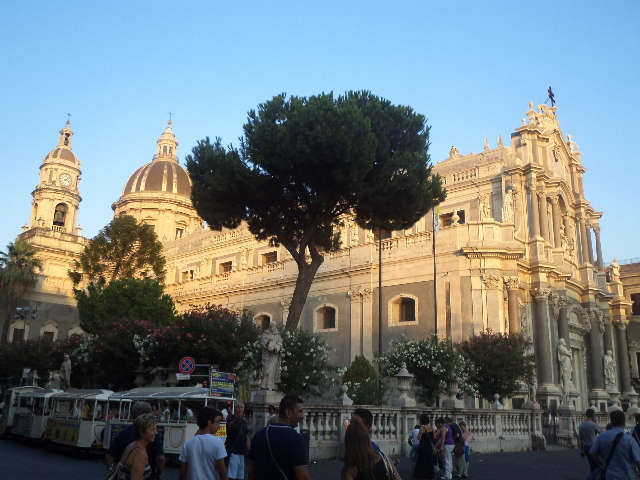
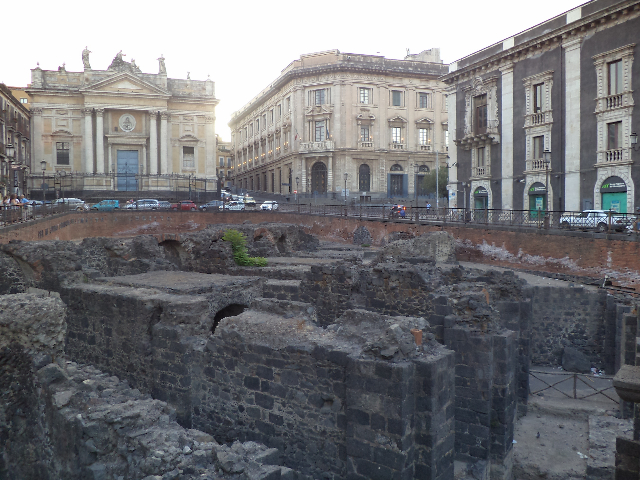
The town has, of course, the requisite number of ornate baroque churches and piazzas. But all the buildings are dark and dirty, and there is a lot of graffiti around. It looks run down and poor. But the people seem friendly enough.
On Sunday we went on an Etna tour. We travelled with Johnny, who runs “This is Etna” . They have only been operating since April, but already have impressive reviews on TripAdvisor. And they lived up to their billing.
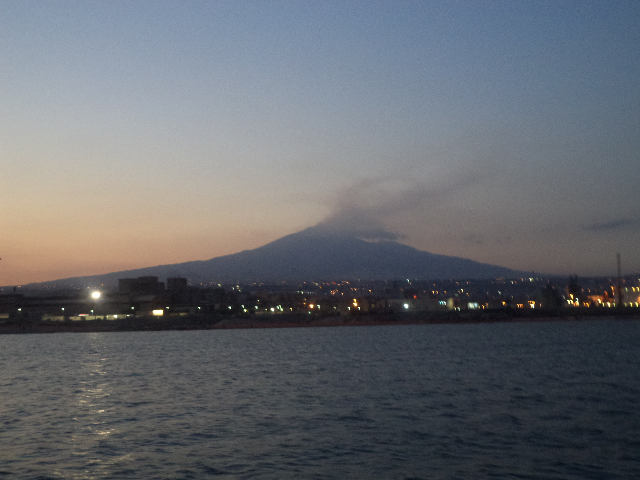
Johnny picked us up in his big black Land Rover from the harbor entrance. We then picked up two other couples, one from Milan, the other from central Italy, Both spoke pretty good English, as did Johnny.
First stop was some crazy off-road driving with “Indiana” Johnny at the wheel. We pretty much drove across an old lava flow to view the Valle di Bose. Now, we have to get into a bit of geology here:
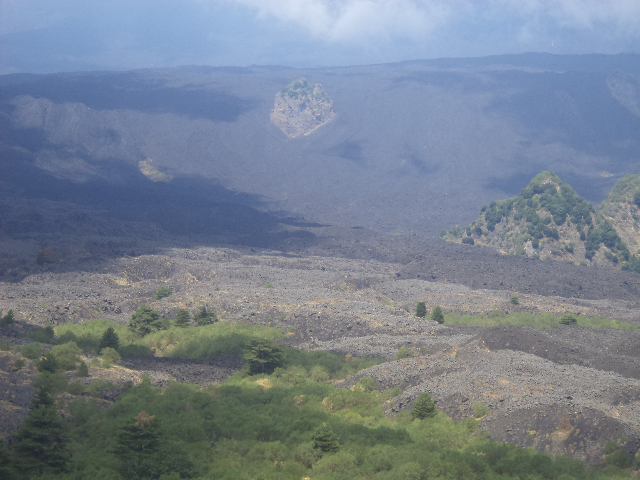
Sicily was formed at the junction of two tectonic plates – Europe and Africa. The north of Sicily is an extension of the Apennine mountains that run the whole length of Italy. The south was formed as the African plate was pushed under the northern plate.
In between the two, of course, is a fault line. Which is why the island sometimes has earthquakes. Those two plates, one on top of the other, float on magma – liquid rock full of high pressure gases, all under pressure like a pop bottle.
This pressure tries to find release, and does so through faults in the overlying plates. It is one such aperture that allowed Etna to form as a typical conical volcano many millennia ago. Initially the cone was at the south end of the island. Over time, however, the plates moved south while the volcano stayed static. Seen from the land, the volcano slowly marched north, forming the southeastern coastline as it did so.
But still it as a typical conical volcano.
Then, 9,000 years ago, the pressurized magma found a different passage through the rocks, and blew out the whole side of the volcano causing the world’s biggest tsunami with waves estimated to be 250m high!
That left behind a huge crater which, over the millennia, have been gradually filled with vegetation and forests.
Since then Etna has had countless eruptions. In fact, it is the world’s second most active volcano – the most recent eruption being just 2months ago, and another one expected at any time. Many of these eruptions occur from both the summit craters (there are now 4), or through the sides of the mountain (over 315 side craters at present).
Now, the good news is that much of the lava from these eruptions flows into this Valle di Bose and, as a result, protects Catania from receiving them. Even so, there have been some close calls, plus many villages that have been destroyed.
2002 is a good example. Etna gets winter snow, and so the government has built two ski resorts, which it rents out to operators. One night, at 3.30am, ski-tourists sleeping in the 54 bed hotel were woken up by a huge rumbling noise. They were hurriedly evacuated.
Half an hour later, a 26 km long crack developed in the ground, about half a mile away from the hotel. Through this crack, a whole series of new craters formed and erupted. Lava bombs flew up over 300m in the air, dropping to the ground at 600 deg C. Some of these were a meter in diameter. Ash and aerated rock fell all around. And lava flowed out.
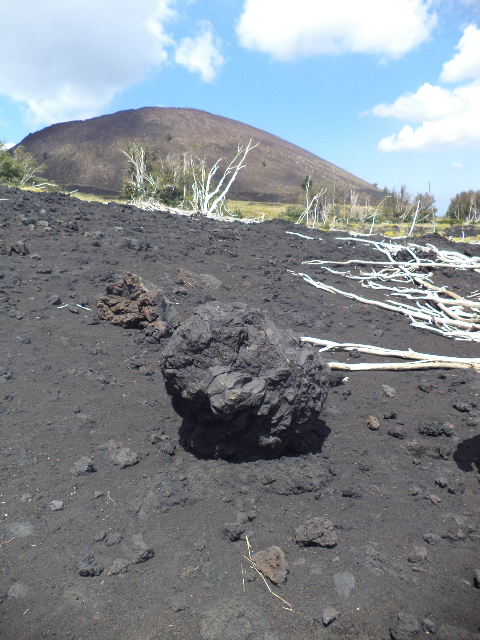
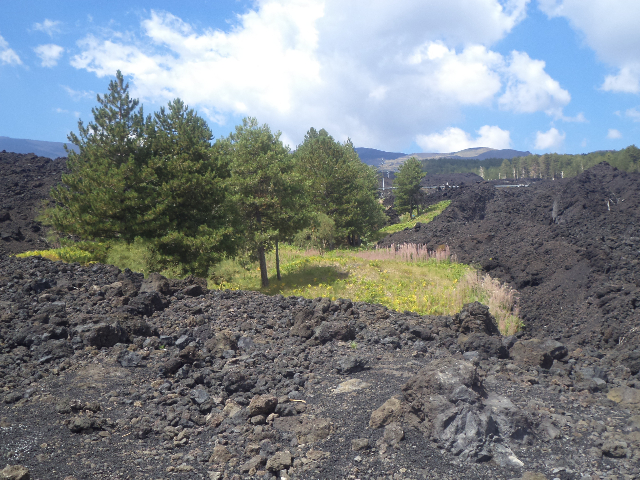
The lava is hot – 1200 deg C. But it flows slowly, and so the surface cools and hardens. This forms a glassy crust to it, which breaks and crumbles as the lava relentlessly descends the hill. Because of the crust, the flow destroys only what it covers. Right next to it the trees and bushes are unharmed. But if it flows over your house, well, it is a good thing you got out. Which is just what happened to the 54 bed hotel that no is there no longer.
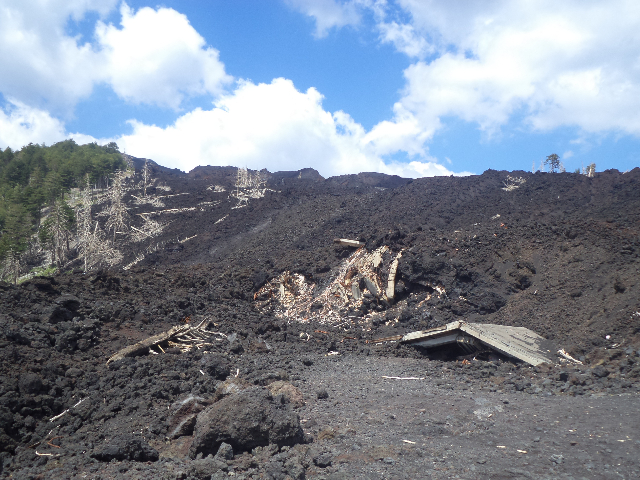
It takes ten years for the lava to fully cool down, so rebuilding has been slow. But gradually the ski hill is being rebuilt. It is odd to see the chair lift rising up over the black lava field.
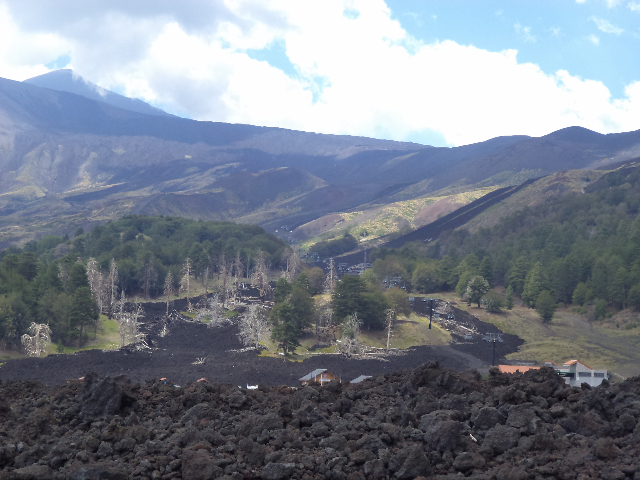
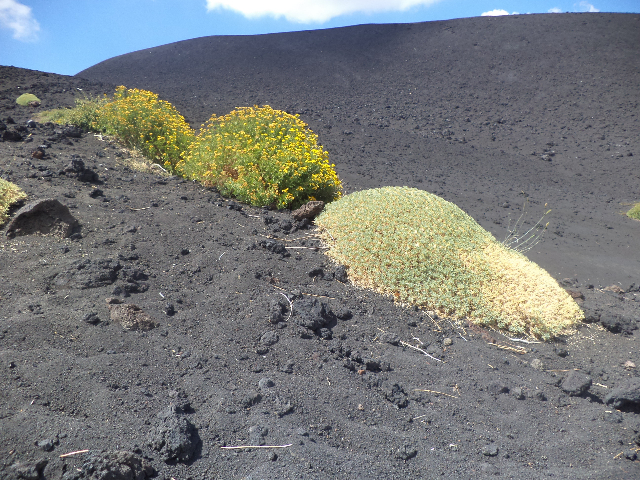
We didn’t take the chair lift (for which they charge 54 euro per person!). Instead we hiked up to crack and some of the craters that formed from that 2002 eruption. It is, indeed, like walking on the moon. The black lava (the surface crust) is all aerated like an aero chocolate bar. The rock deeper down is solid black basalt.
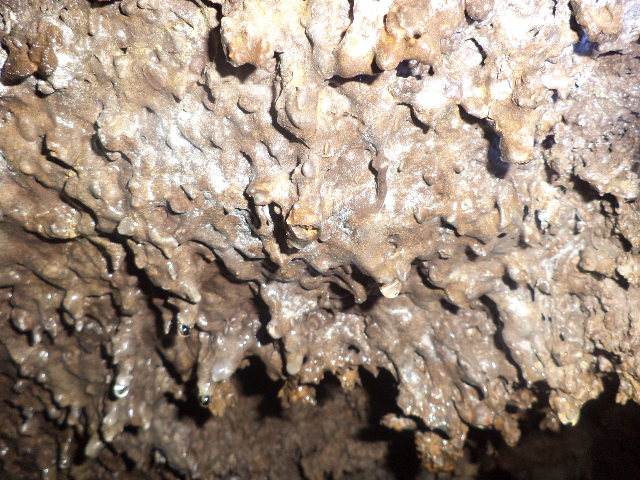
In places the viscous lava, which contains bubbles of gases, rolls over itself and forms lava tubes, through which the lave then flows inside. In places, these bubbles open to the surface on one can walk into them. What is fascinating is the ceiling of the bubble as solidified drips of lava hanging down, like drips of melted chocolate off a spoon.
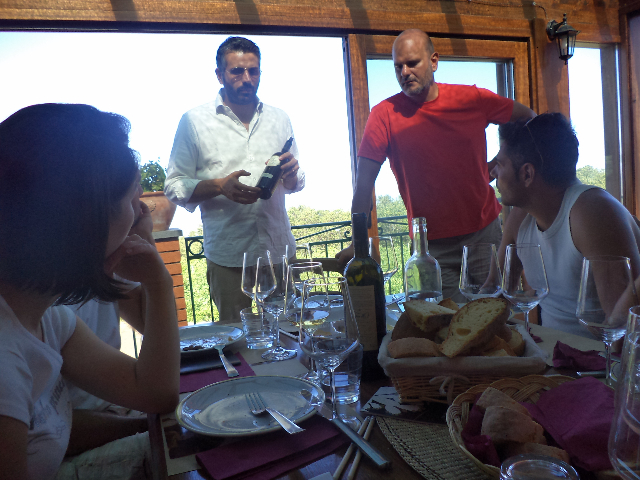
After a filling lunch of dried tomatoes, olives, salami, cheeses and bread – plus wine tasting of four different types of wine – we then went to explore the Alcatara gorge.
Here the river runs through a gorge of black basalt pipes – hexagonal columns of rock formed by rapid cooling of the lava.
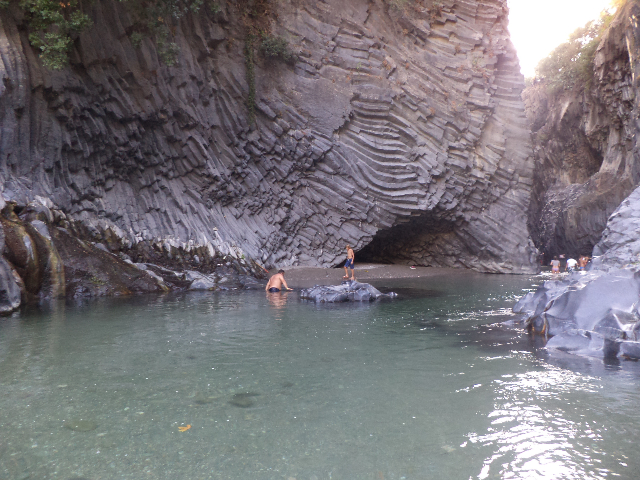
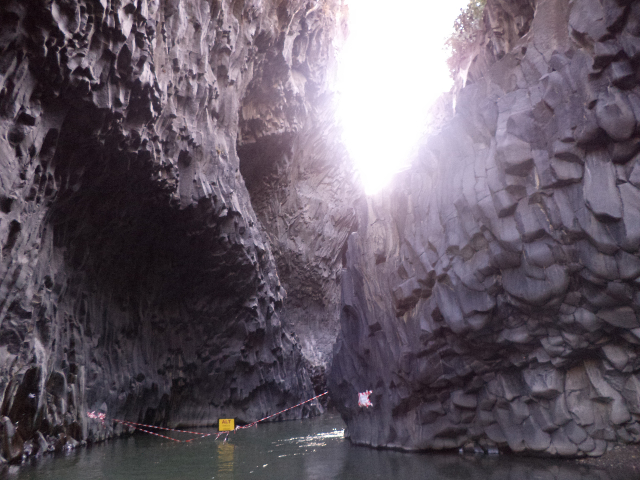
The water was COLD – but we waded through it to take some cool pictures which, of course, never give justice to the live view.
Finally we drove home, arriving at Life Part 2 a full 12 hours after we left. A very good day out indeed, and well worth the 65 euro each (which included the food and wine).
From Syracuse we took a couple of days to sail and motor north to Catania, stopping to anchor at Augusta on the way. Nice anchorage, sheltered from most points apart from south and SW – but not sheltered from dozens of macho men and their planing machines, so it was a bit bumpy until the evening when they all went home.
Just north of Syracuse we passed a big tanker aground on the rocks! Ooops. Looking at the way it was lying, our theory is that it was at anchor during the storm that hit while we were still in Cagliari, and that it broke free and was driven onto the rocks. Otherwise I don’t see how someone could have driven it onto the rocks from that angle. Anyway, looks like salvage efforts are sort of underway, but I wonder what it will take to get it off the rocks again.
Catania is a big grimy city. The harbor is large and industrial, with a mix of ferries, cruise ships (presumably to do the Etna tour), fishing vessels and some yachts. The first night we anchored just outside the harbor entrance in 3m on sand. We were out of the way, but the next day the coast guard cam and told us to move. After looking north of the harbor, where they told us to go, we then returned to where we started, and just moved down the beach a couple of hundred yards. Less shelter from the harbor walls, but still satisfactory in the calm conditions.
Saturday had us touring the city by foot. There is a well equipped chandler just on the main street outside the harbor (turn left, it is on your right a few hundred meters down.) But they didn’t have any C-map cartridges and it was going to be 5 day to order them in. Having seen that our charts do cover the western Greek islands in the Ionian, we decided that we would cruise there for a few weeks, and then return to Ragusa for the winter. That way, we don’t need any new charts this year.
The town has, of course, the requisite number of ornate baroque churches and piazzas. But all the buildings are dark and dirty, and there is a lot of graffiti around. It looks run down and poor. But the people seem friendly enough.
On Sunday we went on an Etna tour. We travelled with Johnny, who runs “This is Etna” . They have only been operating since April, but already have impressive reviews on TripAdvisor. And they lived up to their billing.
Johnny picked us up in his big black Land Rover from the harbor entrance. We then picked up two other couples, one from Milan, the other from central Italy, Both spoke pretty good English, as did Johnny.
First stop was some crazy off-road driving with “Indiana” Johnny at the wheel. We pretty much drove across an old lava flow to view the Valle di Bose. Now, we have to get into a bit of geology here:
Sicily was formed at the junction of two tectonic plates – Europe and Africa. The north of Sicily is an extension of the Apennine mountains that run the whole length of Italy. The south was formed as the African plate was pushed under the northern plate.
In between the two, of course, is a fault line. Which is why the island sometimes has earthquakes. Those two plates, one on top of the other, float on magma – liquid rock full of high pressure gases, all under pressure like a pop bottle.
This pressure tries to find release, and does so through faults in the overlying plates. It is one such aperture that allowed Etna to form as a typical conical volcano many millennia ago. Initially the cone was at the south end of the island. Over time, however, the plates moved south while the volcano stayed static. Seen from the land, the volcano slowly marched north, forming the southeastern coastline as it did so.
But still it as a typical conical volcano.
Then, 9,000 years ago, the pressurized magma found a different passage through the rocks, and blew out the whole side of the volcano causing the world’s biggest tsunami with waves estimated to be 250m high!
That left behind a huge crater which, over the millennia, have been gradually filled with vegetation and forests.
Since then Etna has had countless eruptions. In fact, it is the world’s second most active volcano – the most recent eruption being just 2months ago, and another one expected at any time. Many of these eruptions occur from both the summit craters (there are now 4), or through the sides of the mountain (over 315 side craters at present).
Now, the good news is that much of the lava from these eruptions flows into this Valle di Bose and, as a result, protects Catania from receiving them. Even so, there have been some close calls, plus many villages that have been destroyed.
2002 is a good example. Etna gets winter snow, and so the government has built two ski resorts, which it rents out to operators. One night, at 3.30am, ski-tourists sleeping in the 54 bed hotel were woken up by a huge rumbling noise. They were hurriedly evacuated.
Half an hour later, a 26 km long crack developed in the ground, about half a mile away from the hotel. Through this crack, a whole series of new craters formed and erupted. Lava bombs flew up over 300m in the air, dropping to the ground at 600 deg C. Some of these were a meter in diameter. Ash and aerated rock fell all around. And lava flowed out.
The lava is hot – 1200 deg C. But it flows slowly, and so the surface cools and hardens. This forms a glassy crust to it, which breaks and crumbles as the lava relentlessly descends the hill. Because of the crust, the flow destroys only what it covers. Right next to it the trees and bushes are unharmed. But if it flows over your house, well, it is a good thing you got out. Which is just what happened to the 54 bed hotel that no is there no longer.
It takes ten years for the lava to fully cool down, so rebuilding has been slow. But gradually the ski hill is being rebuilt. It is odd to see the chair lift rising up over the black lava field.
We didn’t take the chair lift (for which they charge 54 euro per person!). Instead we hiked up to crack and some of the craters that formed from that 2002 eruption. It is, indeed, like walking on the moon. The black lava (the surface crust) is all aerated like an aero chocolate bar. The rock deeper down is solid black basalt.
In places the viscous lava, which contains bubbles of gases, rolls over itself and forms lava tubes, through which the lave then flows inside. In places, these bubbles open to the surface on one can walk into them. What is fascinating is the ceiling of the bubble as solidified drips of lava hanging down, like drips of melted chocolate off a spoon.
After a filling lunch of dried tomatoes, olives, salami, cheeses and bread – plus wine tasting of four different types of wine – we then went to explore the Alcatara gorge.
Here the river runs through a gorge of black basalt pipes – hexagonal columns of rock formed by rapid cooling of the lava.
The water was COLD – but we waded through it to take some cool pictures which, of course, never give justice to the live view.
Finally we drove home, arriving at Life Part 2 a full 12 hours after we left. A very good day out indeed, and well worth the 65 euro each (which included the food and wine).
 Tags:
Tags: Syracuse
Current Position: 37°3.51'N, 15°17.13'E
Distance sailed since last post: 25 nautical miles
We had three pleasant days in Syracuse, well sheltered in the huge bay, although the first night was actually a bit bouncy from the SW wind and waves.
First priority was, of course, to buy the new anchor, and dinghy it across to our boat. That involved three trips from shop to dinghy. Fortunately the chandler is only a little way up the street from the marina and dinghy dock.


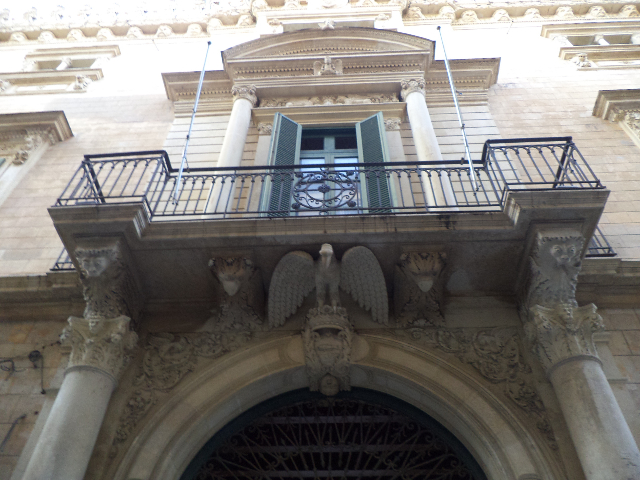
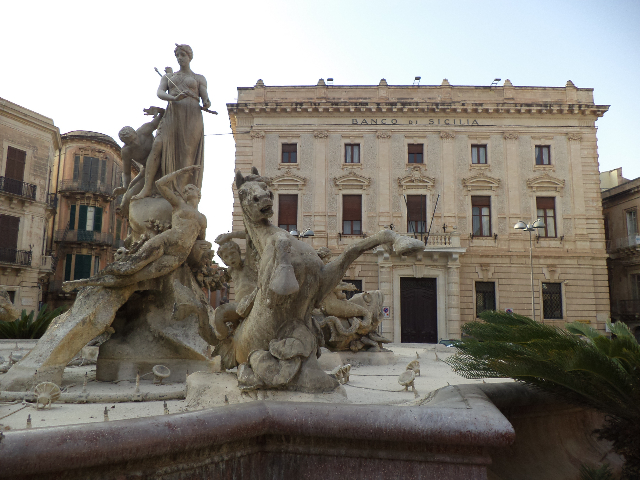
After getting the anchors sorted out, we then went to visit the churches and piazzas.
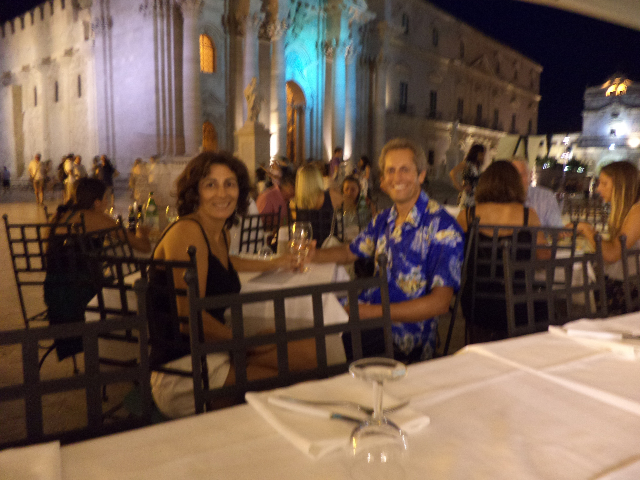
We decided to eat out. After scrutinizing a dozen different restaurants and menus we found a delightful one right outside the cathedral Certainly the best we have had in Italy so far. The menu was very creative, Tuna roe and anchovies pasta for ‘primi’ and then a selection of meats cooked in foil for ‘secudi’ The description, of course, fails to capture the essence. We even had live music from some buskers.

The next day we took the dinghy up the river on the far side of the bay. Lots of fish, birds, and reeds

And then we went to explore the catacombs.
Now, this was cooooool. They are second only to Rome – over 20,000 burial slots in an area of 10,000 sq m. all dug out from the rock by 4th century Christians. No, they weren’t hiding from persecutors, just looking for a place to bury their dead.
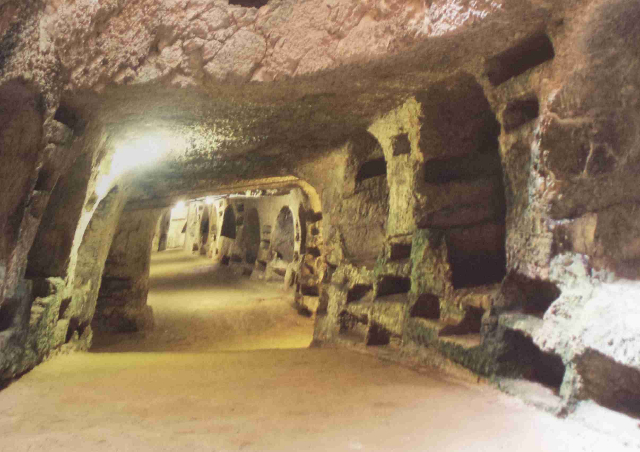
Multiple passage ways through the rock, all of them flanked on each side by rows and rows of stone coffins dug into the rock. Small niches on the walls for babies, adult ones lined up side by side on the ground.
Like the huge cathedrals, this all makes us marvel and wonder at how much work the ancients did. It seems their lives were either about fighting (all the fortresses), or about building monuments.
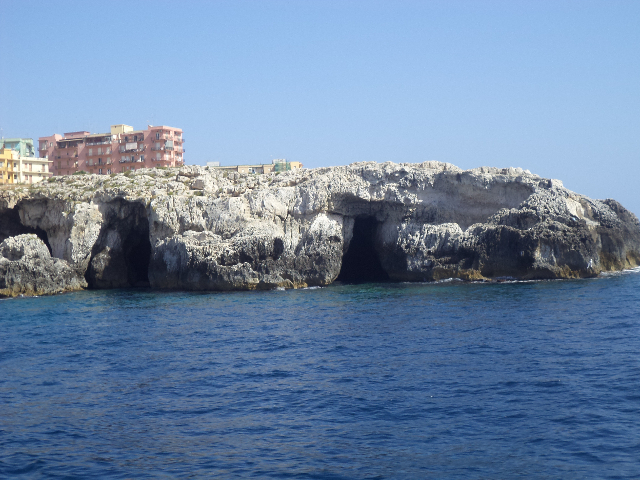
The next day we dinghied around to some more coastal caves, very similar to the ones in Favignana.
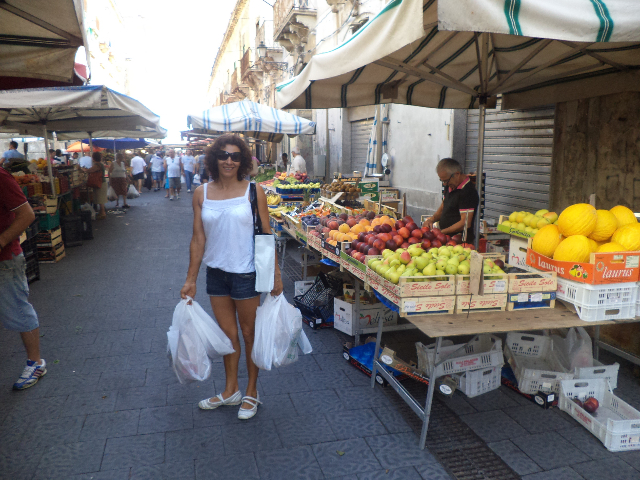
And then we went to the market to get some groceries
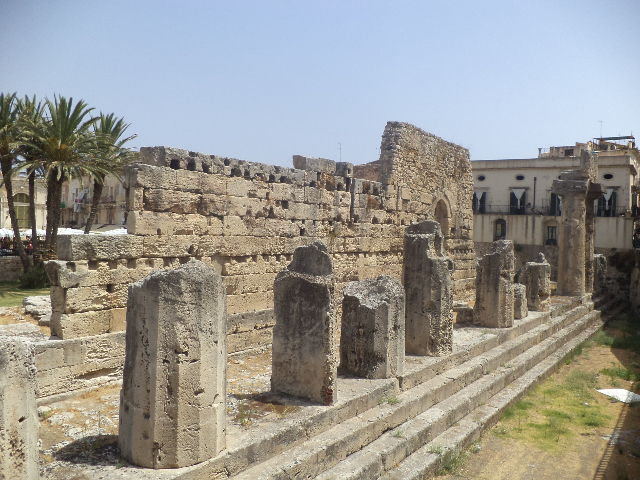
After all that, it was time to press on to Catania in the hopes of being able to fill up our propane bottles.
We had three pleasant days in Syracuse, well sheltered in the huge bay, although the first night was actually a bit bouncy from the SW wind and waves.
First priority was, of course, to buy the new anchor, and dinghy it across to our boat. That involved three trips from shop to dinghy. Fortunately the chandler is only a little way up the street from the marina and dinghy dock.
After getting the anchors sorted out, we then went to visit the churches and piazzas.
We decided to eat out. After scrutinizing a dozen different restaurants and menus we found a delightful one right outside the cathedral Certainly the best we have had in Italy so far. The menu was very creative, Tuna roe and anchovies pasta for ‘primi’ and then a selection of meats cooked in foil for ‘secudi’ The description, of course, fails to capture the essence. We even had live music from some buskers.
The next day we took the dinghy up the river on the far side of the bay. Lots of fish, birds, and reeds
And then we went to explore the catacombs.
Now, this was cooooool. They are second only to Rome – over 20,000 burial slots in an area of 10,000 sq m. all dug out from the rock by 4th century Christians. No, they weren’t hiding from persecutors, just looking for a place to bury their dead.
Multiple passage ways through the rock, all of them flanked on each side by rows and rows of stone coffins dug into the rock. Small niches on the walls for babies, adult ones lined up side by side on the ground.
Like the huge cathedrals, this all makes us marvel and wonder at how much work the ancients did. It seems their lives were either about fighting (all the fortresses), or about building monuments.
The next day we dinghied around to some more coastal caves, very similar to the ones in Favignana.
And then we went to the market to get some groceries
After all that, it was time to press on to Catania in the hopes of being able to fill up our propane bottles.
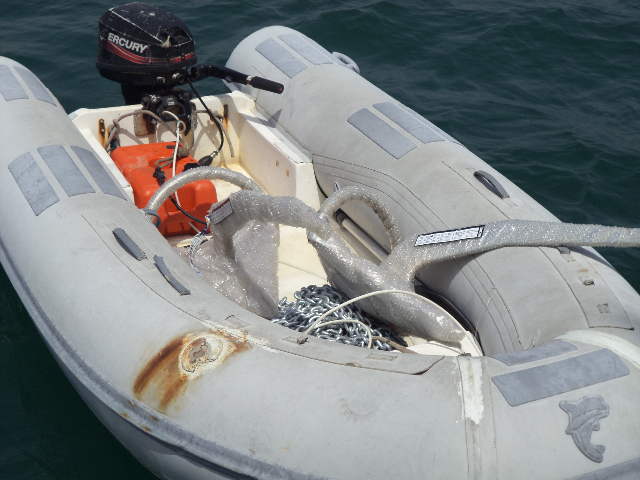
Our New Rocna 33 Anchors!
Having had them on order, we finally picked up our new anchors in Syracuse.
As you can see, the new Rocna 33 – which weighs, uh, 33kg – is quite a bit bigger than our hydrobubble. And, as you can also see, it has a concave shape rather than a convex shape to it.
There are several new generation anchors that all look and function pretty well the same – the Rocna is one, the Manson Supreme and Buegel are two others. All of them are classed as Super Holding Power which means they dig in and hold much better than the older generation anchors.
So, with our new anchor installed, and our new strong chain, we feel a lot more confident now 🙂

You can see how much bigger the Rocna is compared to the hydrobubble

The Rocna 33 anchor fits perfectly in our Leopard 42 catamaran
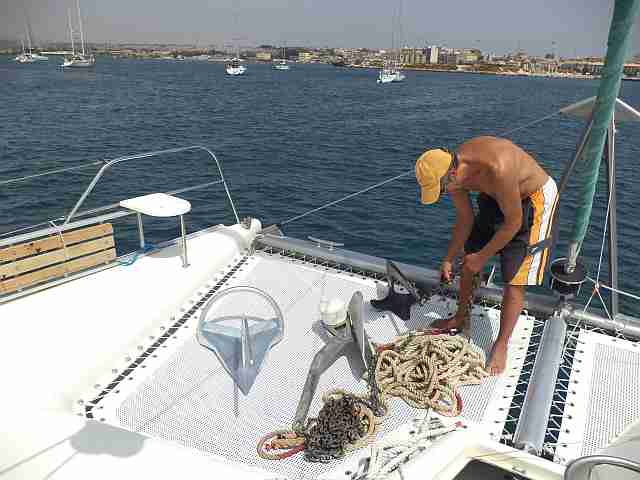
Noel sorting out the anchors and rodes. Seen here, from left to right, are the new Rocna 33, Hydrobubble, and 15kg Bruce
Impressions of the Sicilian South Coast
Current Position: 36°40.18'N, 15°6.9'E
Distance sailed since last post: 122 nautical miles
We have just left Marina di Ragusa on a bright sunny Saturday morning. The sea is calm, and there is a nice 10kt sea breeze on our starboard quarter as we glide along at 5 knots with the spinnaker up. Doesn’t get much better than this!
We have been fortunate with the winds. Since we left Minorca we have had to do very little motoring; and the few times we have, have been a blessing as we were cruising close to dramatic cliffs where one really wouldn’t want any significant wind or wave action. We were told that the Mediterranean is ‘either too much wind or too little’. Certainly we have had a few windy days, but by watching the weather closely we have been able to position ourselves on the right sides of the coast. That did mean a couple of lively sails past Bonifacio, but nothing dramatic. The one exception to that was the stop in Callaseta where the wind changed from onshore force 5 to offshore force 5 rising to 7 at 2am. The wind change had been forecast, but we thought it would arrive a bit later in the day than that!
We have also been fortunate in finding plenty of places to anchor. Many times this has meant just lying off the beach, which is fine in settled and offshore weather. We have been surprised, however, at how few other boats are around. We had been warned that the cruising grounds would be ‘packed’ during high season. Well where are they all? And the same sentiment has been echoed to us by other cruisers we have met. I guess the current economic woes, and the Italian boat tax, have cut down the traffic. Corsica was by no means busy, and Sardinia and Sicily have been practically empty. And all the marinas we have passed looked pretty empty too.
Sicily is nice. We have had great weather. The people seem to be friendly. The towns are pleasant. Prices are reasonable – how about 3.50 euros for a large beer (66ml) in a bar? Scenery is not spectacular like Corsica and NW Mallorca, but is certainly very pleasant – mostly low lying or flat ground with lots of beaches and some pretty coves. And, of course, the ancient history is dramatic.
The south coast is less commonly cruised than the north. The north has the off-lying islands, like Stromboli and Uscati, plus tourist destinations like Erice and Cefalu, all of which we plan to see on our way back. Most of the villages are small fishing towns, plus some industrial larger towns. The sea isn’t crystal clear like it was in Sardinia and Corsica, but it is clean enough. And sometimes we get some phosphorescent plankton to brighten up our toilet flushing!
In Porto Empedocle we met Tony and Sarah aboard Ron Glas, and old Junk rigged schooner from Inverness. They had also been in Cartagena when we were there, and were friends with Tony and Sarah of Ione, our neighbours in Cartagena. It is fun how you meet up with people as you sail. Since they don’t have a freezer we had them over for drinks (with ice cubes) and served them some ice cream as a treat! Fun people. Sarah is an artist and paints on board (she did an exhibition in Cartagena) and also a hairdresser, and Tony is a leather worker and general fixer upper. They bought the boat in dilapidated condition, fixed her up over two years, and took off. That was eight years ago. Just goes to show you can go cruising without a huge kitty.
The night before last we anchored outside Licata. Licata has a HUGE harbor, with an outer section and two inner sections. All of them are almost empty. The eastern inner section used to allow free anchoring, but they have just opended a new marina at the end of it and so the don’t allow any anchoring. In fact, as we entered the outer harbor a dinghy rushed out to meet us. I guess they wanted to welcome us to the marina – and to tell us we couldn’t anchor. The cost for us was to be 50 euros for the night, so we said “no thanks”. There is still HEAPS of room for anchoring, but I guess they don’t want those people to come ashore and spend money in their bars and restaurants. The marina itself was, of course, almost empty. Behind the marina is a large shopping mall, so that is nice and easy access for big shopping. They are trying to compete with Ragusa for the over-winter people, but with Ragusa already offering good deals, and being much closer to an airport, I think they are up against tough competition.
Last night we were in Marina di Ragusa, which is a small seaside town, 23km from the actual town of Ragusa which is where all the UNESCO heritage buildings are. The marina is new and looks very pleasant. Cost for us to winter there is only 1500 euros for 6 months. Cheaper than what we paid in Cartagena. Lots of the cruisers we met are planning to winter there, so I am sure it would be a pleasant place to say. We may well come back here.
That being the case, we didn’t actually stay to visit the town, especially since the buses to Ragusa itself don’t run on weekends.
So now we are pleasantly gliding along at 5 kts with the spinnaker up, headed east. Will probably stay in Porto Palo for the night, and then round the corner to Syracuse tomorrow.
Greek Temples at Selinunte and Agrigento
Current Position: 37°34.83'N, 12°50.57'E
Distance sailed since last post: 23 nautical miles
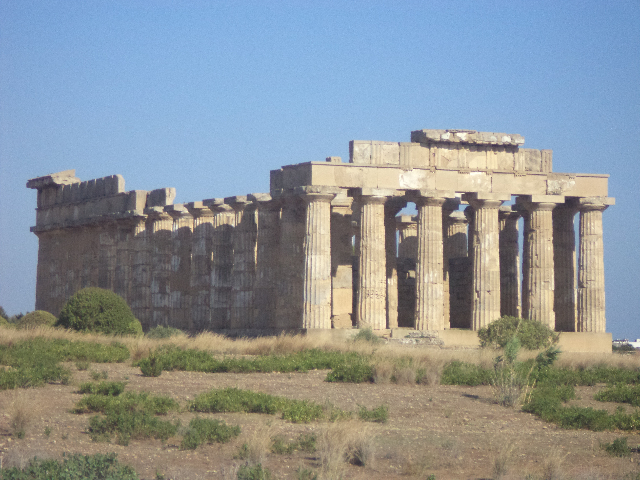
The Greeks, as you know, had a lot of gods. Which meant that they needed lots of temples in which to worship all those gods. Back then they had a good eye for architectural design, but not a lot of understanding of the principles of solid construction. So, to make sure stuff stayed upright, they ascribed to the theory of ‘Brute Force Civil Engineering’. Which means, at its core, that if you make stuff big enough, it won’t fall down. As you will see in the photos, that meant massive columns to hold up massive blocks of stone for the roof lintels. And all of these carved by hand with bronze tools.
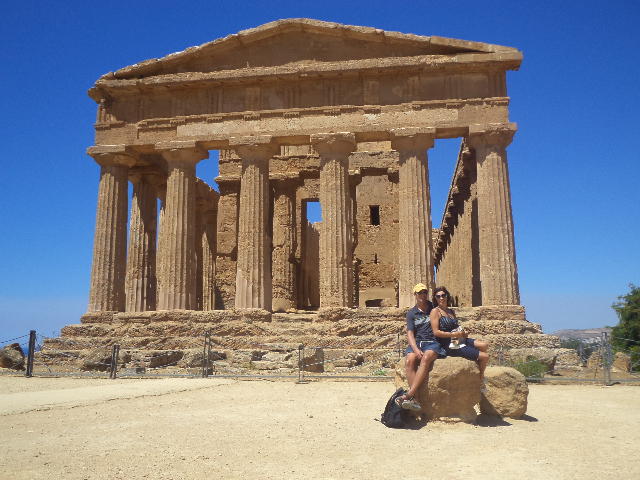
And, it seems, their theories were correct. Two and a half thousand years later, despite storms, earthquakes and multiple invaders, their temples are still (sort of) standing. In fact, some of them are in remarkably good shape, considering the time gone by.
There are three major archeological sites in Sicily: Agrigento, Segeste and Selinunte, listed in so-called order of importance. The first two have examples of the most complete remaining temples, which is why they are at the top of the list.
We visited Agrigento and Selinunte.
Selinunte is visible from the sea as you approach the little fishing village of Marinella di Salinunte. The harbor is way too small for a yacht, but one can anchor just beside it and get some (not a lot) protection from its walls. And at least the harbor makes it easy to go ashore with the dinghy. It is then a short walk up to the archeological park. The entrance fee was 6 euros, which also provided entrance to the Caves di Cusa – the stone quarry from which all those massive pillars where carved. Unfortunately that was 13km away, so we couldn’t get to it as there were no buses there.
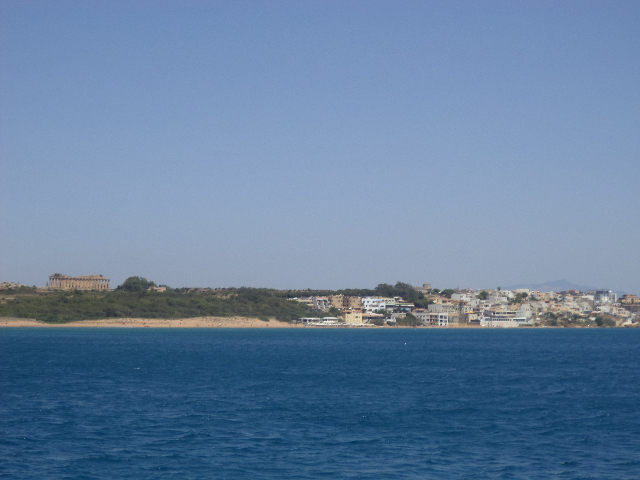
Inside the park one can freely roam among all the ruins.
As well as the temples, there are also the remains of fortifications made by the Carthaginians when they conquered the area. And there are good descriptions and explanations, in English, by the various temples and sites.
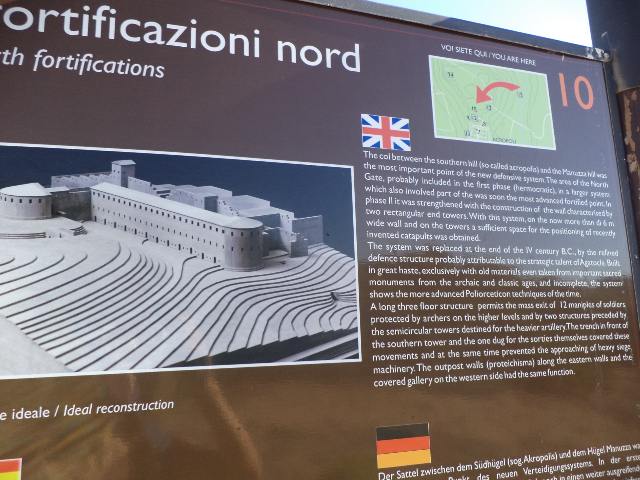

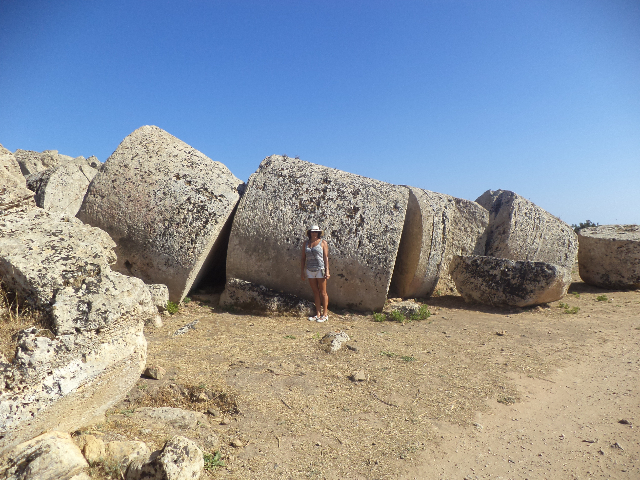
The following day we went to Agrigento. This is farther inland. One can anchor free of charge inside the huge commercial harbor of Empedocle, and then dinghy ashore. Then walk up the road to the right, passing a fishmonger, to find the bus terminal on the right. From there it is a half hour bus right straight to the entrance to the archeological park at Agrigento. The bus runs in both directions about every half hour.
Entrance here is 11 euros. And, once again, you can wander around the ruins. But you can’t walk through them. There is one very well preserved temple, but it was a shame to not be able to actually walk inside it like you can at Selinunte. There also appeared to be less ruins, although the ancient Christian necropolis was interesting. However there were NO informative signs at all, not even in Italian. Of course, if you really want the information, they will sell you a site map for 1 euro and a book for 7 euros. It seems they figured being a World Heritage Site with a well preserved temple is enough, and they don’t need to do anything else to enhance your 11 euro experience.
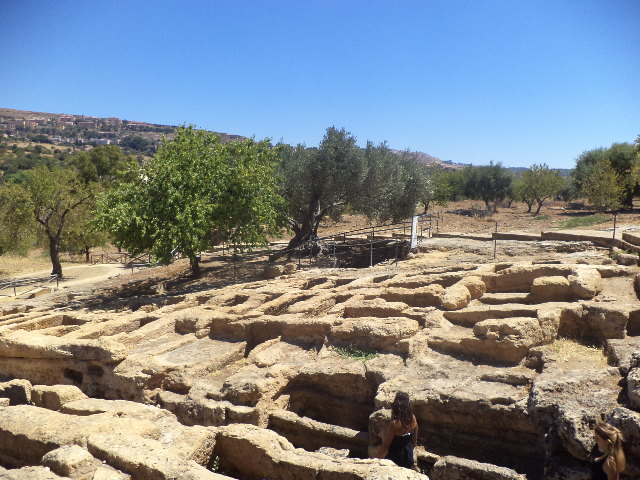
Allow a good couple of hours to visit each place.
Overall, we figured that Selinunte was more interesting and better value. If you have time for only one of them, do Selinunte. But do go to at least one of them! My understanding is that Segeste (which we didn’t visit) is similar to Agrigento.
You can see the full gallery of the pictures here:
Greek Ruins at Selinunte, Sicily, July 2012
Greek Temples at Agrigento, Sicily, July 2012
Some of them are pretty impressive!
Welcome to Marsala
Current Position: 37°47.13'N, 12°26.48'E
Distance sailed since last post: 10 nautical miles
We just arrived in Marsala anchored right outside the harbour, it was mostly weed but were able to find a sandy spot and dropped anchor.

Marsala,view from when we were arriving at our anchorage
Got the dinghy down and crossed the ugly green and brown waters of the harbour. Some friendly fisherman from the old rocky pier pointed us into a better spot, that he thought was safer to walk up from. We tucked in between a bunch of fishing boats. I was wondering if we would be able to find it later on in the dark after all the Marsala wine!
Harbours in Sicilly for the most part are dirty, very industrial fishing ports, and not nice Marinas. I guess they all are in the North coast which is sure more popular with sailors. We shall see. The good thing is…behind that, there is always a nice city, or town with its magical touch of beauty, history and friendly people.

Rich 17th century residence leading to the Garibaldi Gate and archeological park
We went into town early afternoon. As usual everything closed, everyone having their siesta and Noel and wondered around the nice narrow peaceful pedestrian streets, admiring its many beautiful buildings and Parks. By 4 pm places start to open. We found a tourist office for information. Like with most Info places, the first thing they tell us is to take a sea excursion, because they have beautiful beaches scenery etc..etc. Well….funny, we tell them we live at sea.

The piazza during siesta
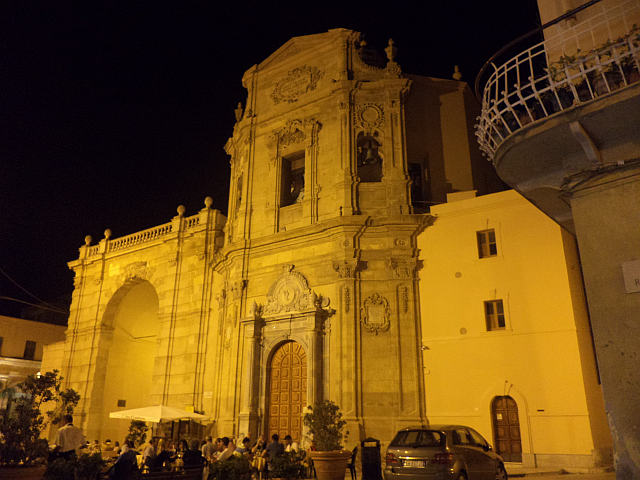
In the evening the piazza turns into elegant dinning
She did advise us to what to see in town that was still open for the evening. So we did the city touristic thing….you know! Museums, elegant Churches and Cathedral. And surprise, surprise! The town was so busy we could barely take a step without bumping around.
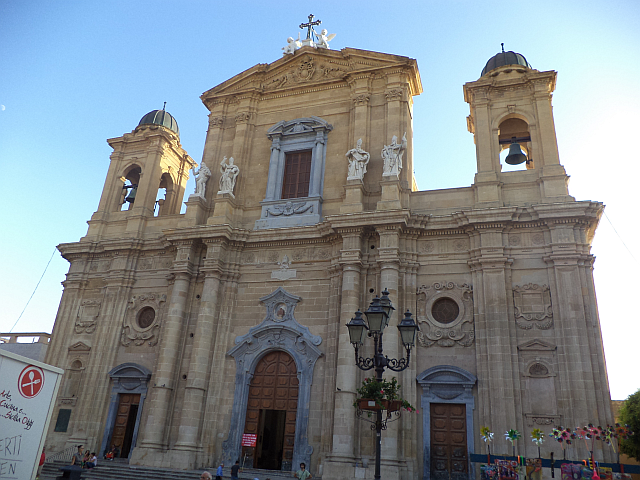
The Cathedral
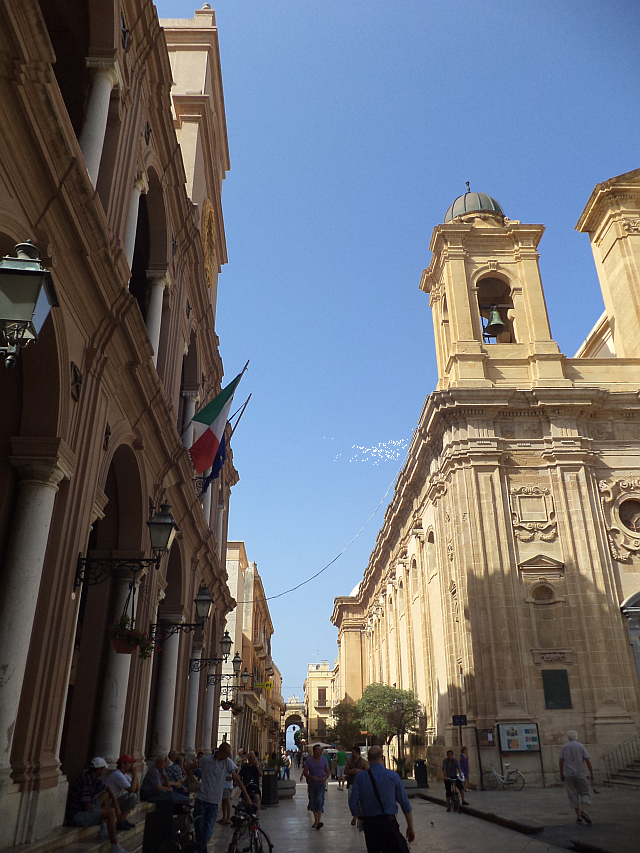
Town hall on the left, and street toward the waterfront.
Time for dinner out!
Much better meal than that last one I told about….haha (and we now know how to order!)
Finally after so many restaurants and tough choices, we ended up at the end of a street right by the Art Gallery.
We were greeted by Giovanni in Italian who quickly switched to English.
He was able to convince us, along with his friendliness and charm that he could make the best tuna steak that I so desired. After ordering some nice local wine and appys, we indulged in a great tuna steak served with a large variety of roasted vegetables, and Sicilian salad. Noel chose Marsala fillet and good local wine. We skipped dessert….we rather have some of their Marsala wine.
Giovanni. He looked just like a Giovanni too! Secilian, middle aged man, worked his way to pay for school. Son of a plumber. He is a captain in big ships. Can work anywhere and speaks many languages.
He says: met this “beaurriful girl” in 1971. They were together till 2 years ago. “She starte menpause and she went crrazy…gambling, spent all money, had to tell her the American way: to f… off.”
Geovanni was out of a job at the moment and approached his restaurant owner friend , although he had never done this kind of work before .
He says: “I’me not gona bag for my money my friend, I work very hard, I’me very good with the people, I speak many languages, I can do this!”
After all that, he told us this was his first day at work! Wow! He was a great host, a natural at it.
In the end he brought the chef out and we got to congratulate her on a job well done. Realized how late it was and asked for the bill, and said our goodbyes.
We crossed the street over to the Art gallery where we watched a piano concert. To our surprise, it was once again, Chopin. The piano player was wonderful, his fingers were magical……
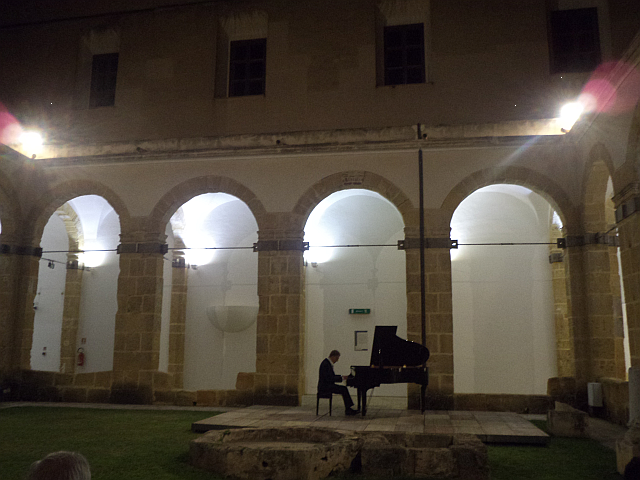
Concert at the art gallery court yard – another dose of Chopin!
The next morning we went back to explore some more of this historical town. We had a brochure on this nice place for wine tasting, at sea, not far from us. As we were headed there and then home, we got side tracked. We spotted the Market and decided to go in to check it out. Ohhhh such nice freshly picked vegetables, seasonal fruits…and the FISH. We just couldnt resist. Filled our hands with bags and now headed home.

Some REALLY fresh fish: The fishermen selling the day’s catch, some of them still moving!
Ahhhh…not without some wine tasting!
As we were walking along the side walk, just outside the town, it was this little man sitting in front of his shop. Beside him a barrel and some wine bottles on top decorated with few grapes.
I commented to Noel something about the wine display, and the gentleman got up, and in broken English invited us inside for some wine tasting. We really enjoyed that, and in the end we bought 2 bottles of crema mandorla, almond flavored marsala. It was delicious! We bough some fresh capers and few other items from his supermarket. Too bad we couldn’t buy more from him. Our hands were full and getting heavy. We didn’t get to experience the wine tasting in the nice setting and beautiful views at sea, we were headed for previously…..but he was such a nice guy and we were truly happy that we could buy from a small business.
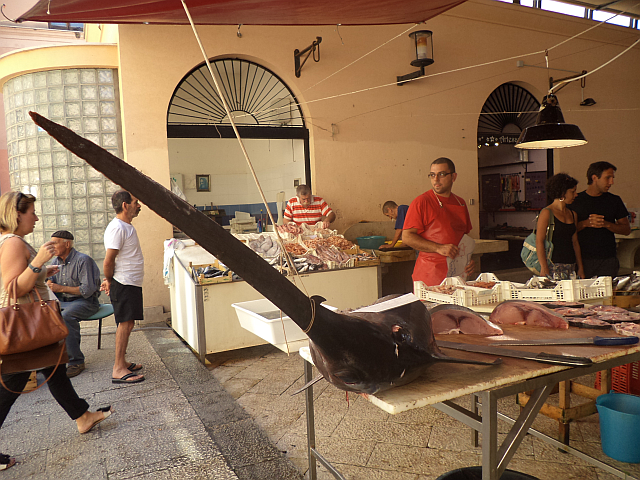
Fresh swordfish. We had two slices off this.
We were also happy to go home and barbeque the steaks we got from that sword fish, along with roasted fresh veggies and sweet peaches and nectarines.
PS. No problem to find the dinghy the night before, I guess we didn’t have enough Marsala wine.
Next day was time to leave for a small sail down the coast and visit some ruins of Greek Temples. It will be the next blog. I can tell you they were amazing and will have some photos. Today is more than enough typing and photo thing…. (I’m not computer friendly…lol).
Stay tuned for the next adventure
Just Arrived in Sicily
Current Position: 37°55.96'N, 12°19.37'E
Distance sailed since last post: 0 nautical miles
Well, we left at 7am yesterday in light winds and had a peaceful and uneventful crossing.
Initially we had the spinnaker up and were stomping along, but then the wind got up to 15knots so we took it down. Replacing it with just the jib on a dead run. The wind then dropped a bit, but as night was coming on we decided to leave the jib up, so most of the time we had only the jib going. That meant for a rather slower crossing, but with only a jib it is very peaceful and needs no looking after. A bit frustrating when we were overtaken by a monohull with his main and jib up, goose-winged – ie about double the sail area we had – but then he does have five people on board to handle everything. And we don’t have a whisker pole for the jib. No matter, we arrived in the bay just about half an hour after them.
So now we are in Favignana, one of the western most islands just off Sicily. There is a castle at the top of a big hill, so I think we are going to have to hike that to see what’s up.
Will keep you informed!
Passage to Favignana, Sicily
Current Position: 37°55.86'N, 12°19.45'E
Distance sailed since last post: 150 nautical miles
Nice passage. The wind was astern for the most part of the trip so that meant spinnaker up. Sun goes down, spinnaker goes down, because with just with one of us on watch while the other sleeps, it’s not safe, as we have to go out front to adjust sail and all. So we slowed down a bit during the night. At dinner time we noticed a boat way behind us in the horizon. Must be the German boat, we said!!!!
By midnight he passed us, while I was on watch. I was excited to see Noel’s reaction, upon waking up. He used to race dinghies before, (sshh…deep inside he’s still in the racing mode) . What’s the definition of a yacht race? Two sailing yachts going the same direction in sight of each other. When he woke up, the other sail boat was way way ahead of us. He wasn’t impressed.
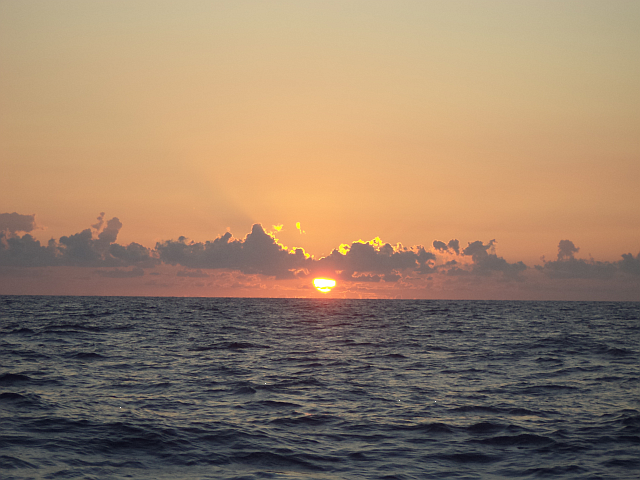
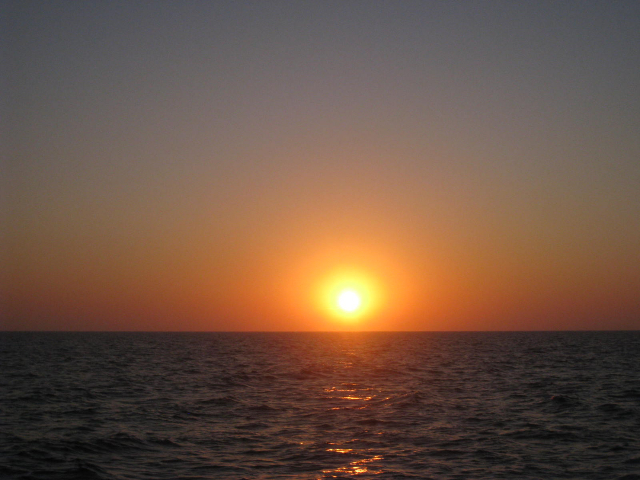
I think thats about the only time Noel and I see the sunrise is during our night passages
About 6am spinnaker was up again, we were gaining up on them, but didn’t catch up, we soon arrived at Favignana.
Surprise, surprise, they were at the same anchorage as us. They had just anchored, so they didn’t get too far ahead!!!! The funny part was , the German fellow, rowed over to our boat, he sat and had a beer and with his broken English asks Noel why we so slow…catamaran slow??? I started to laugh and answered that we didn’t have 4 men onboard!!! They had their main and jib up at all times (we had just our jib), and even motored a bit. But….what does he know? is not a sailor, just in a holiday on the friend’s boat.Nice guy.

Anchorage of Favignana. The warehouses in the back were used during their tuna canning days

many of the boats, anchors and many tools still in the warehouses
Favignana is part of the group of 3 islands called Egadi Islands, other 2 being Maritimo and Levanzo. They are just off the west coast of Sicily, where we were heading next. It is a small medieval town defended by fort S. James and of Santa Catarina at the highest point. The town is boosting with tourism. Popular for their rocky coast, beautiful turquoise waters surrounded by tuff walls, many sea caves, and grottos and crates left after former volcanic activity. Again, we arrived and went to town in the afternoon, there was barely a soul, but we couldn’t believe how busy it got for the evening, it was like going to a different town!
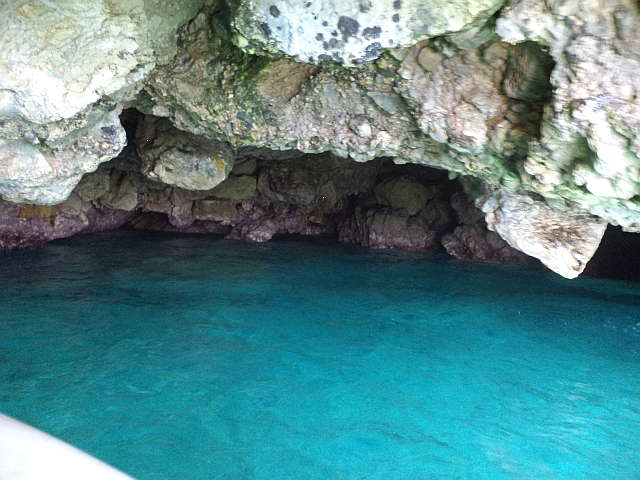
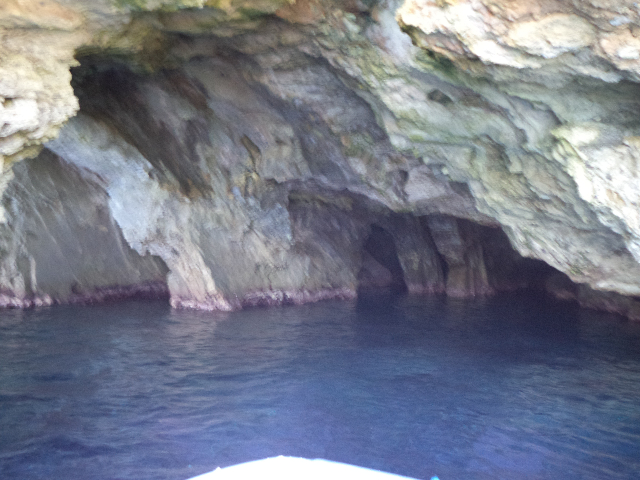
One of the caves near by we went to visit by dinghy
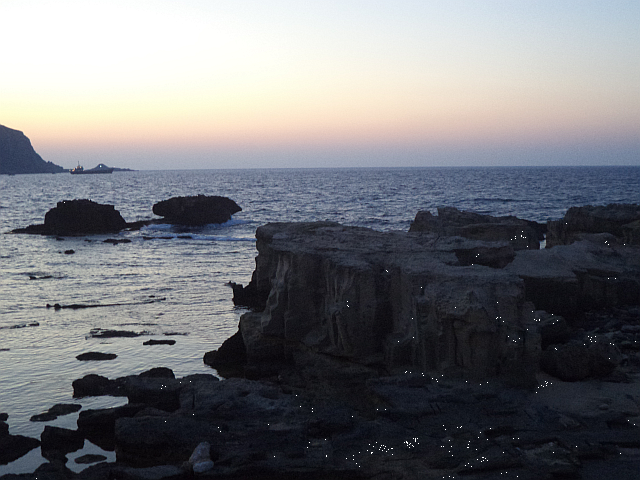
While walking through town in the evening along the sea Noel and I found our first tuff quarries
In one of the Piazzas we noticed a stage all set up, Noel and I quickly found some good seats in closest cafe to the stage. It was a 4 piece band who played such beautiful music, from traditional Italian, Cha- Cha, Salsa, Waltz, Polkas and they even included some nice tunes from Abba and The Beatles. It was wonderful that they played such variety. People quickly formed a large circle in the front of the stage many dancing, others cheering on. Most people were locals families, little ones in strollers and older ones others running around, moms dancing with other moms, couples, everyone was having a great time. Walking home, we noticed where all the tourists were. The shopping streets were so busy, the restaurants, the bars and their loud, different kinda music. Again…was like crossing the street into a different town. Totally different atmosphere.
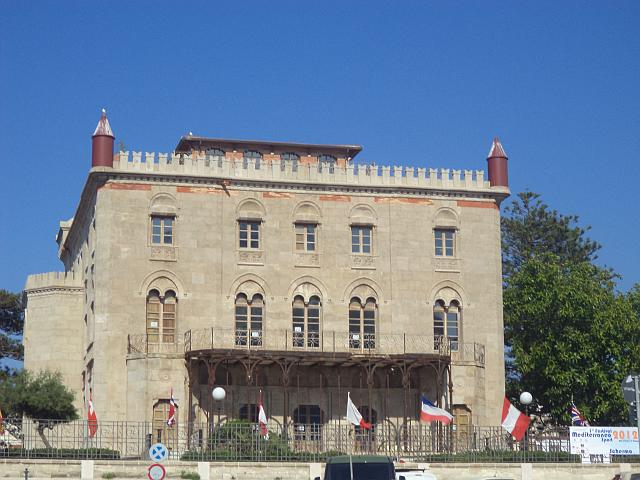
The old tuna cannery, renovated in the recent years. It is now art gallery upstairs and tourist information office in the main floor.
Favignana was very prosperous in the 1800’s. Signor Ignazio Flario from Palermo, bought the Island and made it the centre of the tuna canning Industry. Blue fin tuna was their catch. Also the Tuff quarries, opened up, exporting to Tunisia and other countries bringing in a lot of prosperity to their inhabitants. Tuff is a type of rock consisting of consolidated volcanic ash ejected from volcanic eruption. Today around town, you can still see a lot of the evidence, including the canning factory and warehouses full of the old boats, big anchors and lots of tools. Also the Tuff quarries and the signs of the manual hard labor. It was just amazing.

One of the Piazzas in town, with statue of signor Ignazio
I told Noel, that some day I would like to come back in May for their show of the Matanzas when they bring in the big catch! That would be another blog: The Matanzas in Favignana. You can probably google it and see what I mean!
We visited some of the Grottos by dinghy, not far from harbour. They were quite big, with some amazing rock creations in the ceilings and all around. Had to wait our turn outside for a few minutes, it was a popular place!

Grotta del innamorati.The lover’s grotto. Named after the 2 matching rocks standing side by side
We left our anchorage and set sail around the coast, with the beautiful turquoise waters against the tuff quarries,caves and grottos.

Quarries along the coast and the signs of hard labour.

beautiful turquoise waters and more tuff quarries
Anchored in a nice bay of Prevetto enjoying the nice scenery and a good refreshing swim, till we saw some jelly fish. Was time to get back on the boat.

The bay where we had our encounter with the jelly fish and the Guardia Costeira. Love the little old Italian men in their colourful little boats proudly taking the tourists around
As soon as we dried off the coastal guard showed up and told us that boats more than 10 metres in length are not allowed to anchor in that area, but we could move to an anchor ball around the corner. At that point we chose to leave, we were done there anyways, we were going to cross over to mainland Sicily.
2 hours later we were in Marsala, mainland Sicily. Next blog, very soon!
It Rained Today…
Current Position: 39°7.44'N, 9°30.39'E
Distance sailed since last post: 19 nautical miles
We haven’t had a drop of rain since we left Cartagena, Spain mid May.
But today it rained.
No, I mean it RAINED.
At the time we were ashore doing some shopping, as the sun was shining and it seemed a nice day! In just under an hour our dinghy had over 6 inches of fresh water in it. Then the rain eased off while we went back to the boat. And then it started raining again, and now the dinghy has another inch of water.
Anyway, tomorrow it looks like good weather for a departure, so we are leaving Villasimius to head overnight to Sicily.
Farewell Sardinia!
We will keep you informed.