

Bahama Blues continues
 December 31st, 2022 |
  Author:
 Current Position: 25 26.11 N 076 36.35 W Click to view map.
Distance sailed since last post: 619 nautical miles. View the map of our voyage track here
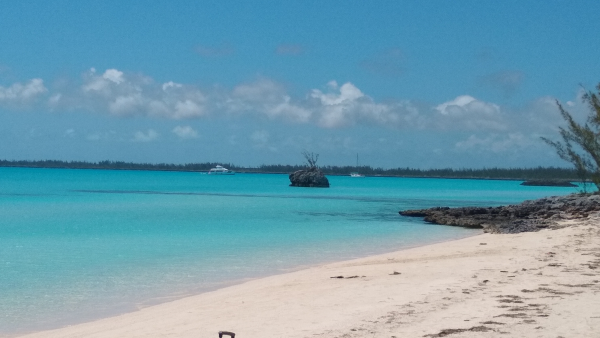
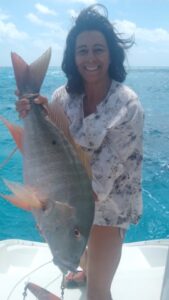
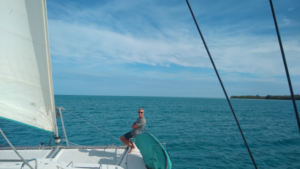 As soon as we left Staniel Cay we caught a nice mutton snapper, that was exciting especially when were about to bring the line in, as we approach the National Park. The seas were smooth and I prepared the fish on the cockpit. With the small bits I made nice fish cakes for lunch. The rest made nice fillets. The bones made a yummy ch0wder.

We finally got to see some nice lobsters wile snorkeling. Not that we are very good at catching them, but here fishing is prohibited as we are in Exuma Land and Sea Park area in Warderick Wells. Good snorkeling and a nice walk. Huge wales skeleton
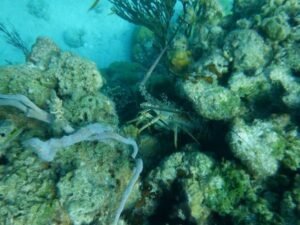
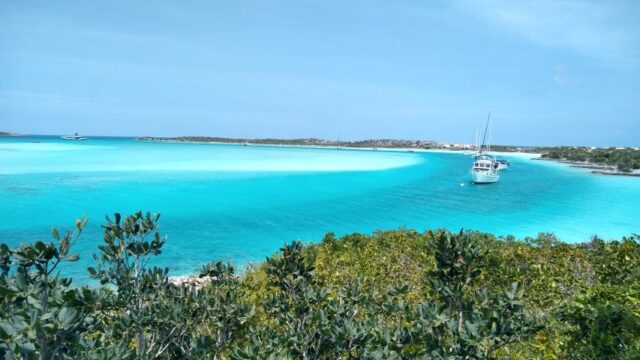

After spending a couple of days here we headed to Norman Cay. We had 16 kts of wind and a nice broad reach. Very big waves through the cut and big waves continued out to sea.
Little Pond Cay
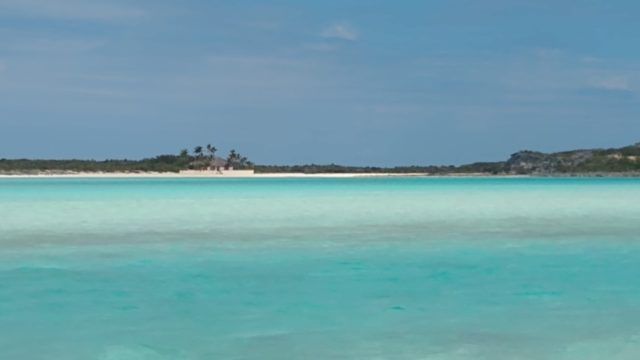
Johnny Depp owns this gorgeous island
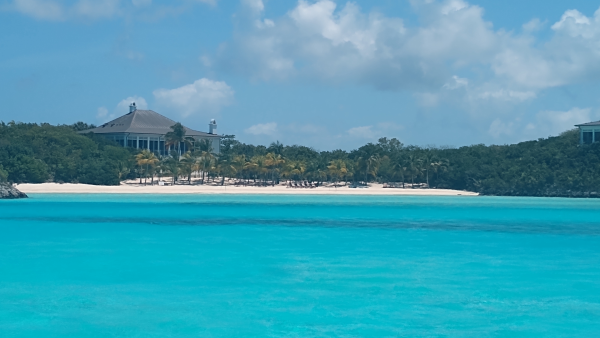

Although most privately owned islands around here only have a “Private, No trespassing” sign, Johnny Depp goes way beyond with this sign 0n his beach front.

Big beautiful island, beautiful beaches but did not see any mansions, just smaller villas spread out. Gorgeous spot too, right next to the Exumas Park.
The island next to this one is White Bay Cay, owned by Tyler Perry, beautiful beaches backed by palm trees and mansions. Just gorgeous and upscale.
Norman Cay
For years, this small island, South of Nassau served as the headquarters for the Medellin Cartel s drug smuggling in the 70’s up to around 1982. Planes would land on the tiny man-made runway (which is thought to have been built by Pablo Escobar himself) to refuel before continuing their journeys to the USA to drop off their illegal cargo.
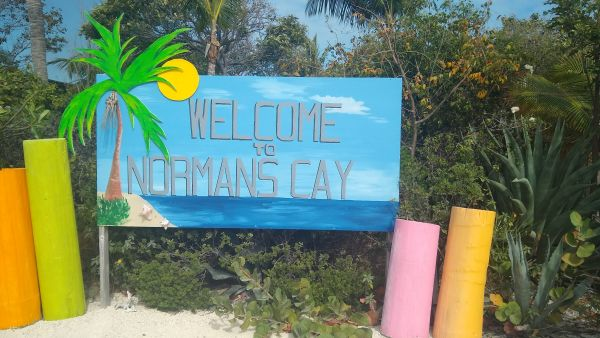
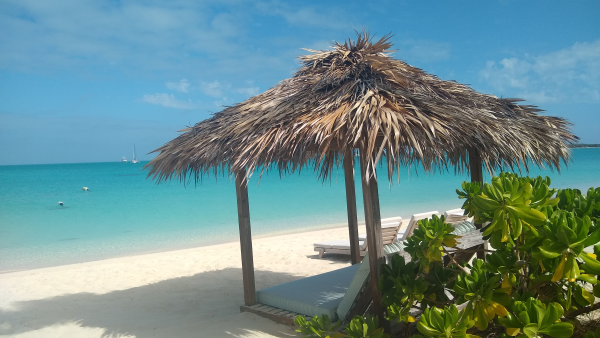
Beautiful Beach in front of Mcduffs restaurant and villas. The first day we anchored near the sunken plane so we could snorkel it. The second day we anchored right in front of this beach and from here we enjoyed a nice long walk through the island.
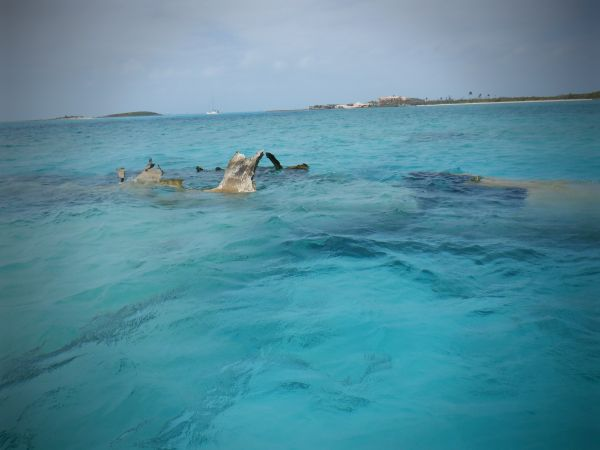
Pablo Escobar Crashed Plane
The Curtiss C-46 Commando once owned by Drug King, Pablo Escobar, lies in the beautiful turquoise waters in a sand bank so easy to snorkel.
The WWII-era plane was thought to be carrying cocaine when it landed just shy off the runway in 1980. It came to its final resting place on a sandbar between two outcrops of land on the southern end of Norman’s Cay.
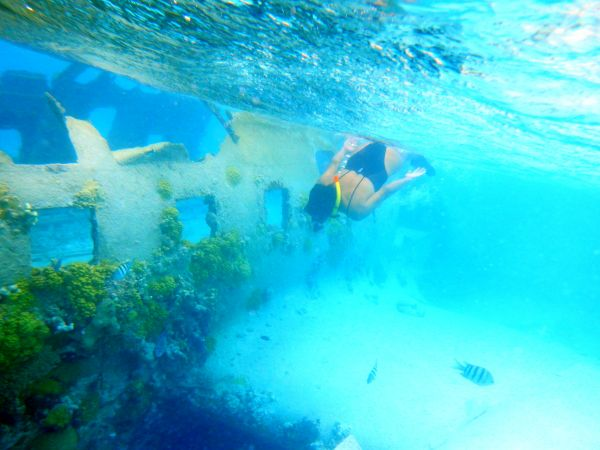
Depending on the tides, the plane usually sits at a depth of around 10 feet below the surface, making it one of the most fascinating and easily accessible snorkel.
It is so impressive! Whats also interesting is that its not really advertised much in the Bahamas as a tourist attraction. so you find yourself anchored in this beautiful place with no one around. I guess the tourists are all gone to see the Exumas swimming pigs instead!
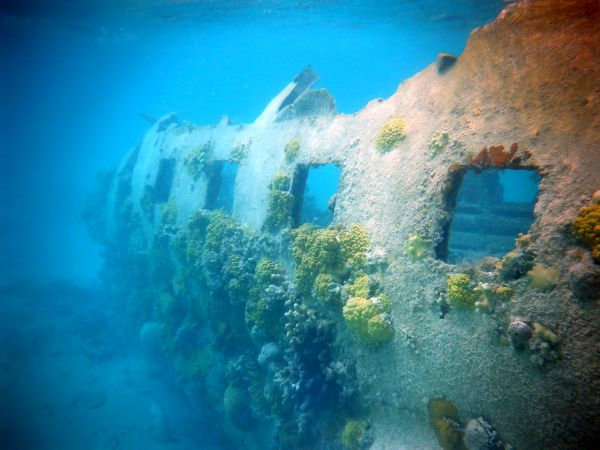
We loved exploring it. It was very cool. there were many colourful fish and marine life.
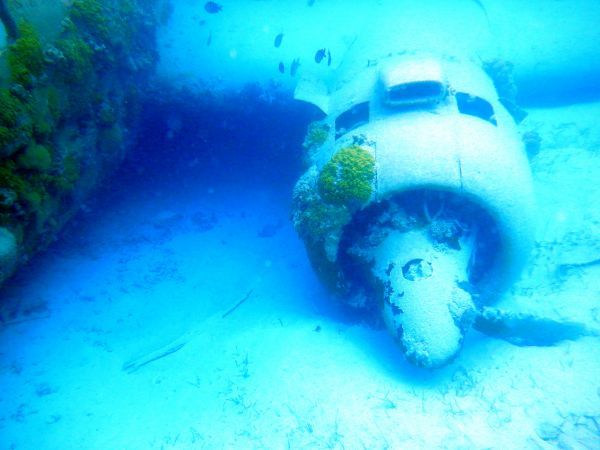
Eleuthera
We loved this island. We set off from Norman Cay expecting light winds but in our favor! well they lied. We had up to 20 kts and are now close hauled but still a fast trip. Anchored in Rock Sound. What a great spot. Well stocked market with fresh vegetables, including Kale. A short walk to the laundromat. Happy Happy
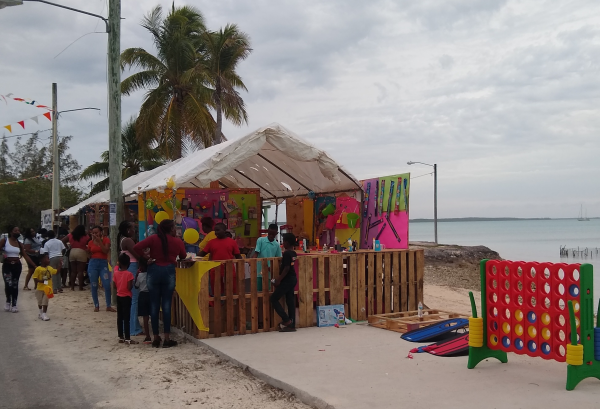
Its Good Friday and we are told by the other cruisers there is food ashore and could hear music. We beached the dinghy. We enjoyed the street food, open bar, good music and meeting other people. Good start of the Easter weekend. Next day filled our water tanks from a tap at the beach, for Free.
In the afternoon we walked to visit these very cool caves. Cathedral Caves
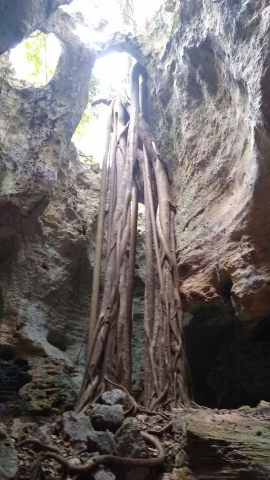
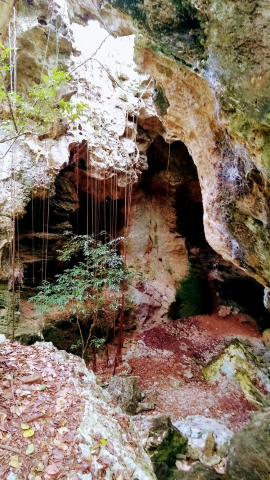
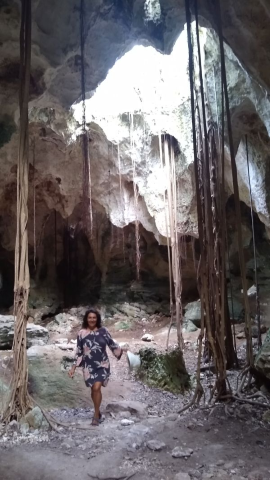
On Easter Sunday we did a short sail to Governor harbour. What a beautiful calm bay, and a picturesque little town.
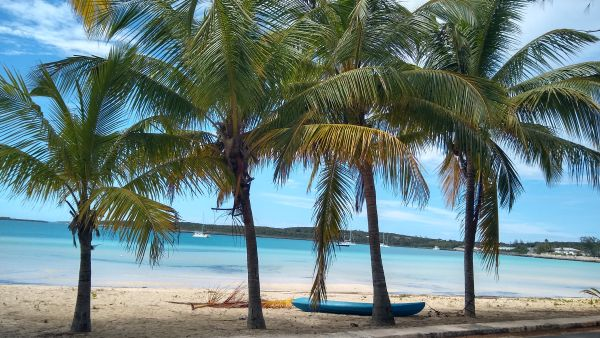
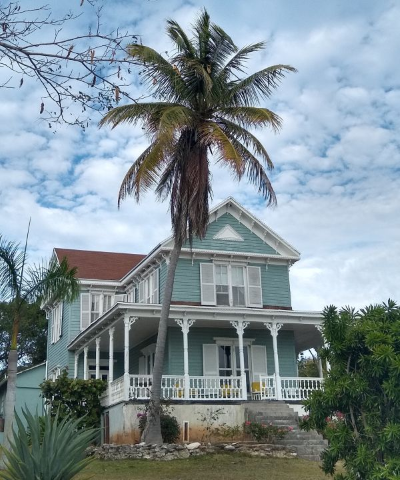
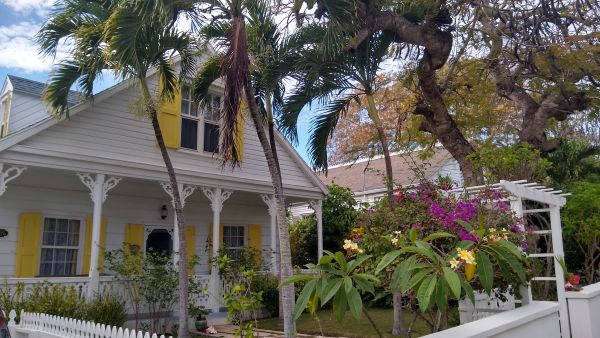
we loved our walk around here, with the beautiful gardens and colonial style homes though out
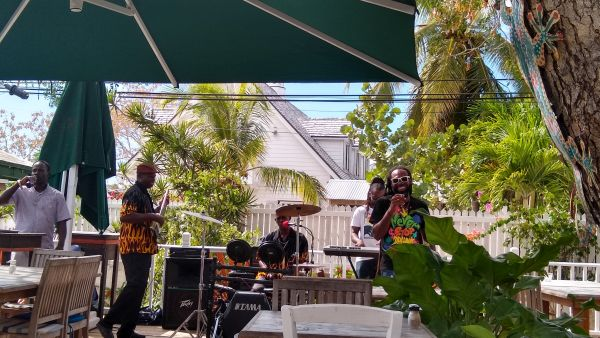
In the afternoon we adventured into a long walk to the pink sand beach. Walking through town we came across this local bar Buckeneers Club, with a live band playing really nice music, so we stopped and had a drink, and listened to the band. I even got Noel to Dance…..
It was a great weekend . Loved it here and will be back
Next anchorage, Hachet Point
Smooth sailing , winds behind and jib out. Anchored in very calm bay. As soon as we arrived I saw a few jelly fish here though.
Our friend told us to go snorkel this pond on a protected area to find seahorses. Noel and I set off on a long and hot walk to this Pond.
With some detours into visiting these caves, that had graffiti all these writings going back to the 60’s. apparently if you take the ladder or steps down, the caves are quite deep. Well, we had no flash light with us, and not feeling that adventurous here.

In all our travels we had never seen seahorses , so we were hoping to finally find at least one. We saw some very different marine life, crab and white shrimps, and we were snorkeling for a long time and about to abandon our search. At last we spotted One
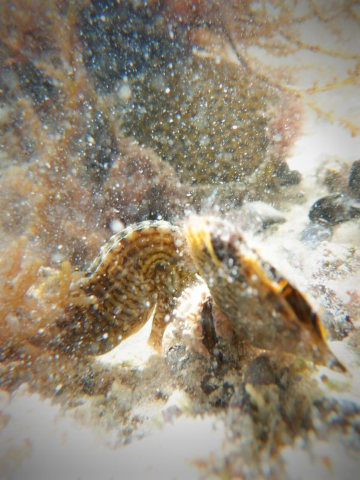
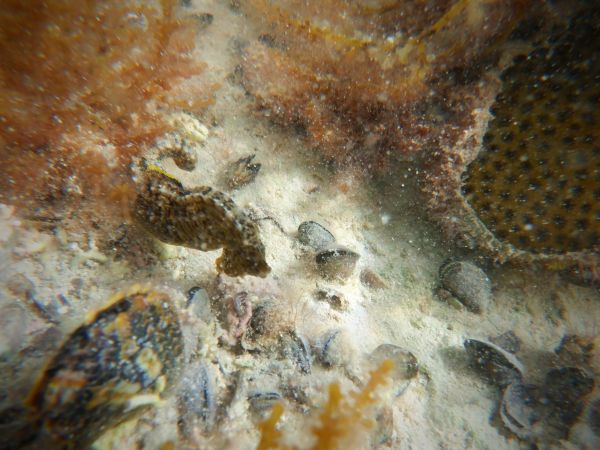
Very cute, not very big, and this one really camouflages in there. So it was very exciting! sure worth the long and hot walk
Next anchorage, Glass Window, Eleuthera
Beautiful sail here, about 9 miles, gliding along beautiful cliffs.
One of nature’s true wonders, The Glass Window Bridge will certainly leave you breathless as you drink in the magnificent panoramic view. It is one of the few places on earth where you can compare the rich blue waters of the Atlantic Ocean on one side of the road and the calm Bight of Eleuthera (often incorrectly called the Caribbean Sea) on the other side, separated by a strip of rock just 30 feet wide.
On the eastern, Atlantic side the highway is flanked by ridges leading up to cliff tops 80 feet above the ocean. The approach is thus blind on this side, until you actually reach the bridge where the deep blue Atlantic heaves into view.
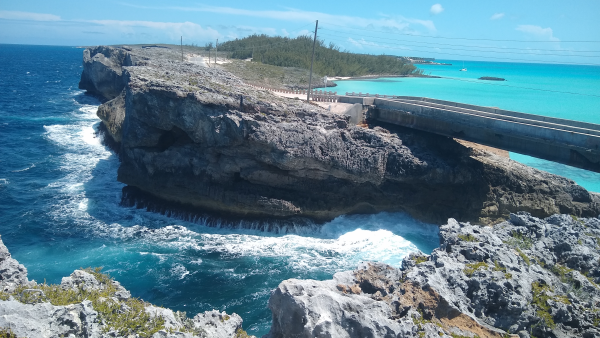
the contrast in the blues and a very calm day
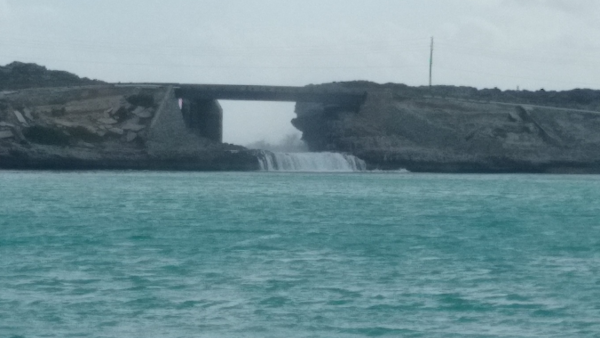
waves crashing and water fall into the other side, high tide and not a calm day
Queen’s Baths or Hot Tubs are a collection of natural pools that border the rugged Atlantic Ocean side of the island, a short walk of 0.6 miles south of The Glass Window Bridge. They were formed over the years through erosion of the rocks by the dramatic crashing waves of the Atlantic Ocean.

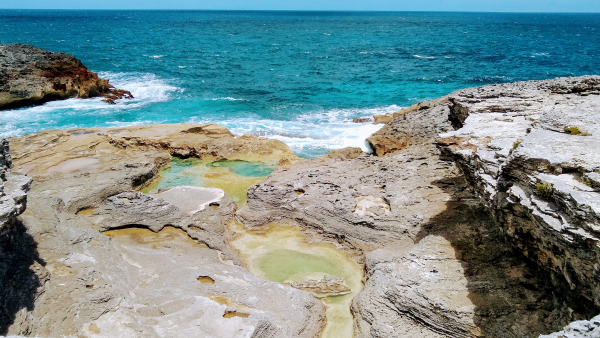
queen baths in a calm day
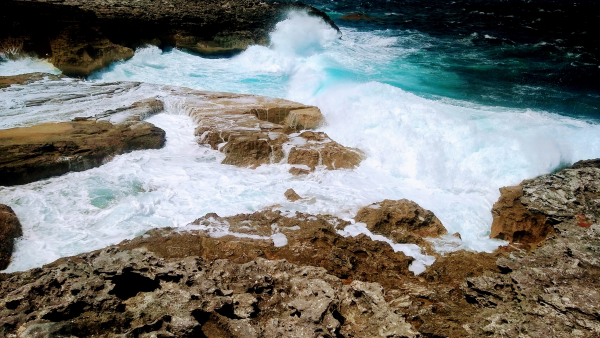
queen baths on a not so calm day.
We went twice to see the difference. It was gorgeous both times. First day at low tide, calm and serene, you can soak in the pools and the next day was totally dramatic with the waves crashing.
 Posted in
  Tags:
Tags: 
How to Use a X-Box Controller with OpenCPN
We use OpenCPN as our primary navigation tool, running it on a Raspberry Pi 3B using OpenPlotter as the basic platform. Although OpenPlotter has a lot of additional features, we don’t actually use them, just OpenCPN as our chartpolotter. We have an Eyoyo LCD screen at our helm station.
It all works well, except that operating OpenCPN with a large wireless keyboard or even a mini keyboard really does not work great. The large one is too cumbersome, the small one too fiddly.
So we have now switched to using a wired x-box 360 controller. Well, actually, we are using a Logitech F310 which we bought from the Source in Canada for C$25. It plugs into the Raspberry Pi with an ordinary USB cable. We have an extension USB cable that goes to a panel-mounted USB 3.0 socket next to the Eyoyo screen.
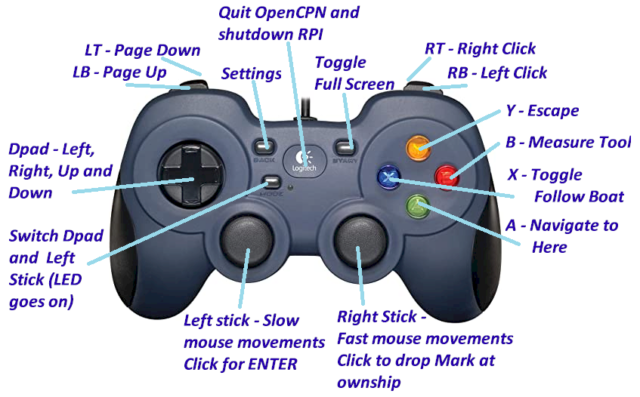
That works great. But it does require some configuration to get it working. Since I just spent an entire week getting it all working correctly, I thought I would save you some time by outlining all the steps. To do this you are going to have to use some command line Linux commands by means of the Terminal, which you can open by going on the desktop to Main Menu -> Accessories -> Terminal. Don’t forget to put sudo at the beginning of each command so as to grant the comman admin privileges.
You will also need to be connected to the internet.
This assumes that you are using Raspbian 10 (Buster). It will probably work on later versions, but this is what we have, and what works for us. Actually, we just upgraded to a Raspberry Pi 4B with Bullseye, and it works even better on that. Will this work on Windows? Yes, but you will have to figure out how to install xboxdrv and get it running on initial boot. Also, note that I am no expert on Linux. This is what I managed to put together after a whole week of working on it. I hope it works for you too, but if it doesn’t you are on your own in figuring it out. Google is your friend. When you do look stuff up, always make sure that what you read applies to your current operating system – eg Buster, not Stretch etc.
NOTE: when you create these files, and especially the shell scripts (that end with .sh) you need to do this either within the raspberry pi, or on another linux system or, if you do it in windows, make sure your text editor (eg. notepad++ ) uses Linux line endings (LF) and not windows (CR LF) or Mac (CR) line endings, otherwise these will likely not work. There is a setting for this in the Edit tab on Notepad++.
Before you start this, make sure you backup your current working SD card so that you can recover to it if you screw something up. (google “how to backup raspberry pi sd card”)
So, start by exiting OpenCPN and returning to the Desktop environment.
1. Install xboxdrv
This is the utility that will convert your controller to a keyboard and mouse so that you can manipulate OpenCPN. You can read about it here. To do that type into the Terminal the following:
sudo apt-get update
sudo apt-get install xboxdrvsudo rmmod xpad
sudo modprobe uinput
sudo modprobe joydev
2. Write the Configuration Files
These tell xboxpro how to map the keys on your controller to keyboard and mouse events so that it will do what you want it to do.
Navigate to the location for the files:
cd /usr/share/doc/xboxdrv
ls
This will give you a list of files including a directory called examples which contains some example configuration files that you can play with. But you don’t need them.
Create a new configuration file by typing in:
sudo nano logitech.xboxdrv
This will bring up the ‘nano’ text editor.
Into this type (or copy and paste) the following (lines that begin with # are comments that don’t have any programming action. If a line has text but does not start with # Linux will try to execute the line as code, so make sure any line with comments in it begins with the hash #.):
# Mouse Emulation
# ===============
#
# This configuration file emulates a mouse. Both sticks control the mouse.
# The left one allows for slow fine controll, the right for more rapid
# movements.
# The controller buttons are configured as follows:
# LB does page up (i.e zooms into the chqrt) and LT does #page down (zoom out).
# A (Green) = Navigate to here
# B (Red) = Start Measure tool ( = M key). If you want to drop a MOB marker instead, edit the appropriate line below, but you may keep dropping it by accident.
# X (Blue) = Auto follow boat (= F2) toggle on/off
# Y (Yellow) = Escape# Left Stick press down = Enter
# Right Stick press down = Ctrl-SPACE = Drop MOB Mark at cursor (to
#enable this you will need to manually edit the OpenCPN config file, the location of
#which can be found by clicking the Help menu tab, and then the About item.
#NOTE: you must edit this whle OpenCPN is CLOSED otherwise your changes
#will be overwritten. Change the setting for SpaceDropMark to -1 (0 will
#deactivate it)# RB = Left mouse click
# RT = right mouse click (usually brings up a menu)# Dpad = left, right, up and down keys (use these to
# pan the display or move up and down in menus# BACK = open settings/options dialogue
# START = F11 toggle full screen# Mode = this will light up the LED and swtich the
# functions of the Dpad and the left stick[xboxdrv]
#ui-clear=true
silent = true
detach-kernel-driver = true
mouse = true
trigger-as-button = true[axismap]
Y2=Y1
X2=X1
X1=X2
Y1=Y2[ui-axismap]
X2^dead:1000 = REL_X:750:-1
Y2^dead:1000 = REL_Y:750:-1[ui-buttonmap]
x = KEY_F2
#b = KEY_LEFTCTRL+KEY_SPACE
#The line above will drop a MOB marker at the current GPS positionb = KEY_M
#The line above will turn on the Measure Tool. Use the Y button to ESC from that.a = macro:navhere.macro
y = KEY_ESCrb = BTN_LEFT
rt = BTN_RIGHTlt = KEY_PAGEDOWN
lb = KEY_PAGEUPtl = KEY_ENTER
tr = KEY_LEFTCTRL+KEY_SPACE
#This will drop a MOB mark when you press down on the right joystick[ui-buttonmap]
dl = KEY_LEFT
dr = KEY_RIGHT
du = KEY_UP
dd = KEY_DOWNstart = KEY_F11
back = KEY_LEFTCTRL+KEY_COMMA
guide = macro:shutdown.macro[ui-axismap]
X1^resp:-30768:-15284:-8899:-5469:-872:-300:-200:-100:-50:0:50:100:200:300:872:5469:8898:15283:30767
Y1^resp:-30768:-15284:-8899:-5469:-872:-300:-200:-100:-50:0:50:100:200:300:872:5469:8898:15283:30767
# This defines the speed of the right joystickX2^resp:-3768:-200:-100:0:100:200:3767
Y2^resp:-3768:-200:-100:0:100:200:3767
# This defines the speed of the left joystick (much slower)# EOF #
Now we need some macro files:
The first is to shutdown the whole system when you press the Guide Button
sudo nano shutdown.macro
and then insert this text (the ‘0’s are zeros):
send KEY_LEFTCTRL 1
send KEY_Q 1
wait 1000
send KEY_LEFTCTRL 0
send KEY_Q 0
wait 50
send KEY_LEFTMETA 1
wait 50
send KEY_LEFTMETA 0
send KEY_UP 1
wait 50
send KEY_UP 0
send KEY_ENTER 1
wait 50
send KEY_ENTER 0
send KEY_ENTER 1
Save and exit using ctrl-X
With this we also need a shell script to run it:
sudo nano shutdown.sh
and the contents (type this into the text editor):
sudo shutdown now
Save and exit using ctrl-X and then make executable with
sudo chmod +x shutdown.sh
Next is the macro to set up the temporary ‘Navigate Here’ route:
sudo nano navhere.macro
and the contents:
send KEY_LEFTCTRL 1
send KEY_M 1send KEY_M 0
send KEY_LEFTCTRL 0send BTN_RIGHT 1
wait 50
send KEY_DOWN 1
send KEY_DOWN 0
send KEY_DOWN 1
send KEY_DOWN 0
wait 50
send KEY_ENTER 1
wait 50
send KEY_ENTER 0
Save and exit using ctrl-X
Now create a new startup file by typing in:
sudo nano logitech.sh
Into this you can insert the following text (only two lines):
#!/bin/bash
sudo xboxdrv -D -c /usr/share/doc/xboxdrv/logitech.xboxdrv –silent & sleep 1
When you have done that, save it by typing Ctrl-X and then following the prompts. This should bring you back to your command line prompt.
Now you need to make this file executable by typing:
sudo chmod +x logitech.sh
Test all this as follows:
plug in your controller and make sure the switch on the bottom is set to ‘X’ for x-input.
type in:
sudo logitech.sh
This will run the script that will start up xboxdrv that will (hopefully) recognise your controller and then use the configuration file to map the keys.
Now we need to set it up so it will run at boot. Assuming you are using a LXDE desktop (eg OpenPlotter) first we edit the autostart file:
sudo nano /etc/xdg/lxsession/LXDE-pi/autostart
Type in the startup command at the end of the file before the exit 0 line (if there is one):
@bash /usr/share/doc/xboxdrv/logitech.sh &
Save it with ctrl-x.
Now reboot the system
sudo reboot now
and the game controller should now be recognised at boot up, even if you plug it in later.
You should now be able to use the joysticks as a mouse. Using your mouse you can now launch OpenCPN and play around with it, using your controller. Once OpenCPN is launched you will probably have to left-click (RB button) so the controller knows to work inside OpenCPN.
When you have done that, here is a tweak for OpenCPN that will make it easier to use:
Go to the OpenCPN Settings dialogue (press the ‘start’ button – just to the right of the dpad – on the controller). Then go to User Interface and about halfway down you will find an option to Enable Touchscreen interface. Turn this ON as it will make it easier for you to hit a target (eg a waypoint) with your cursor. Then when you are near a target you can left-click it to select it. It will then stay selected (highlighted in yellow) until you deselect it. In the meantime you can drag it somewhere by clicking on it again and holding in the RB (left click) button and dragging the item with either of the joysticks.
If you need to actually type in something (eg to name a waypoint) you can, obviously, plug in a real keyboard, or you can use a virtual one. To do that press the ‘start’ button on the controller which will take it out of fullscreen mode (assuming you were in that). Then you can find the keyboard either on the top toolbar, or else go to the Raspberry start icon -> Accessories -> Keyboard.
Now go and make another (dated) backup of your SD card. If you keep a series of dated backups you can always revert back to the last one that worked properly.
That’s it, hope it works for you: 🙂
Mid-Ocean Live Update
Current Position: 35 40.88 N 075 15.79 W Click to view map.
Distance sailed since last post: 161 nautical miles. View the map of our voyage track here
(Sent by InReach satellite connection)
Mid-Ocean Live Update
Current Position: 33 15.59 N 076 40.92 W Click to view map.
Distance sailed since last post: 159 nautical miles. View the map of our voyage track here
(Sent by InReach satellite connection)
Mid-Ocean Live Update
Current Position: 30 42.24 N 077 29.81 W Click to view map.
Distance sailed since last post: 148 nautical miles. View the map of our voyage track here
(Sent by InReach satellite connection)
Mid-Ocean Live Update
Current Position: 28 17.2 N 076 56.77 W Click to view map.
Distance sailed since last post: 293 nautical miles. View the map of our voyage track here
(Sent by InReach satellite connection)
Arriving in the Bahamas
Current Position: 23 31.52 N 075 46.08 W Click to view map.
Distance sailed since last post: 346 nautical miles. View the map of our voyage track here
We arrived in Inagua, the most Southern island of the Bahamas, and a Port of Entry, from Luperon. It was a good trip here, with little wind and then no wind. Had to motor the last 5 hours of our 16 hour trip. Dodged a few ships and caught a mahi mahi….oh what beauty, such bright colors till it desappeared again off the hook and gone. Too bad!
Inagua, the outer islands
Anchored near the Harbour, check in was quick and easy. Some 20 dollar fee and 300.00 US for cruising permit for 3months.
As we are aproaching we notice the flat lands. We have left the beautiful green mountains of the Caribbean, PR, DR, in exchange for the most beautiful seas with the most brilliant shades of blues and greens.
But first, before beaches and after the checking in, we walked through Mathew town, population of about 400 very friendly people.
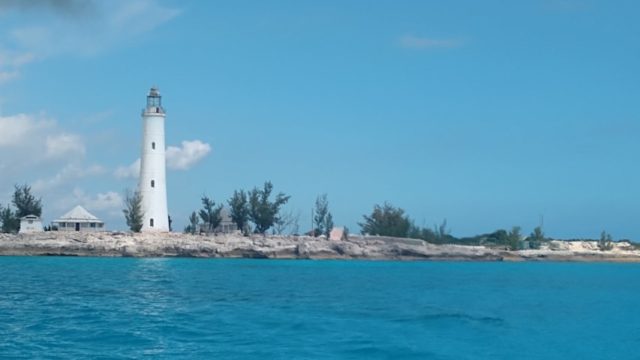
The very picturesque Historical Lighthouse.
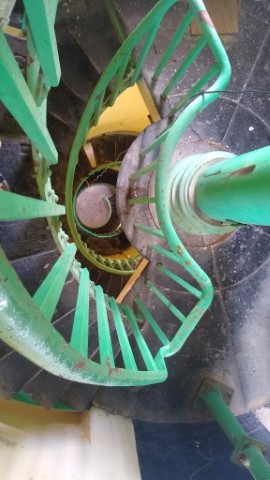
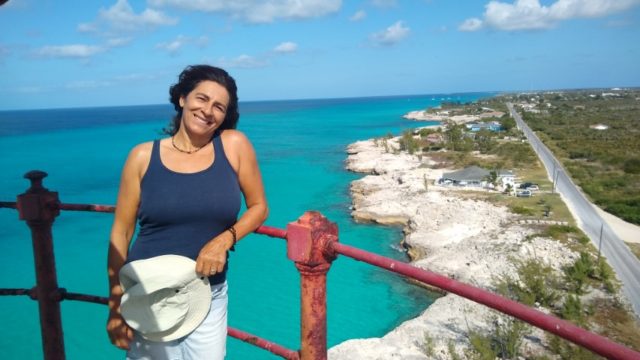
Great Inagua reportedly has the reputation of experiencing the first act of piracy in The Islands of The Bahamas in 1713
Many ships were wrecked in the reefs along the island’s shoreline, and in 1870 The English Crown selected the island as a location for a lighthouse to be built in order to prevent such incidents.
The classic all-white structure towers 113 feet and offers visibility 27.35 kilometers. A climb up the spiral stair case lighthouse offers amazing panoramic views of nearby Matthew Town and all around.
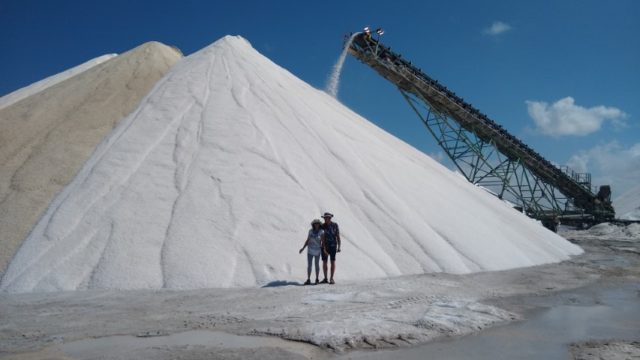
The third largest and the most southerly island in the Bahamas, Inagua is also the hottest and the driest and very flat. Because of its low rainfall and tradewinds, Inagua has natural salt ponds. The Morton Salt Company is located here and produces nearly a million pounds of salt annually. Salt is still the main industry on Inagua.
Inagua is also a birdwatcher’s paradise with the world’s largest breeding colony of West Indian flamingos (over 60,000) that makes the ratio of flamingos to people on Great Inagua approximately 60:1. The flamingoes live in a protected 287 square mile reserve called the Inagua National Park.
Unfortunatelly, there were no guides available to take us to the Park for the flamingos. It was weekend and the only 2 people that do the tours were away from the island. Population of about 400 people.
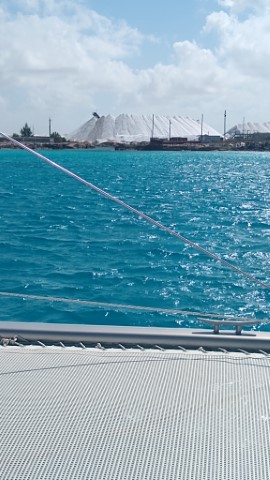
The moved up just a few miles and anchored in Man of war bay to visit the Mortons Salt company.
From afar, looked like snow at top of the mountains. But its all salt salt. Its a huge production site. It all get loaded and shipped from here to be processed in the States
It was very quiet here, I guess because it was the weekend, but as we were getting near the salt mountain, a truck came by. It was a security telling us it was private property and we couldnt go any further, but we could take some pictures and leave. We told them we were disappointed we couldnt get a tourist guide, and he made some calls for us, but still no one available. Nice and friendly, we thanked him for trying.
Acklins Bight
The charm of Acklins
Breathtaking deserted beaches. Quiet and peaceful
Famous for its bonefish flats, with more than 1,000 miles of shallow water. We anchored in Camel point and took a walk ashore.
We moved up trhe islands the next day into this little anchorage in Acklins bight. I was really nervous being in such shallow waters throughout. We anchored in Camel point and took a walk ashore.
Ruins of diesel tanks ashore on our walk to town. A small settlement called Spring Point.
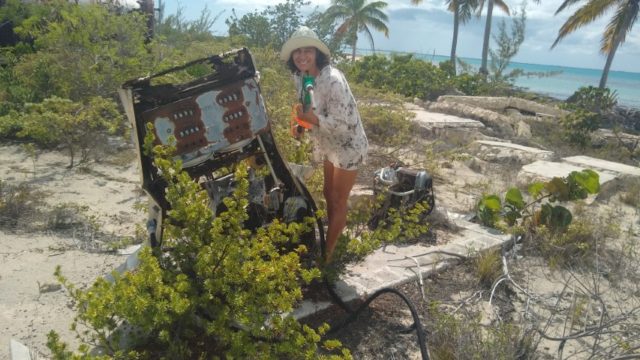
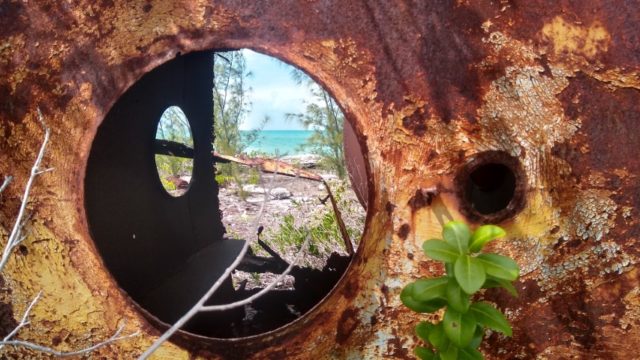
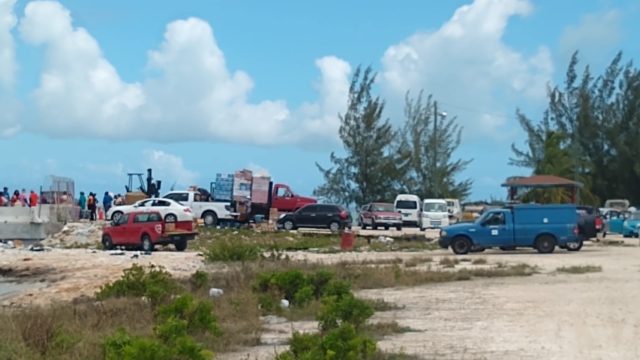
We were surprised to see so much movement ahead, on our walk. Turned out it was the mail boat on the docks with everyone coming to load up their vehicles. We thought it was our lucky day and expected to find some nice fresh produce to buy in town. We were still about a Km or 2 away from the settlement. We kept walking, and at every 100 metres or so someone would be offering to give us a ride. Such friendly people. In town there was only a little grocery store inside the gas station. No fresh produce. We asked how many people lived here, and the local named a few family names.
French Wells
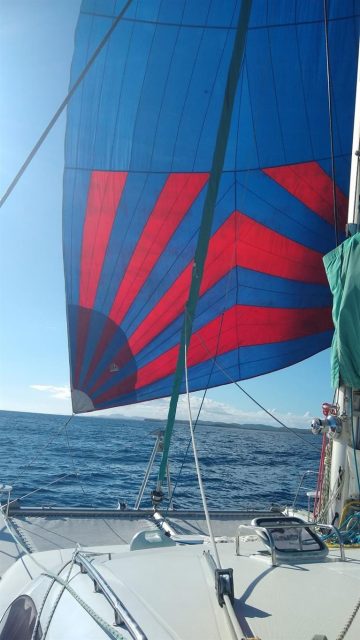
We departed our anchorage with light winds, from the South. Feeling a bit lazy but we did put our spinnaker up and we were gliding along nicelly in a fresh breeze.
Our next anchorage was in French Wells Cut, where the wind fighting against the current sure gave us some entertainment. Very strange to see our anchor behind us or beside us instead of in front. We were holding well though and it was a very calm night, but you could hear the chain changing direction as the tide turned.
There was only one other boat here. The next morning as we headed out to explore by dinghy we passed by to say hello to the new neighbour and they told us there were Flamingos a good dinghy ride away. We pretty excited about that, since we had missed them in Inagua.
A long ride, yes it was, and some very shallow water where we had to get out of the dinghy and walk it along untill it got deep enough to start the engine again. All worth it.
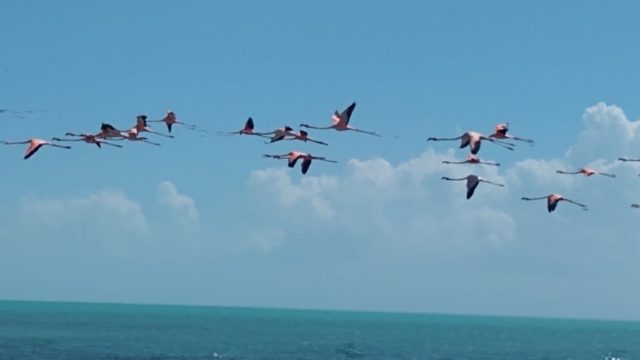
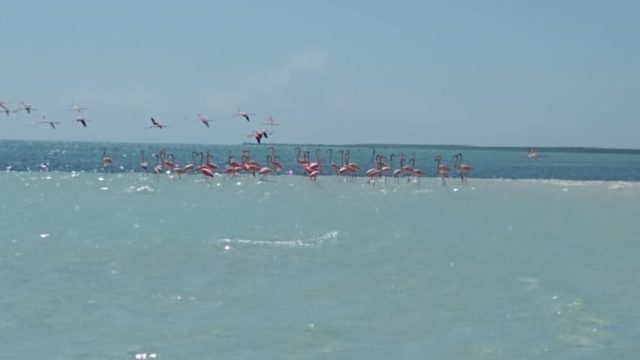

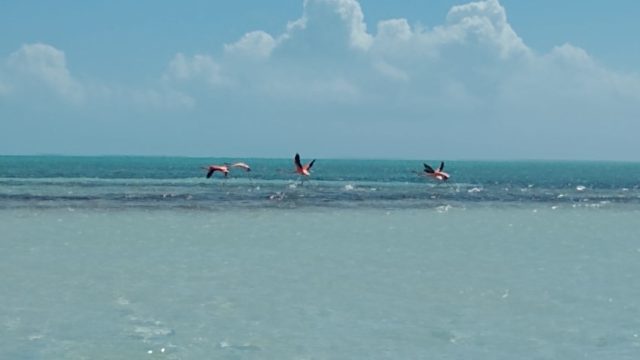
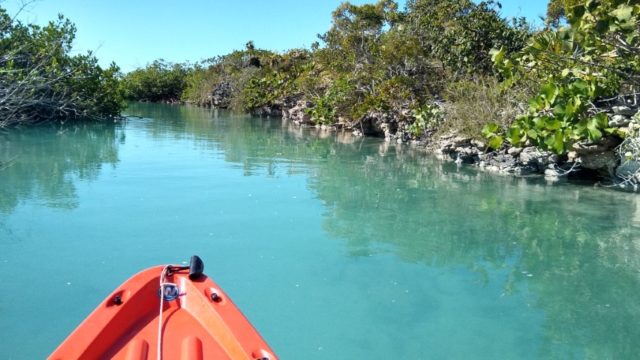
The following morning we had a beautiful paddle through the mangroves. It was so peaceful with only the sound of the water splashing from our paddles and birds, many birds. Cristal clear waters, saw a couple of little turtles and a lemon shark.
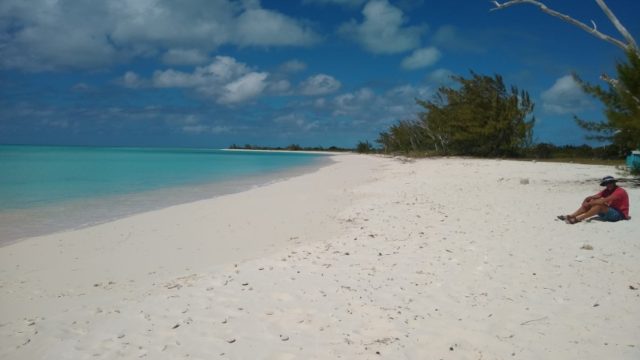
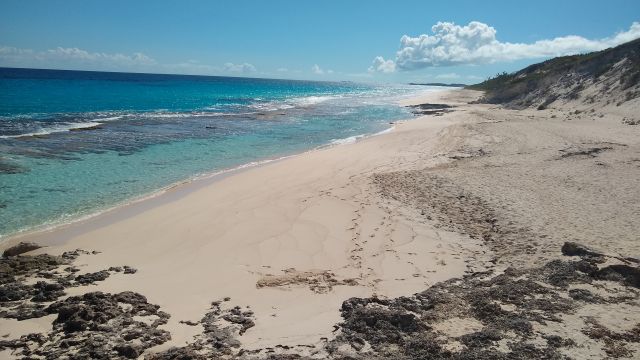
It was also at this anchorage that we experienced our very first Bahamian, pristine, gorgeous, deserted beach experience. Paradise! Now…its only the beginning!
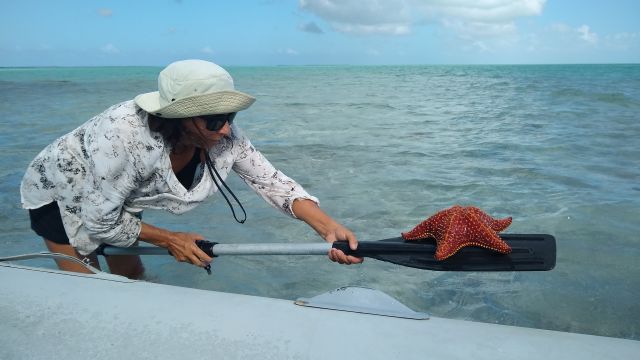
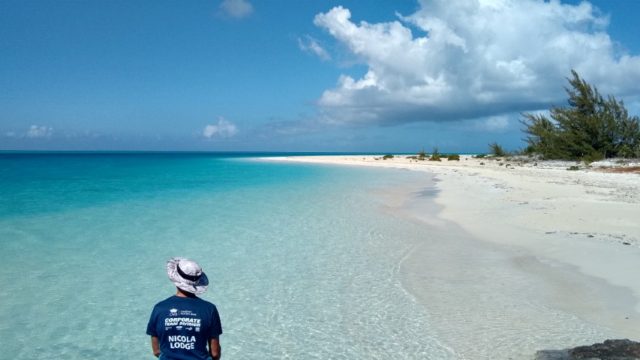
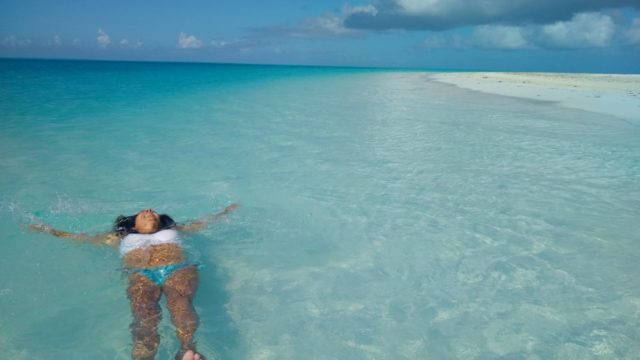
Land rail point Our next stop
We anchored here, in this beautiful anchorage with nice beach and turquoise water.
We met a couple from Edmonton, Allisen and Chris on SV Purrfect and imediately were invited aboard for Lobster tacos. They love to dive and spearfish and we were delighted to join them along with some other friends Marta and Eric from SV Deja Vu. Good times.
Good snorkeling here, but we didn’t last long as the current was very strong at the time. We also could not land the dinghy safely, so we did not visit the Lighthouse. Pictures only. Next time!

Long island
We left Landrail in Acklins , to Long Island, about a 40 mile sail headed to Clarance town. We anchored in front of a beautiful beach, close to the island’s capital, Clarence Town but it was very bouncy. The next morning we weighed anchor and left for the great big and protected harbour Thompson Bay, about 48nm around the island to the other side.
It was a very lively sail, 20 kts of wind and quite choppy waves. As we rounded the Cape Santa Maria, we gybed and are now going more downwind and smoother seas. Such beautiful scenery along the coast, beautiful beaches and Resort in gorgeous Calabash bay.
We anchored just a few miles south of here in Thompson Bay with just .3 metres of water beneath us. Yes it is so shallow everywhere. Good holding, lots of other cruisers here and we heard there is a good supermarket.
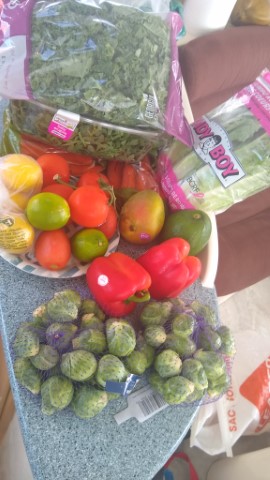
YES…fresh produce! Last time we stocked up was 2 weeks prior in DR. Nothing available in the other islands we visited. So by now, we’re really running low on fruit and vegetables. We were warned ahead of time of how the Bahamas are very expensive to provision, but its sure nice having available, even being expensive , one has to eat! Plus, we only really need the fresh stuff, we stocked up in DR with everything else.
The store here in Thomson Bay was well stocked, I was so happy. That’s a very good day in Paradise.
We met some cruisers at the beach for sundowners, where we arranged with another couple to rent a car the next day visit the island.
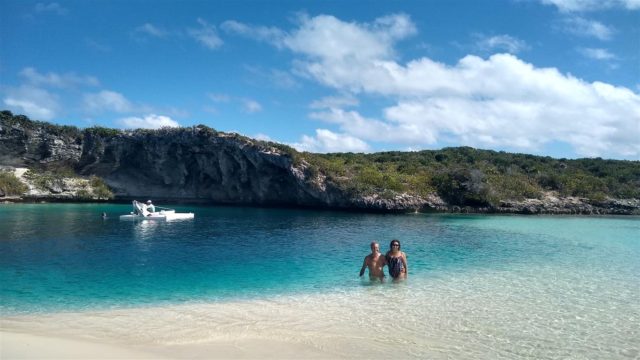
With brilliant coral reefs, pristine beaches and world-class bonefishing, Long island is also known as the most scenic island in the Bahamas.This tranquil island also offers a few inland surprises, including Dean’s Blue Hole, the second deepest blue hole in the world.
Dean’s Blue Hole dips some 663 feet (203 meters) into the ocean floor right offshore. It is said to be the second deepest blue hole in the world and the second-largest underwater chamber. Experts who have dived the site report that it is enclosed on three sides by a natural rock amphitheater and on the fourth side by a turquoise lagoon and powder-white beach. There is never any swell or waves inside the hole, and visibility is usually between 50-100 feet (15 – 30m). At the surface, the Blue Hole is 80 x 120 feet (25 x 35m) but opens out after 60 feet (20m) into a cavern with a diameter of at least 330 feet (100m). It is also the site of the International Free Diving Competition every year.
We enjoyed the car drive, the scenery, the highlights and the company of JoDana and DJ from Brunswick USA. Another great day in Paradise.
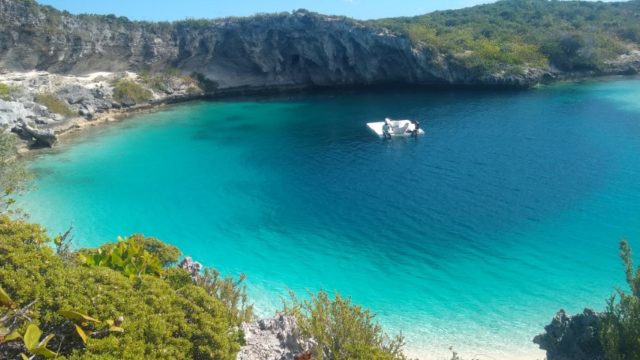
We snorkled around there, great swim and walk on the beach. Its such beautiful
Columbus originally named the island’s northern tip Cape Santa Maria after the largest of his three ships. The beach here is gorgeous, full of private homes and resort villas, and a restaurant, bar, and gift shop that are open to the public. North of the Cape Santa Maria Resort are the Columbus Monument, comemorating Columbus’s landing on Long Island, and Columbus Cove, where he made landfall.

The cliffs at Cape Santa Maria
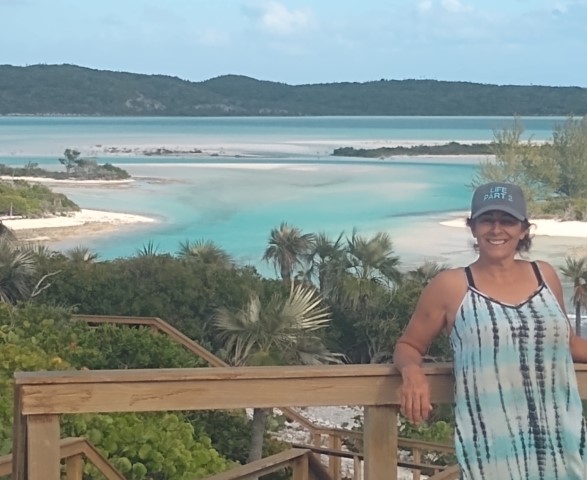

Columbus monument
LITTLE EXUMA
A small bridge connects Great and Little Exuma. Smaller and quieter than its counterpart, Little Exuma is home to the Tropic of Cancer beach. Just gorgeous as we sailed by but we didn’t stop this time. We were headed to Georgetown to meet with our friend, Rod.
GREAT EXUMA
The largest island in the chain, Great Exuma is where you’ll find most large hotels & resorts, as well as the Exuma International Airport and the capital city of George Town.
Crab Cay and Walker Ruins
Crab Cay, is part of the great Exumas. It faces the southern part of Stocking Island and Elizabeth Island,with the harbour in between. At the southern end of Crab Cay there are Red Shanks Cays. We were expecting some strong winds and this is a very protected and beautiful area with good swiming and walks ashore. We were happily hiding out here and also hanging out with our friend Rod and his friends onboard SV Oh!
So in one easy trip ashore, beaching the dinghy near by, we toured the ruins- old and recent.
Big bucks ECO development on Crab Cay. Several corporations involved and to be built to the highest standards:
A marina for yachts to 300 ft and a Harbor Village with Resort and Spa was in process, and that’s as far as it went. The marina basin dredged and pilings stacked on shore ready to use. All came to stop.


It was very sad to see such beautiful property all going into ruins too. It is such a good spot with amazing turquoise waters.
Sir William Walker Ruins
The developers of Crab Cay planned to destroy the Walker Ruins but the Bahamian government demanded that the ruins be preserved, and access allowed to anyone.
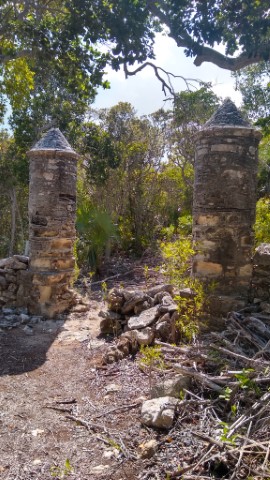
Walker was a Loyalist who came here in the late 1700s and built a stone house and botanical garden atop Crab Cay. The house was impressive, considering the effort involved in building a stone structure on an island off an island in the 1700s! The site contained high stone walls, peaked entrance pillars surrounding a botanical garden.

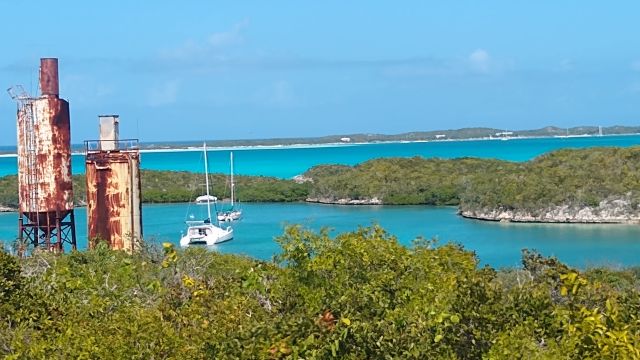
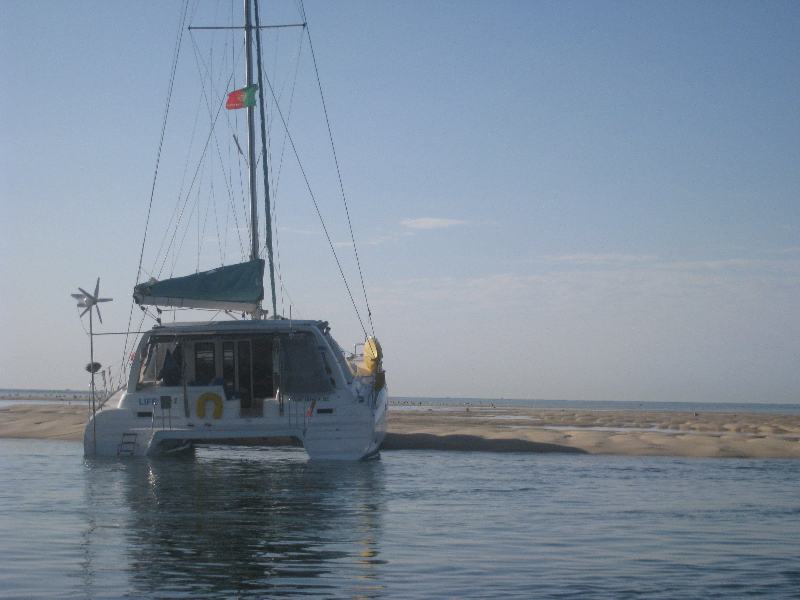
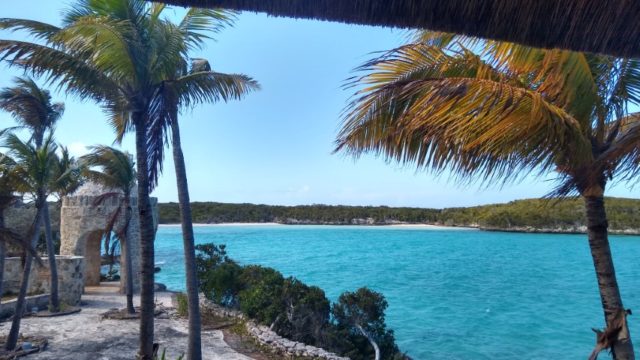
View from the ruins. Overlooking crab cay anchorage. We also enjoyed a couple of days at anchorage here where we met Stephanie and Perry right on the catamaran we can see below. A Leopard 42′ just like ours.
We enjoyed the walk through the ruins the old and the new.
George Town
Georgetown Bahamas (the capital as well as the largest city in the Exuma islands) is right on the Tropic of Cancer. This means that the sun smiles down on Georgetown almost all year round. One of the largest natural harbours in the world, Elizabeth Harbour is picture perfect with its translucent waters that have many shades of blue and green. A favourite haven for yachtsmen from November to May. However, you don’t need to be a yachtsman or a sailing fanatic to enjoy this city. Aside from fishing and bonefishing, the waters of Georgetown are also perfect for snorkeling and scuba diving escapades.
The Exumas are renowned for their sapphire-blue waters. Stunning, brilliant colours of blues , one can never get tired of this. This chain of 365 islands is home to secluded footprint-free beaches, deserted cays, and ultra-exclusive resorts. Its no wonder many islands are privatelly owned by some of the world’s rich and famous.
STOCKING ISLAND
Located across the harbour from George Town, Stocking Island offers a handful of secluded resorts, many more secluded beaches and the famous Chat ‘n’ Chill. Turists come across or rented boat, or water taxi from George Town.

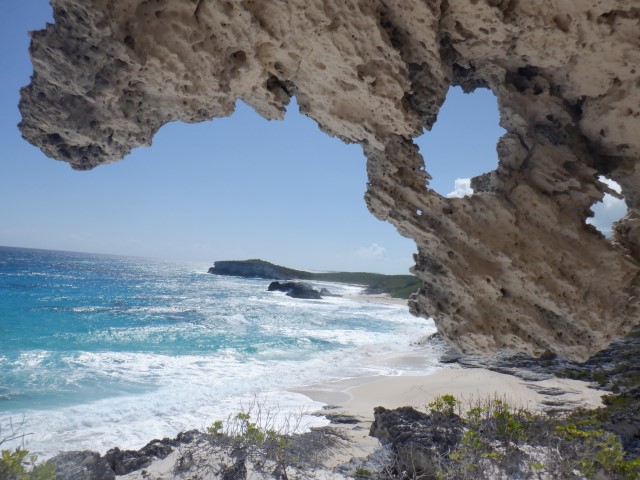
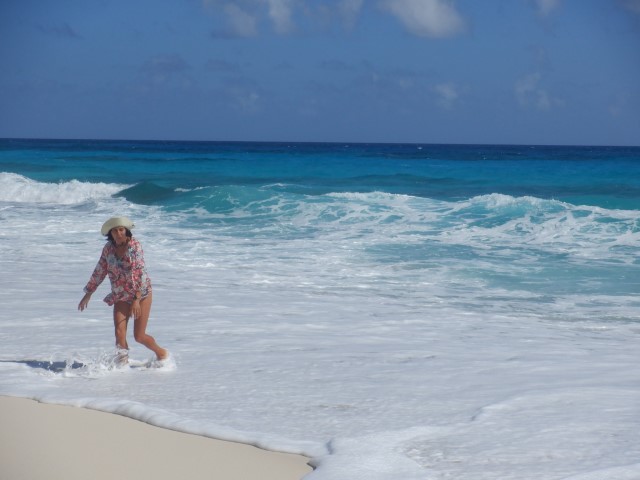
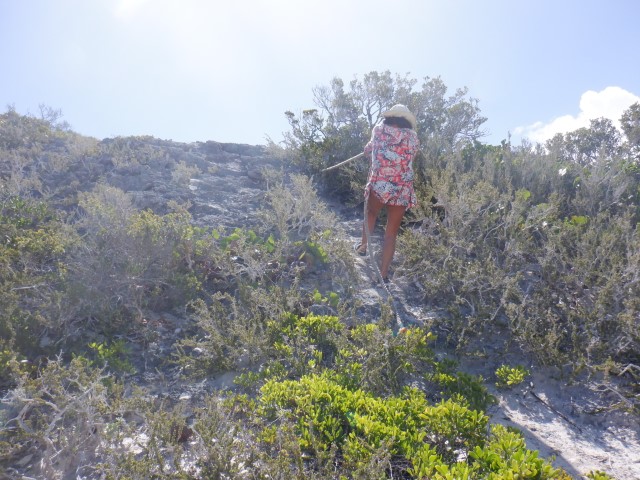

These are fossilized and petrified roots of ancient plants that were growing here.
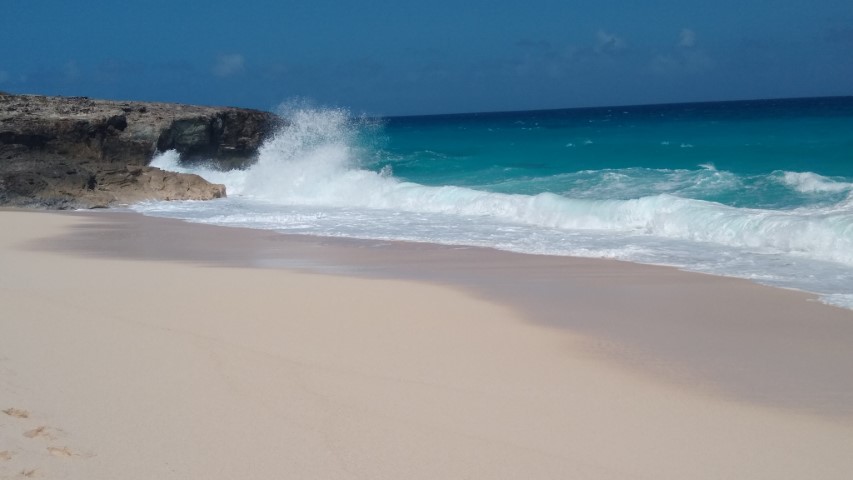
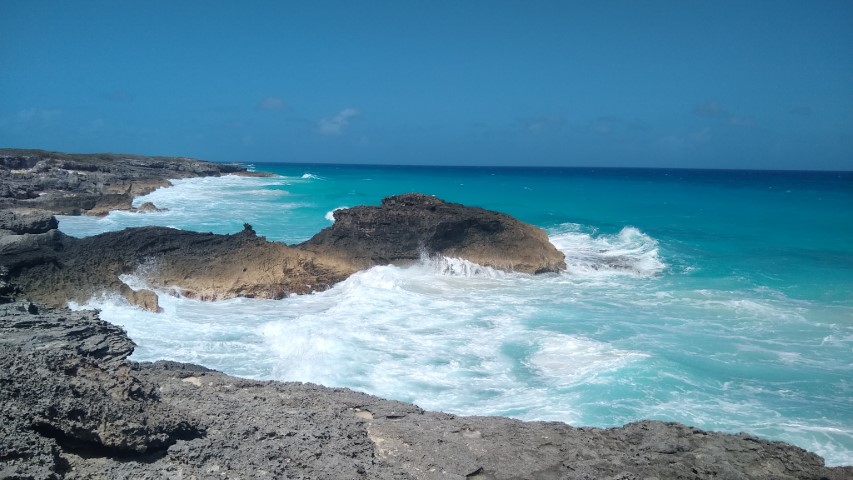


Enjoyng a nice break after our walk with friend Rod. Flip flop beach
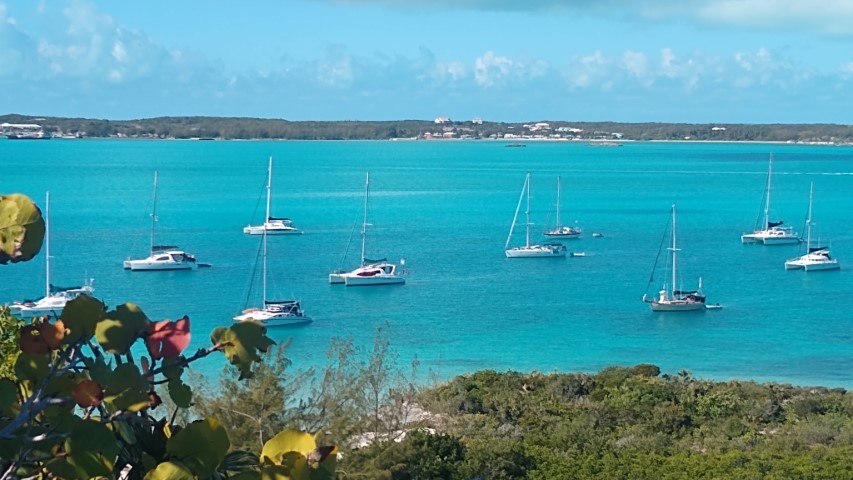
There’s Life Part 2 with the red kayak. Overlooking Elisabeth Harbour
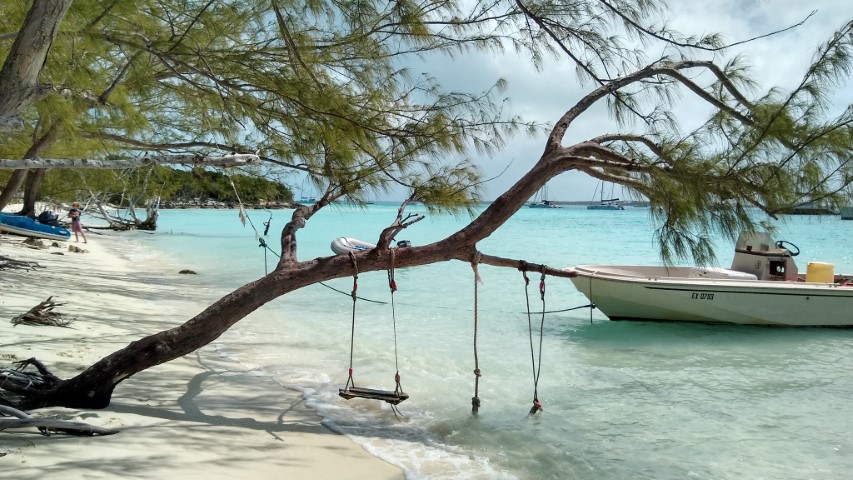
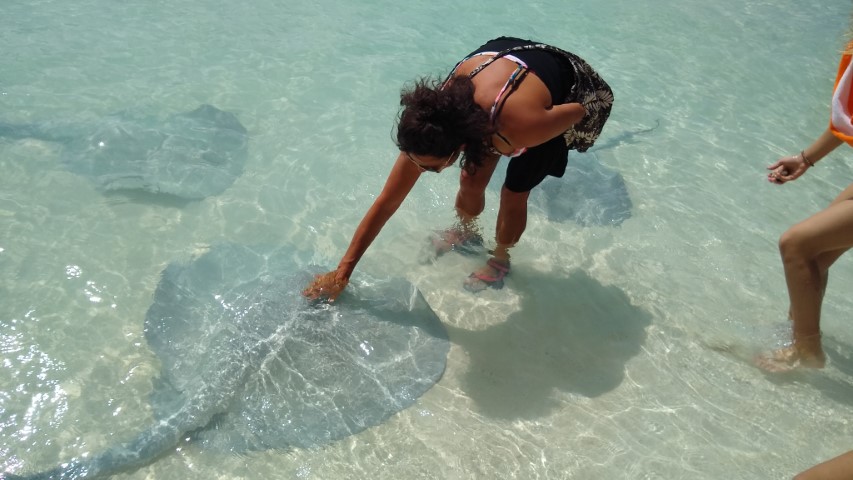
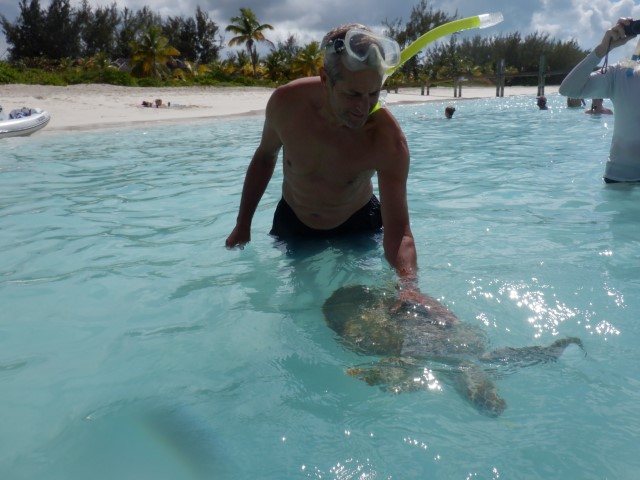
Proof that even fish, in this case stingrays, and reptiles (turtles) can be trained and tamed. They are here for the food, of course. Beach at Chat ‘n Chill. And playing with turtles at Hoopers Bay.
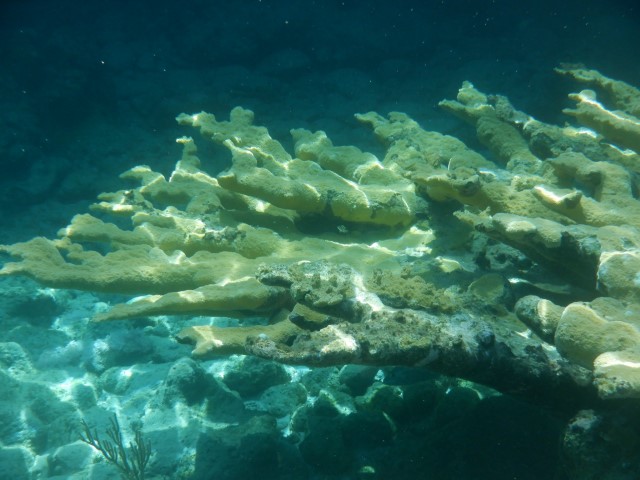
Elkhorn coral at Fowl Cay was just gorgeous.
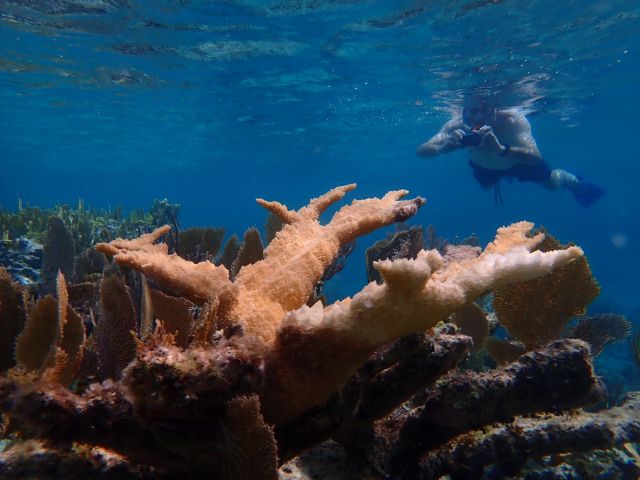
COMPASS CAY
To the north of Great Exuma, lie the cays. A popular stop on an island hopping itinerary, visitors snorkel the pristine beaches and nearby reefs, and swim with nurse sharks (more tame fish) at Compass Cay Marina.
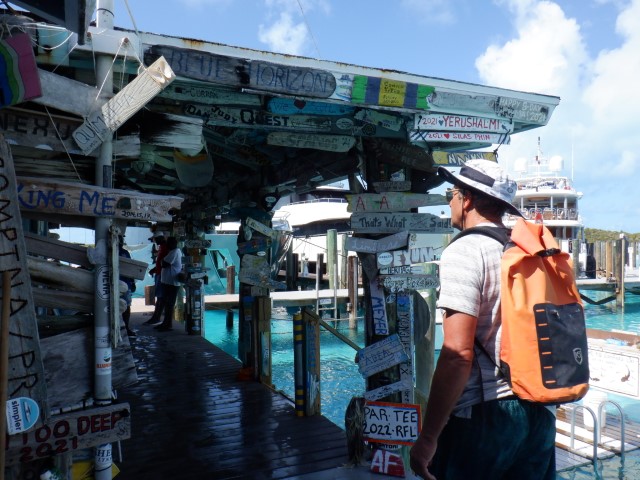
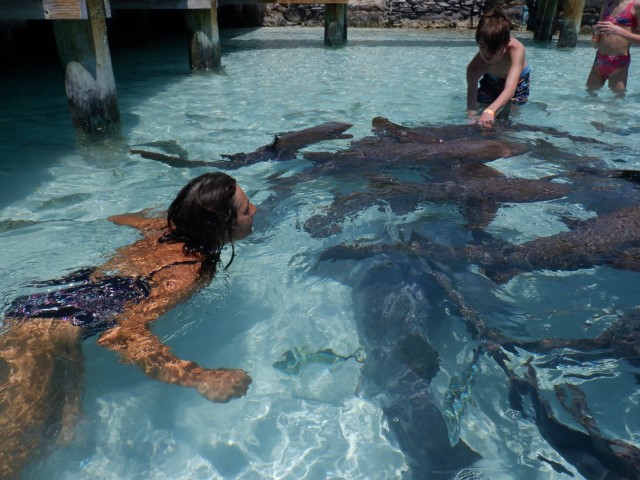
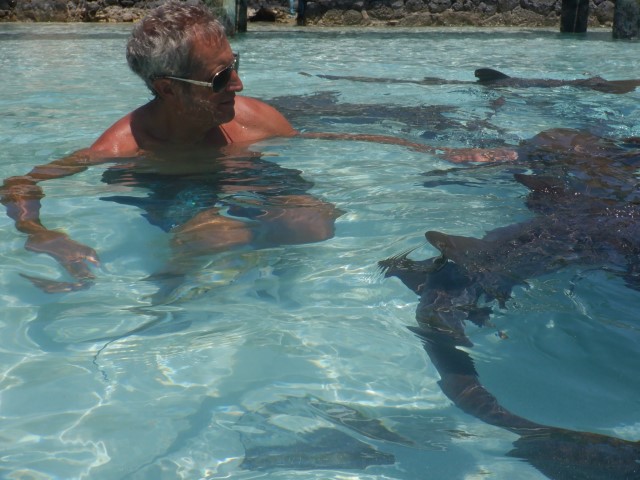
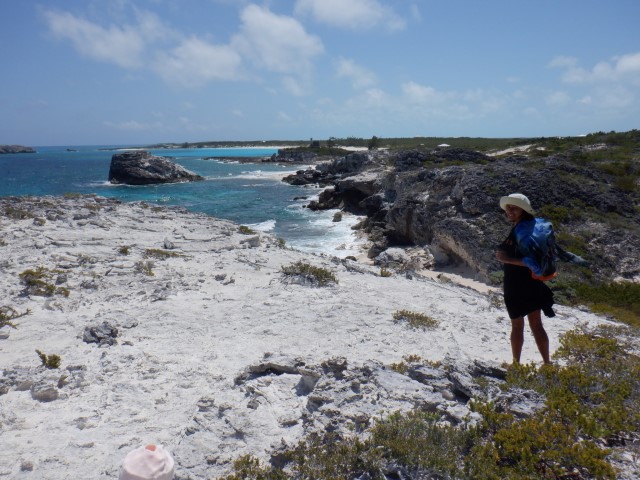
Hiked from Compass Cay Marina where we swam with the sharks, to Rachels Bubbles. The views were stunning, and my eye caught this vine forming a bridge over the limestone


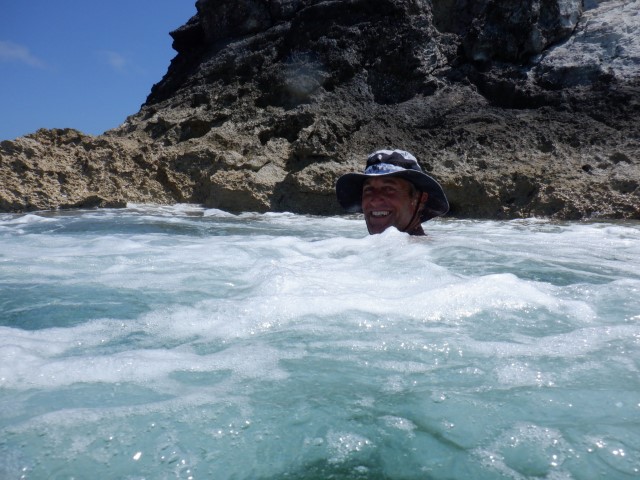
The waves from the ocean wash over the rocks to produce Rachel’s Bubble Baths.
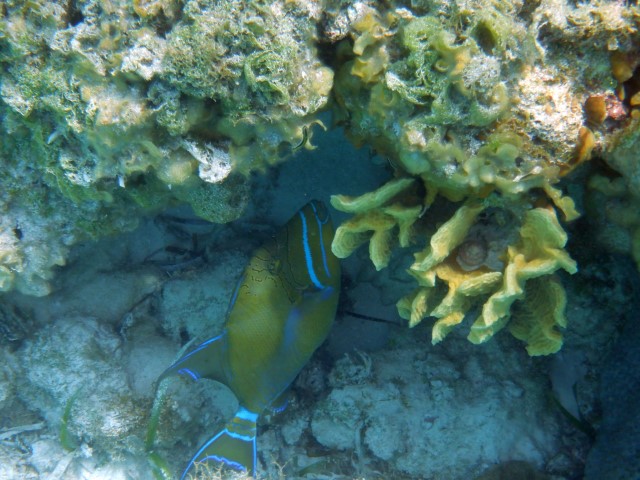
A queen trigger fish. So pretty.

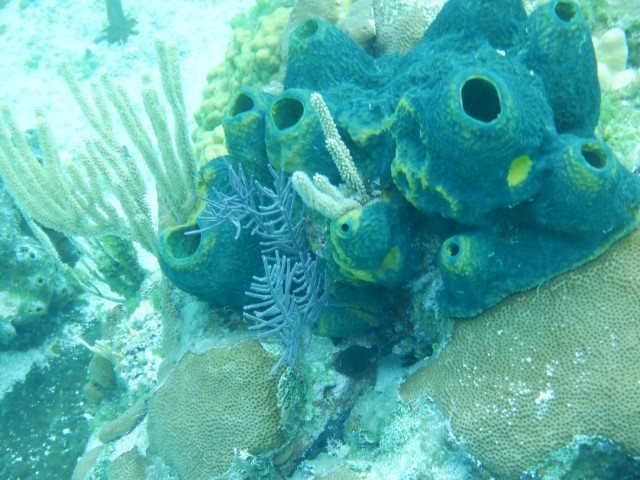
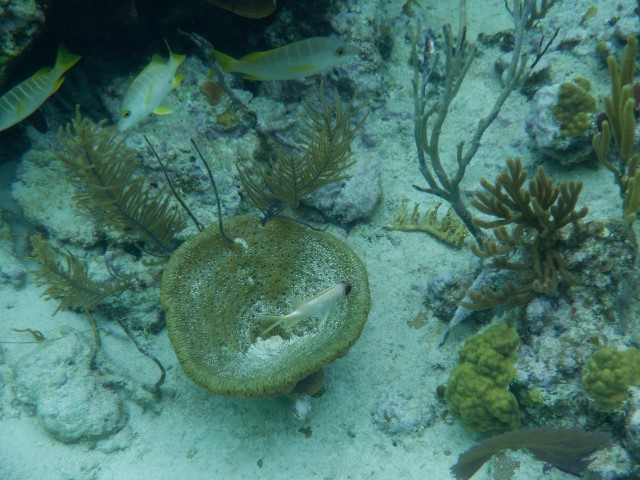


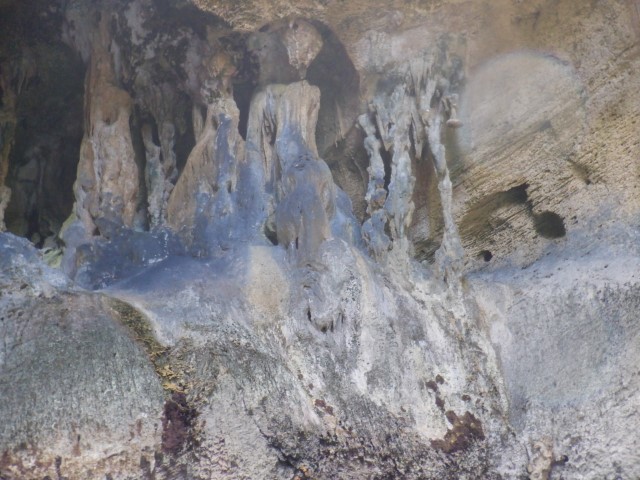
Can you see the woman holding the man’s hand as they gaze up at the ceiling?
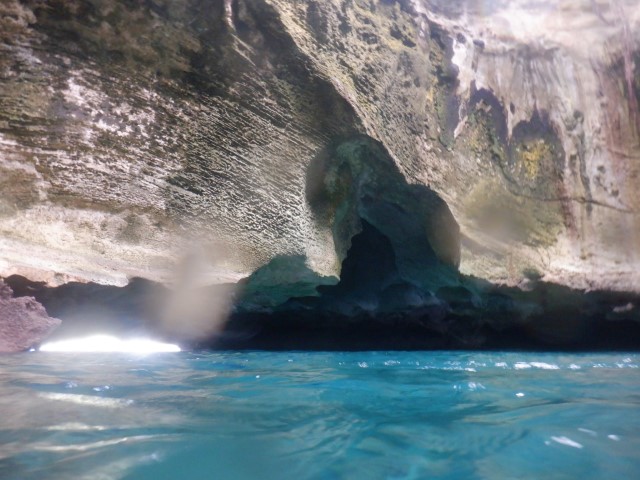
The entrance to one of the caves at Rocky Dundas. And the snorkeling just outside the caves. A short dinghy ride from Rachels bubbles
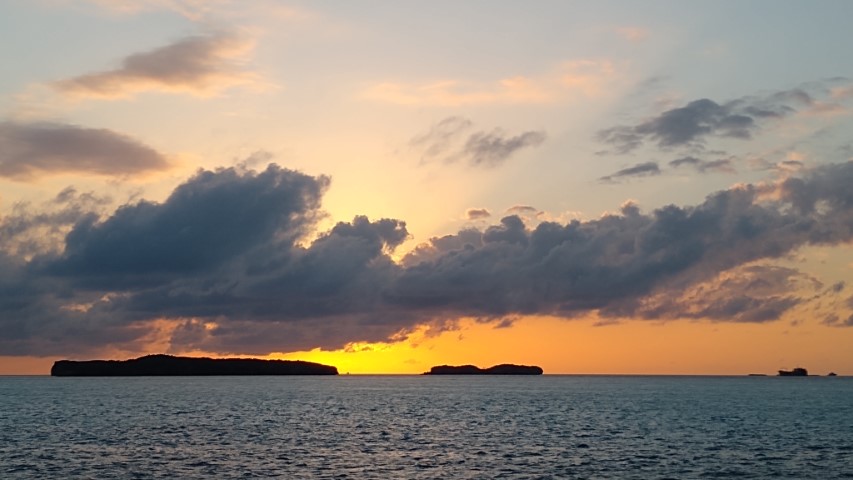
Beautiful sunset over Dundas rocks
IGUANAS
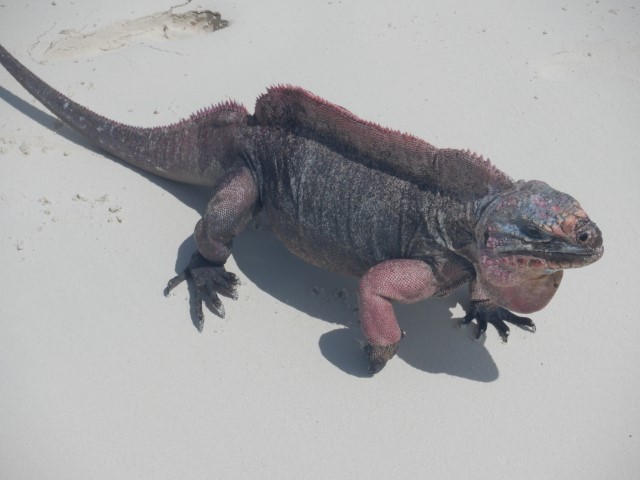
There are very few places through the Exumas where you can see fearsome looking, yet gentle creatures, which are protected by law. They are friendly and welcoming becuase they are used to being fed by the tourists.
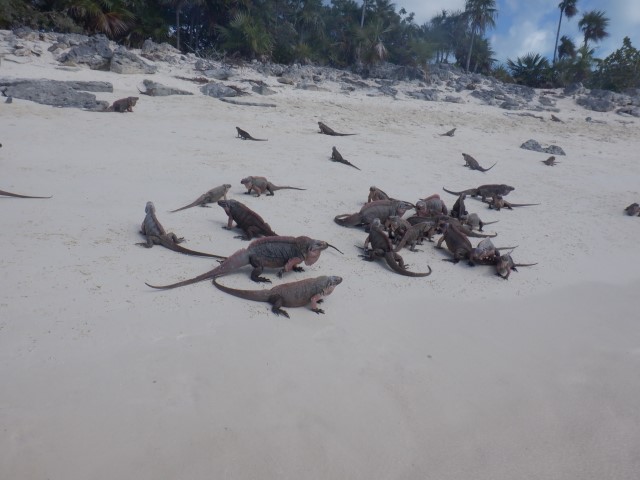
Noel and I stopped at Leaf Cay for a couple of hours just for lunch and a walk on yet another beautiful beach and a walk through the sand dunes into the cliffs overlooking the Atlantic. On our way we saw a few Iguanas, but it wasn’t until we got back to our dinghy that we realized how many there were all around. There was a tourist boat with people feeding them bread and grapes. there were almost a hundred of them on the beach. I snapped a quick picture of these wothout having anyone on my picture.Yes!
Rudder Cut Cay
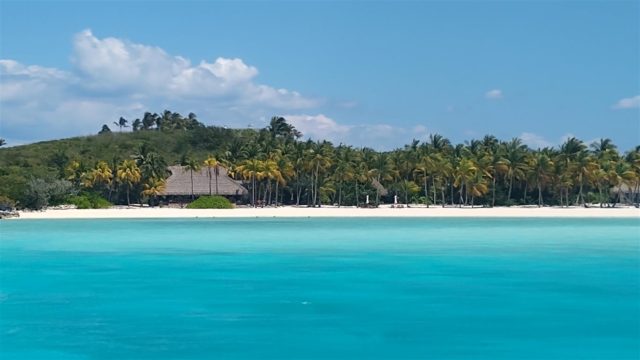
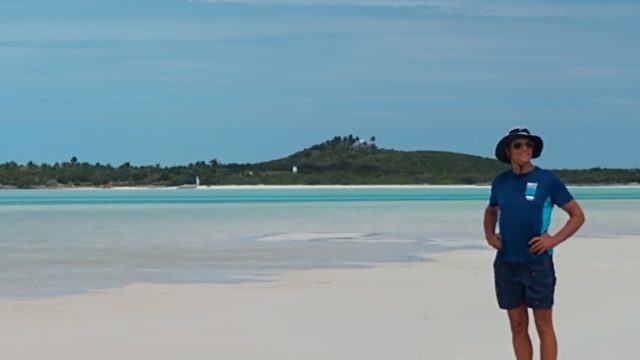
Dropping the anchor at Rudder Cut Cay, we found to our delight that we had it all to ourselves. A few boats there but anchored just south of us.
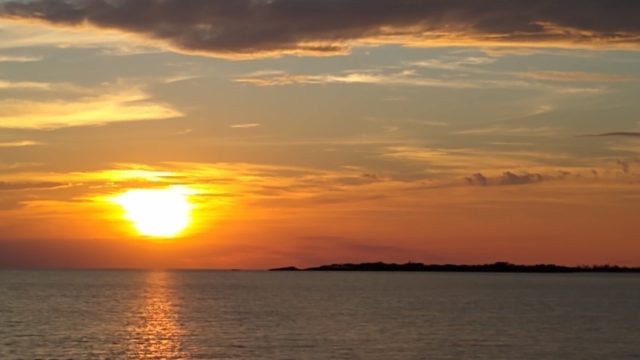
Rudder Cut Cay is a private island owned by David Copperfield. While we weren’t allowed to walk on the beach, near the villas, we were still able to enjoy the prettiest anchorages, caves , snorkeling and the beaches in the snow banks at low tide. In nthe evening we had such beautiful sunsets too! It was just stunning here.
One of the villas in David Copperfield’s Island. Musha cay. There are many scattered throughout and also an air strip.
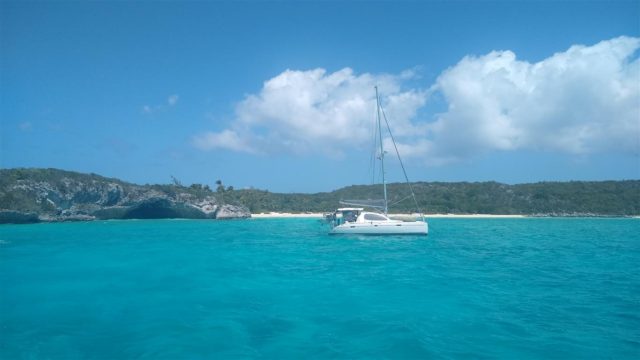
Our anchorage by the cave
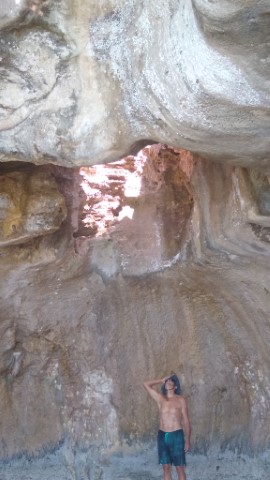

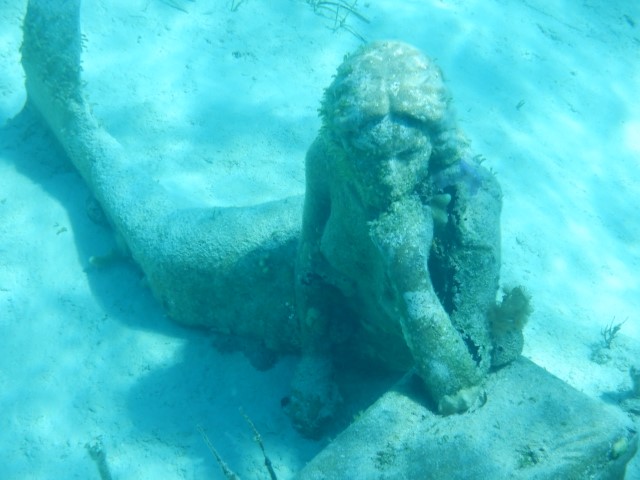
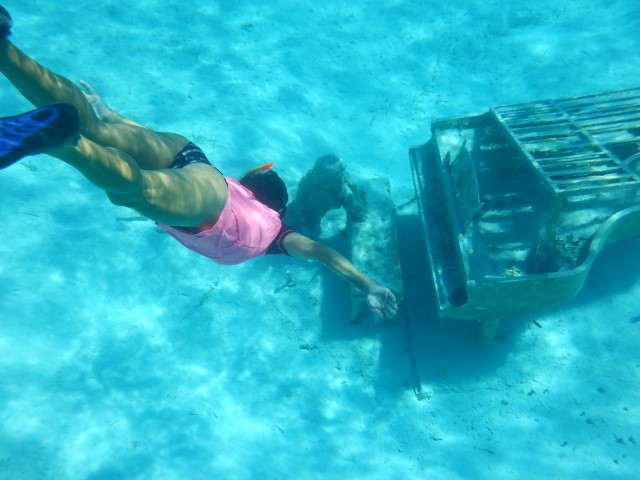
David copperfield commissioned an artist to sculpt a statue of a mermaid looking at a grand piano. He then sank the sculpture in about 13-15 feet of water off of Rudder Cay, which is just south of Musha Cay. We tried to snorkel it first time but the current was very strong, so we went for a second try at low tide and it was great. We got to spend lots of time with the pretty mermaid playing the piano. The snorkeling is very good nearby as well.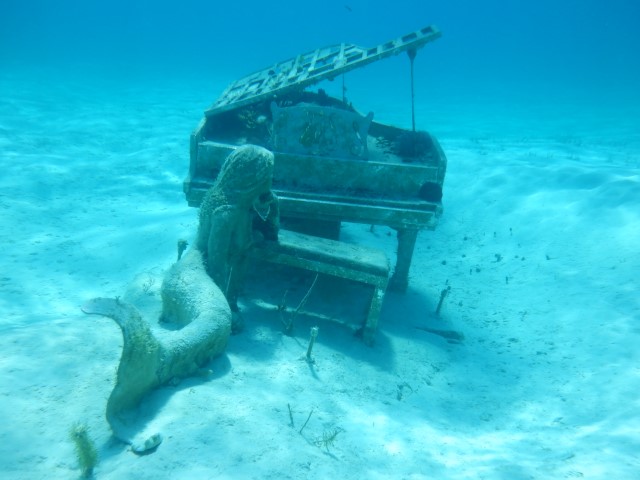

Staniel Cay
Just a few short miles from Rudder Cut is Staniel Cay.
Most visitors will fly or cruise into Staniel Cay from Nassau, because of its accessibility with an airport and large marina. There are also day tours from Miami which are becoming popular. We see many fast motor boats come in on day trips from Nassau.
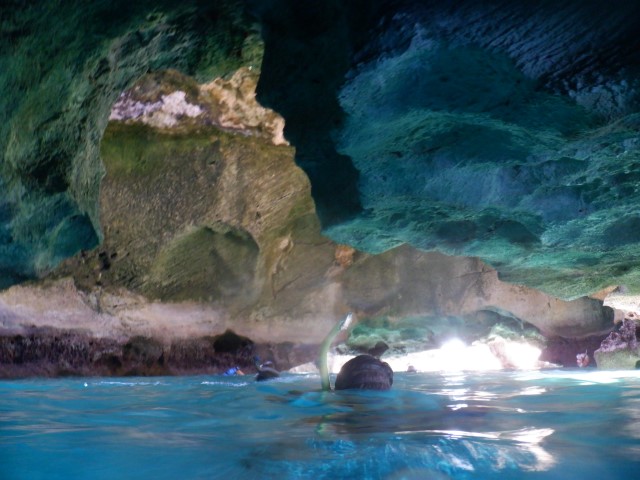
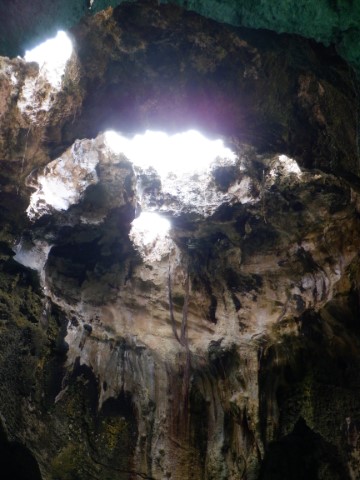
Staniel Cay is also home to the famous Thunderball Grotto. Thunderball is a 1965 British spy film and the fourth in the James Bond franchise starring Sean Connery. One of the scenes from the Movie was filmed in this cave.
There is no shortage of magical and wondrous things to see in Thunderball Grotto. Upon entering this hollowed-out rock, you look upward to admire the natural skylight that has been produced by erosion, breath-taking in both the sun and moonlight. The beams of light snake in from the holes above and the azure waters light up like precious jewels. In certain places, the cave ceiling is only a few feet above the diver’s head, and in others, the ceiling stretches up to an astounding twenty feet or so. What an excitting place to visit.
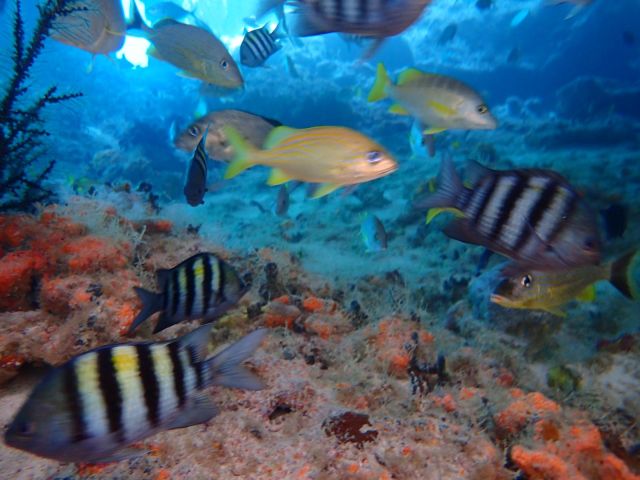
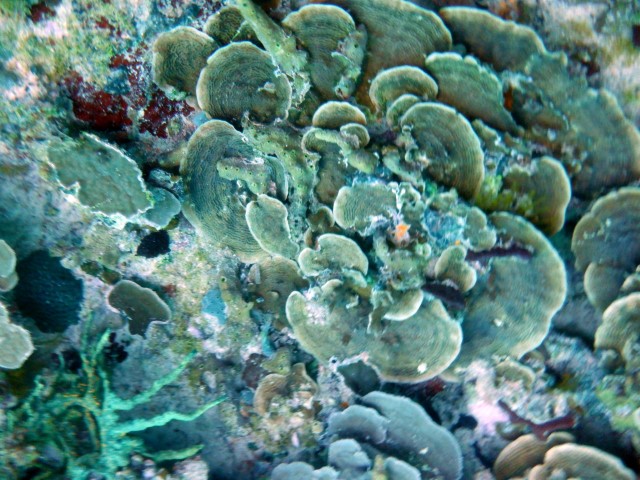
You can swim through during low tide and discover a world teeming with colourful tropical fish, coral and sea life. Animated groupers, lobsters, snappers, and angelfish. We saw the biggest Nassau grouper here. Maybe because some of the tours bring bread crumbs and feed them for more of an upclose and personal visit with them. Such beauty. We went snorkeling there a few times. One time we spent so much time there, the tide started turning and the current was so strong, we couldn’t swim back to our boat, so we asked another dinghy to give us a ride there. So much for anchoring so close to the the east entrance. Haha!


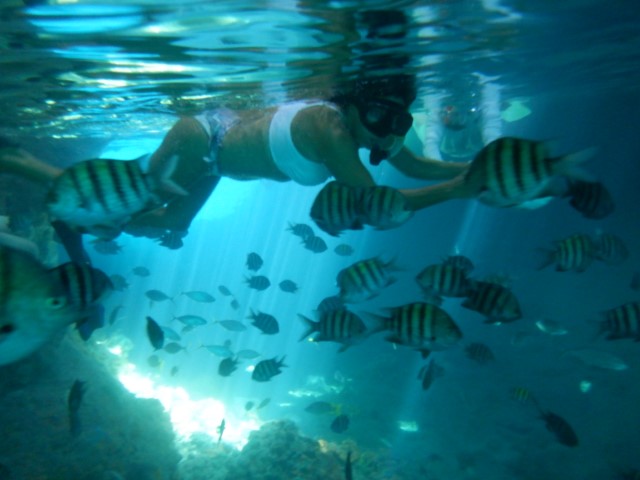


Queen Angel Fish. Many more here than in the Caribbean. Perhaps they like the cooler water.
BIG MAJOR CAY
Sailing on the Eastside of Staniel cay behind Pigs Beach to go visit Thunderball
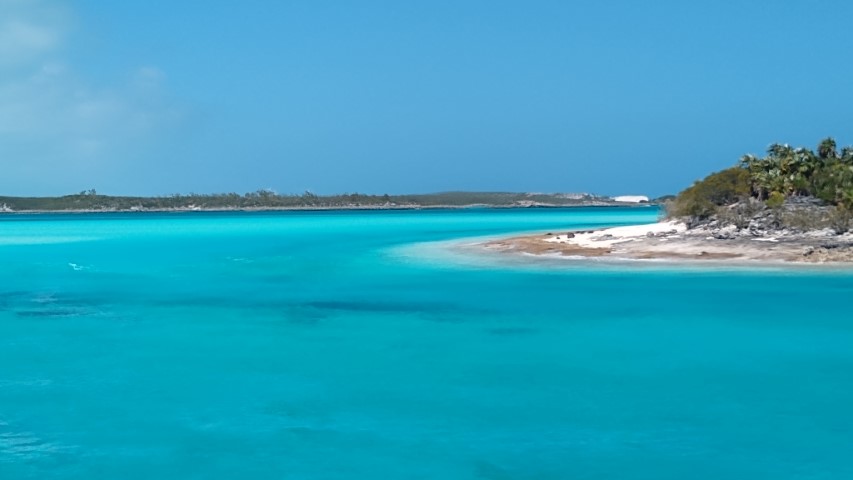
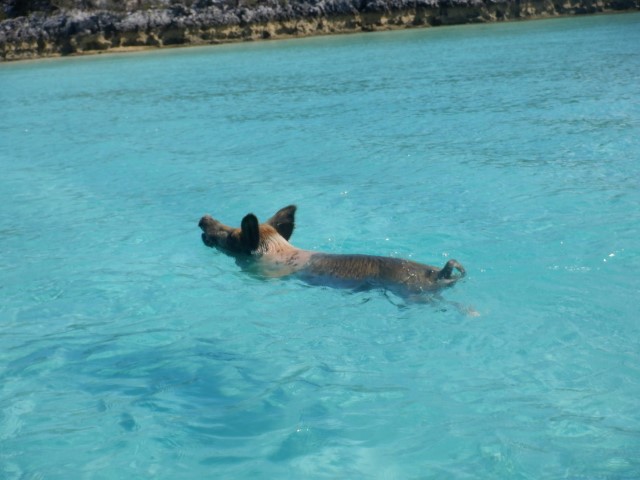
The Exumas pigs on Big Major Cay (Pig Island) are just a short ten-minute ride from Staniel Cay Bahamas. There are around twenty-five pigs and piglets all around the beach who are said to have arrived on the island in the 1990s. Now, they are one of the top attractions in the Exumas.
The official home of the world-famous swimming pigs, this cay is sometimes called Pig Beach, thanks to its playful inhabitants. Accessible only by boat, it is easily reached from nearby Staniel Cay.


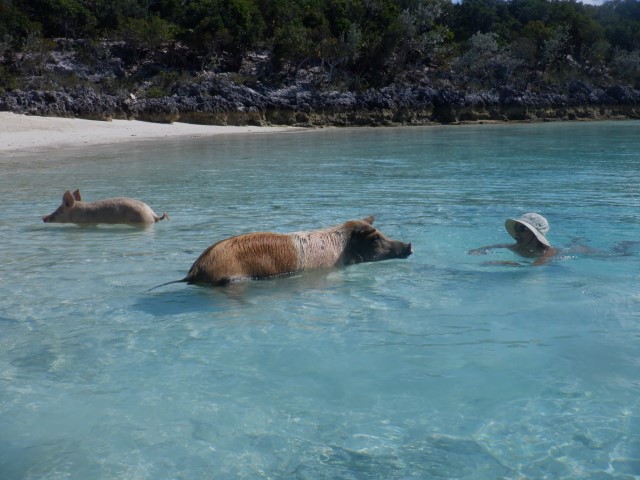
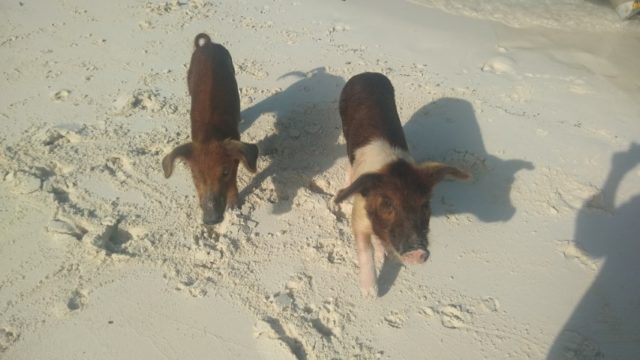
I just love love the piglets. When all the tourists leave usually by 4pm or mornings before 10am, I go to the beach and pet them.

So much more…
We just half way through the Exumas. So beautiful, so much to see, so many words to write. Honestly the pictures don’t do it justice. The clearity of the waters is just brilliant. The snorkeling is so much better than down south Caribbean where we have spent a lot of time. What we do miss is the luscious greens of the Caribbean islands – the rain forests, the coconut palms. Here it is all flat, sharp rock, and scrub bushes. But the Blues make up for it big time. Ah, the Bahama Blues!
So we will stop the narative here, and at some point we will continue with the rest of our travels, working our way north towards Deltaville, VA where we will haul out for the summer. Stay tuned…
Stranded: No Gas, No Phone, No Money, and No Language
Current Position: 19 53.94 N 070 57.16 W Click to view map.
Distance sailed since last post: 101 nautical miles. View the map of our voyage track here
On Tuesday we rented a car to drive to Puerto Plata to buy groceries for our trip to the Bahamas. It turned out to be an adventure.
The day started by jumping into the dinghy and firing up the outboard. No problem there. We took off towards the tock and a good speed. But then discovered we could not slow down. Turning the throttle down had no effect.
At this point we passed another dinghy that was paddling. They requested a tow. Sure, no problem. We are still going at full speed, but they toss us their painter, which Ceu grabs – and promptly gets pulled back and almost right out of the boat. But she doggedly holds on and we manage to bring the towed boat to the dock, still at full speed.
Once there I pull the engine out of gear, with a big clunk, kill the engine, and we paddle the last few feet to the dock.
Our rental car is waiting for us, unlocked, keys in the ignition. The owner message that he had to go to Santo Domingo, 4 hours away, for the day.The car would be at the parking lote just turn the key and go. The car has multiple cracks on the windshiel, multiple dings around the body, no working tail lights and a big propane tank in the trunk. It also has no USB port to charge our phone while using it for navigation.
The fuel gauge says 1/3 full, so we figure we will fill up at the end of the day, as we normally do with rentals.
So we set off. After about less than 20km km the car grinds to a halt. Sounds like it is out of fuel, but the gauge still says 1/3 full. Not so the gauge on the big tank in the back, which says EMPTY. So we need some more propane.
We are outside a nice house, so Ceu knocks on the door and a very friendly and helpful man comes out. Ceu seems to manage with her portinol language and the man says “no problem, I will call the ‘Ministerio de Obras Públicas y Comunicaciones’ who will come out 24/7 to provide assistance.
And they do. An official car with two uniformed officers show up, take stock of the situation, and immediately start flagging down passing vehicles. After a little while they find an old pickup truck, full of wood, that has a towing hitch.
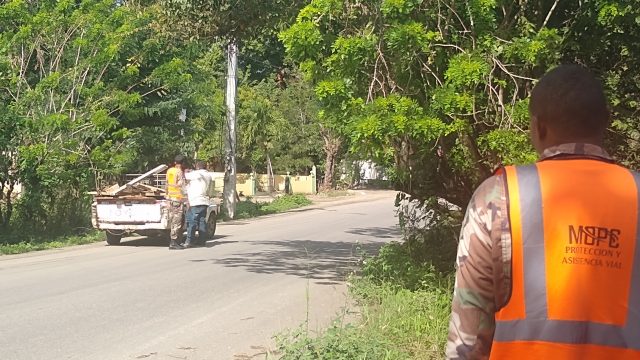
The driver, who was going in the opposite direction, is instructed to turn around and tow us, using a rope, to the nearest propane refill station which, fortunately, was just about 2km away.
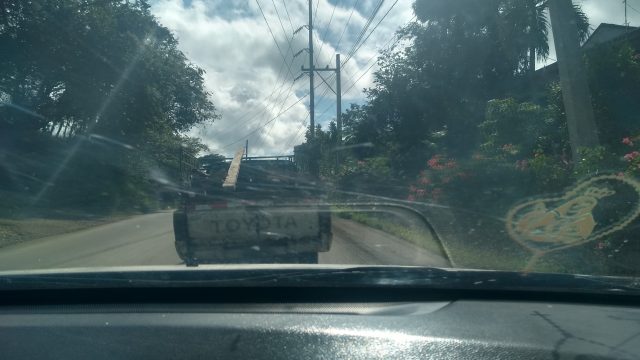
So we make it there, give him $10, and fill up with propane. We put in about $10 of gas whihc is what we normally spend on a one day car rental and doing way more driving, so it should do us fine. It was about 3 gallons. We were also told that propane was way cheaper than gasoline. We were not going very far for our provisions.
And so we are on our way again, albeit an hour or two later than planned.
We get to Puerto Plata, load up on groceries, and then spend a futile hour looking for a pharmacy that is able to refil some of our prescriptions. No joy on that. Same with the hardware stores. We also found the groceries quite a bit more expensive than we had been led to believe.
So we are on our way back to Luperon with trashing rain, Ceu, the driver, had to move her head around the winshield cracks to have a better view of where she was going. About 10km past our previous stop, we ran out of gas. Again. We were also completely out of pesos, though we did still have US dollars. Many places do not take credit cards.
This time we were right outside a police station with a young officer who spoke unintelligble Spanish. By now our phone had died so we could not call anyone. So now we were in the middle of nowhere with no gas, no phone, no money and no language. But at least we were able to charge up the phone in the police station. After a lot of dithering by the police officer, who provided no help at all, we were able to call the rental owner. He was now back from Santo Domingo and offered to come to us, just 12km from Luperon.
He showed up with a friend and a rope and, once again, we were towed to the propane station (not just any station)which, again, was only about 1km away. How lucky.
His friend drives off somewhere, and the owner gets in the back of the car and Ceu drives the rest of the way to Luperon. I guess he was too tired of driving after his trip to Santo Domingo and back.
We arrive in the rain. We have a trunk FULL of groceries, which we now load into our dinghy. We are soaking wet and eager to get home to have a fondue with our new suppply of good cheeses.
We take off and the dinghy is still doing its ‘won’t slow down’ thing. But we manage to kill the engine in time and arrive back at Life Part 2. (without crashing into it)
Soon the fondue is bubbling away on the stove. We get out the fondue pot stand and fill up with alcohol. Ooops, it seems we have run out of alcohol. No worries, we have two bottles of BBQ lighter fluid which should do the job.
Um. No. It seems that lighter fluid does not burn when it is just sitting in an open pot. Could not get either brand to light.
So now we have to run back to the stove every few minutes to heat up the fondue again while we are eating it.
What a gong show today was. All part of the cruising adventure. Only the moment we realized we ran out of gas again, we felt a bit stuck, because we also had no phone, all due to using the GPS and the car had no charger. After that we were ok. At the station we immediatelly plugged in our phone. So now we have phone, Google translate, we have American dollars and friendly people. All was better. The owner of the car apoligized and promissed next time will get us a better car from his fleet of 5.
Notorious thorny path, Mona passage
Current Position: 19 11.8 N 069 19.72 W Click to view map.
Distance sailed since last post: 141 nautical miles. View the map of our voyage track here
Puerto Rico to Dominican Republic
Thursday Jan 20, 2022. Time to head to the DR. But first we need to get outbound clearance from Puerto Rico which, of course, you cannot do as they say you don’t need it. Except that the DR wants to see it. Eventually on the phone I persuaded the officer that I really did need some kind of documentation that we had checked out officially. So he sent me a form, which I filled out and then emailed back to him. He stamped it as official and emailed it back to me. Now we were official!
11am we weigh anchor. Yep, still weighs the same 33kg. The forecast is for 20kts easterly trade winds, but for the first two hours we have no wind, as we are still in the island lee. Motors on. Then the wind fills in – from the West – Since we were still expecting the trade winds to give us a downwind reach we had only the genoa out. We were actually at 60 deg on port tack but, hey, we were still moving nicely, despite the bouncy waves coming at us beam on.
Finally at 14:30 the tradewinds kicked in. Now we’re off with up to 29kts of wind on a starboard broad reach doing well over 7.5kt consistently but still quite bouncy.
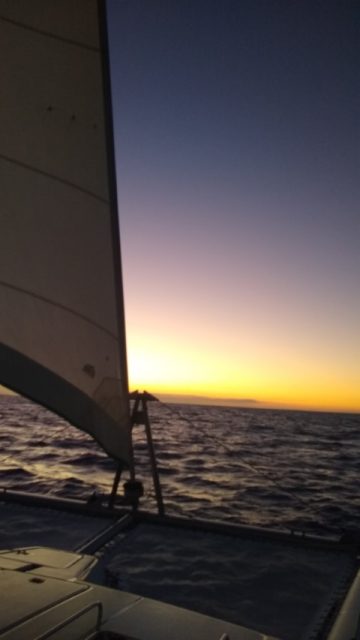
At sunset we turned the corner of Hourglass Reef, heading more downwind with more smooth sailing, though the wind eased a lot through the night.
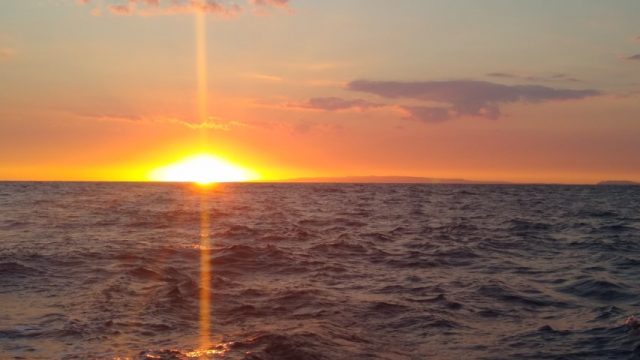
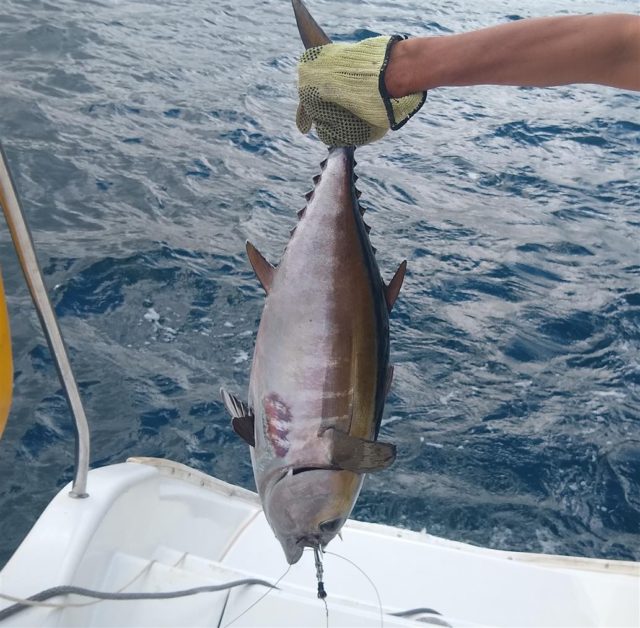
Then, just as we were entering Samana Bay, and dodging whale watching boats, we caught ourselves a nice sized yellow fin tuna!
As we arrived at Samana anchorage we kept calling for the Armada, harbour master or whatever to give us instructions for checking in.
No answer.
At about 6pm Luis shows up and tells us it is holiday and too late, so he will come in the morning to get us checked in.
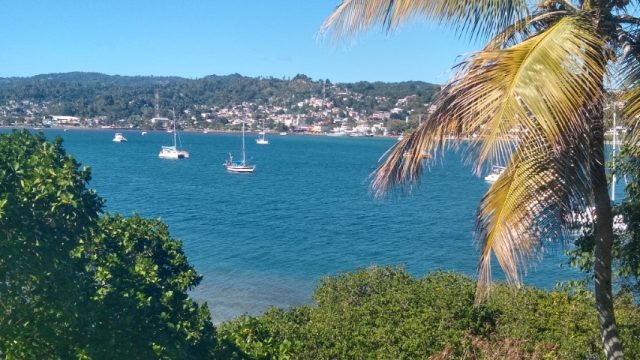
Sure enough, the next morning Luis shows up again and takes us ashore to process our check in and get our passports stamped. We are now legal BUT it is still holiday, so we need to meet him on Monday morning to get the rest of the check-in process done.
On Monday we go ashore and hunt all over the place for Luis, whom no one seems to know. We can’t remember exactly which offices we went to as they are all closed and look different. Eventually we get him on the phone and he tells us it is still holiday but we should go to the Armada office to get a Dispacho to allow us to sail across the bay to Los Haitises National Park. Anytime you want to move your boat here you have to get a Dispacho giving you permission to do so. It is free, but the process takes a lot of time.
We find the Armada office and meet Stephan, a nice German, who is also looking for a Dispacho, (Permit) But it is Monday and still Holiday, so Secretaria, the person they need is not in the office. No problem, one of the Navy people gets on a motor bike and goes to pick her up. The second Armada officer, makes us coffee and served in beautiful china tea set. Coffee was good, cup was too small, so we all had a second cup! Half an hour later the first Armada arrives with the secretary on the back of the motor bike, wearing her civies, and carrying a 6 month old baby.
The baby gets handed over to the other officer, and the secretary gets to work on the dispachos for all of us. But the baby is still crying and the bottle provided by the officer does not do the job. The baby gets passed back to the secretary, breast gets pulled out, baby attaches to nipple, and now she can get on with the dispachos again while breastfeeding. Baby falls asleep, happy.
We were happy too, what a great morning, with lots of smiles, good coffee and great people. Did we say yet, that no one there speaks a word of English? Only Luis the agent, and translator, turist guide and organizer, etc etc. But he was not available. A mix of Portuguese and some some Spanish was exhanged between Ceu and Armadas. Good times.
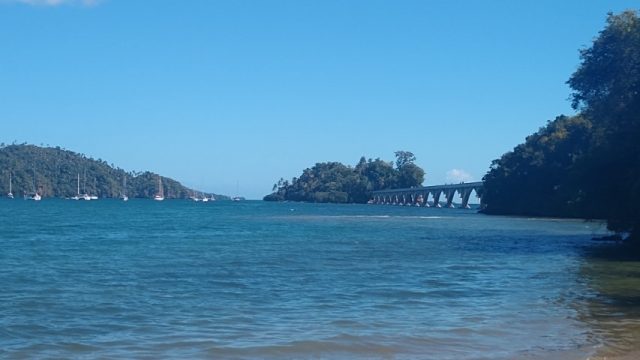
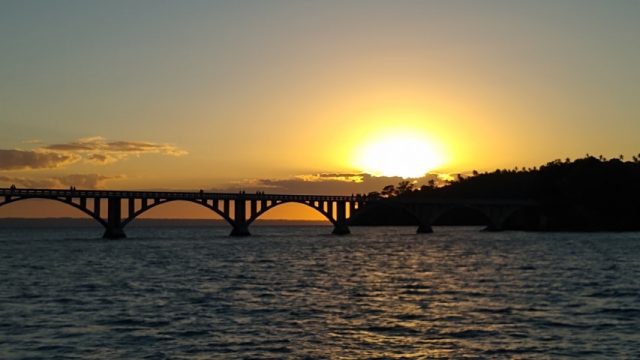
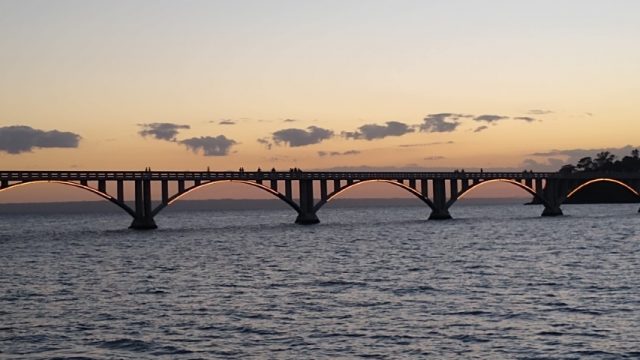
But the process is not finished. Now we have the dispacho in hand, we go back to the boat where Luis will meet us later to have a photo taken, on the boat, of him plus Noel holding up the Dispacho. Finally we are official.
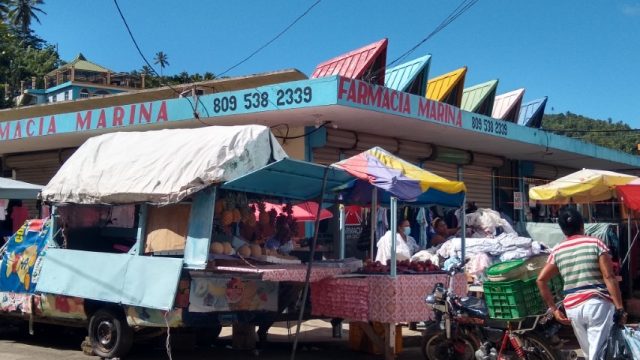
The town of Samana is a scenic, colorful and peaceful port, with friendly and easy-going Dominicans, living their life with tourism, agriculture and fishing activities, all set to the beat and rhythms of Merengue, Bachata and Salsa music.


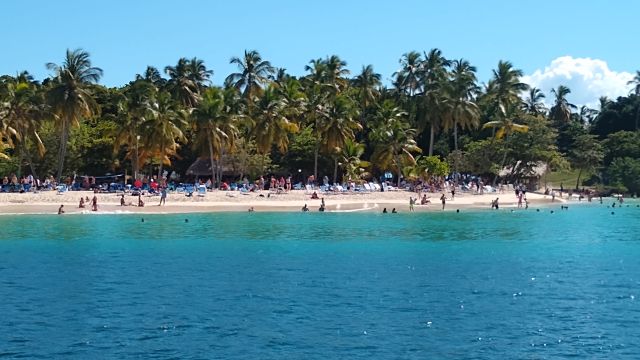
Cayo Levantado. (Bacardi island)The small, picturesque island sits just five kilometers (three miles) from Samaná Bay, and boasts brilliant white sand and palm-fringed beaches. Popular with day tripers there for the beautiful beach and water sports. Also a private resort in there.
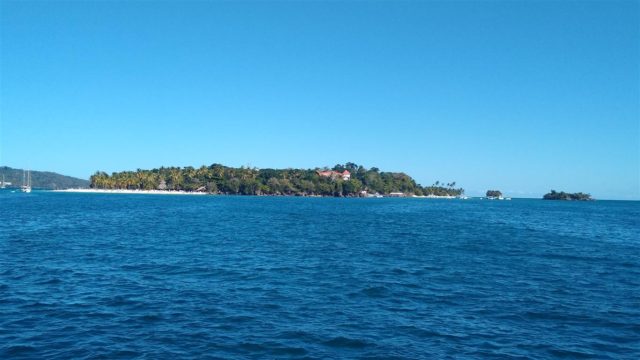
The next morning, Along with Stephan and Astrid on Intrepid Bear, we head off for Los Haitises National Park, with a little detour to visit Cayo levantado.
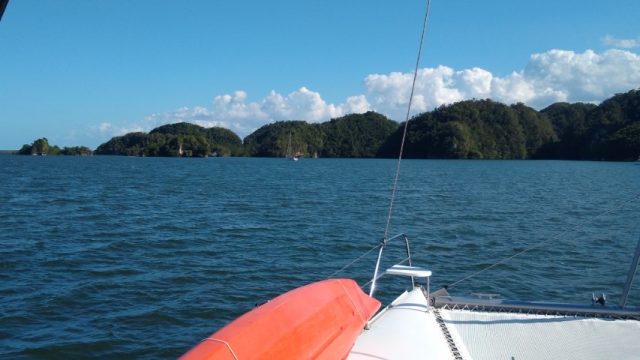
Haitises National Park was stunning and what a treat coming from the busy town of Samana. This was our anchorage in the National Park.
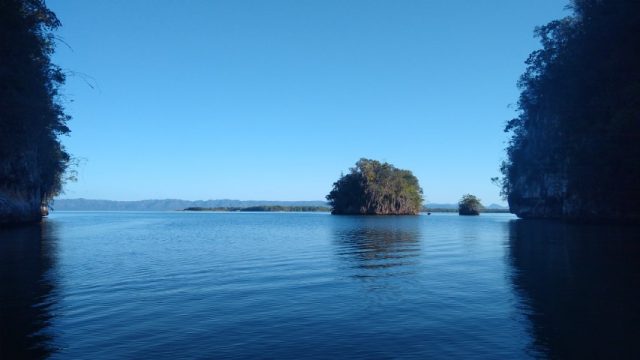
This beautiful Nature Reserve is home to rain forest, rocky vegetated hills , mangrove swamps, lush growth and conical hills. Los Haitises means “highlands” in Taíno.
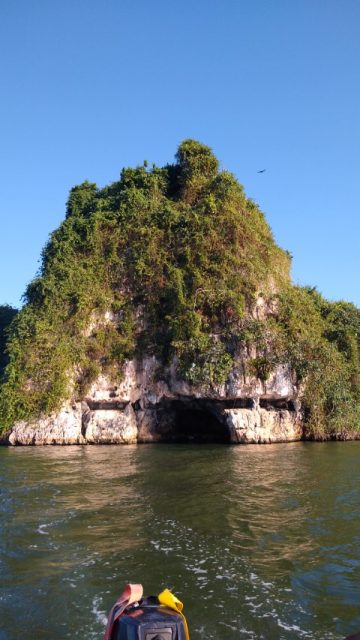
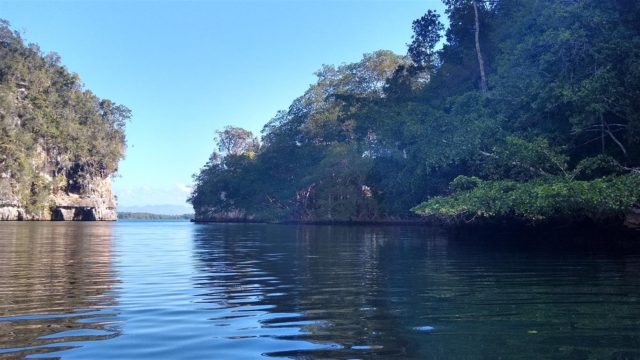
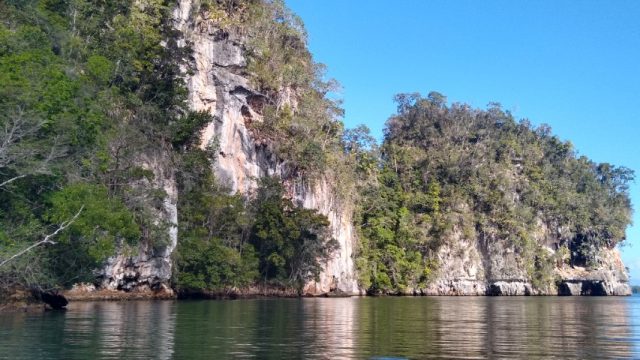
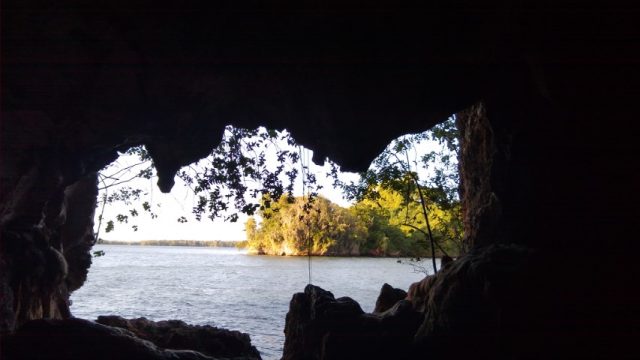
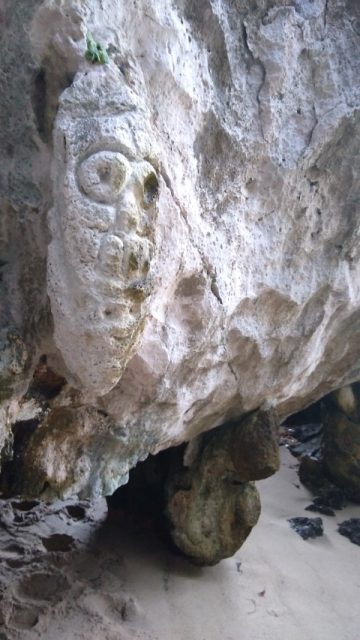
We visited at least 3 wonderfull natural caves some with petroglyphs and pectrographs. Lots of stalactites and stalagmites. One even had a white sandy beach right inside. We just loved this area somuch

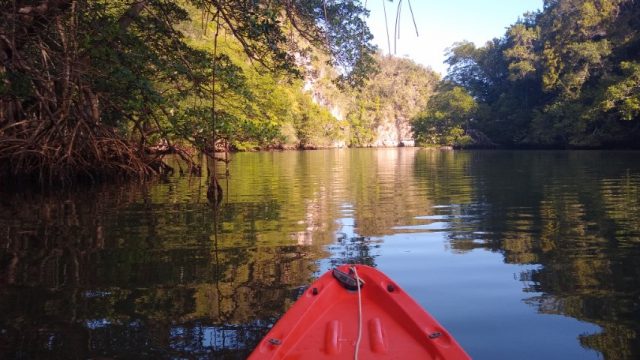

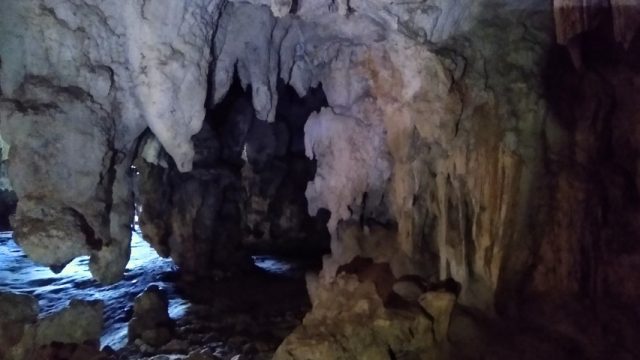
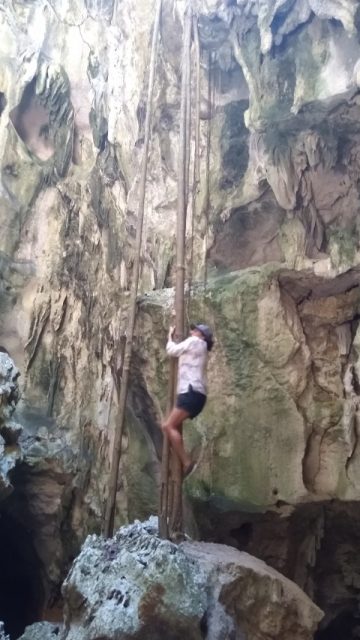
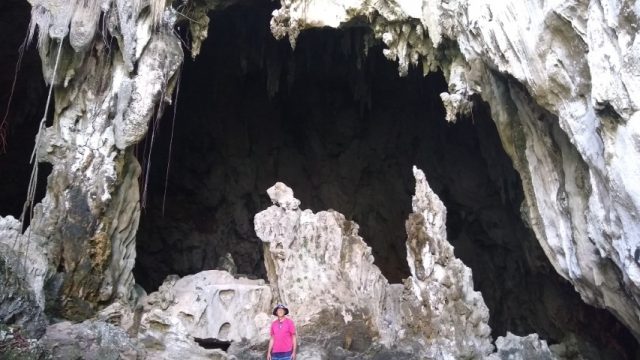
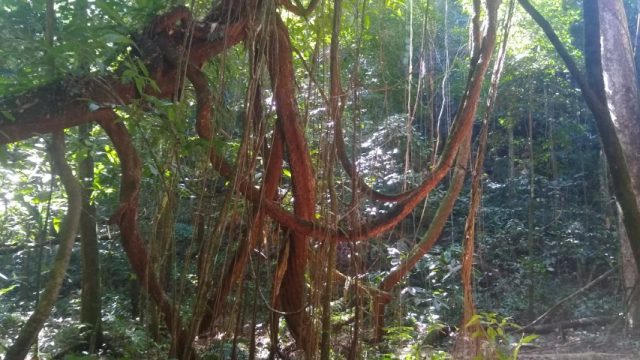
A walk through through the forest and natural swings


Luperon lies in the north of the country. Small town but one can find a little bit of everything, including Farmacies, a small Hospital and even a private Lab. Here we had our rapid test done, with results in half hour before departure to the Bahamas. The people are very friendly. No English speaking.
Due to its shape and location, Luperon bay is ideal for sheltering from hurricanes, and many boats anchor there during the hurricane season. Its a pretty bay surrounded by mangroves. The downside is , not nice for swimming. There is a nice beach and bar you can walk to though. The Bay was our anchorage for about 10 days while we explored the North of the coutry with a rental car and waiting for the right weather to do our passage to the Bahamas. The car was also essencial for provisioning before heading to the Bahamas. Not only the Bahamas is way more expensive, but also we were going to make stops on the deserted islands where provisioning was almost impossible. We drove to Puerto Plata about 50 kms away where they have great big supermarkets. Driving in Puerto plata is a crazy experience. The motorbikes follow no rules, dont stop at red lights, pass you from the left and right and there’s somany of them everywhere zooming along in all directions! The cars form 2 lanes where there’s only supposed to be one. The road is wide enough right here why not make 2 lanes? A 100 metres latter…bottle neck.
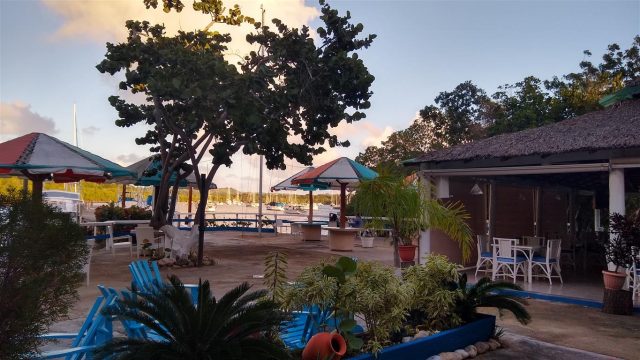
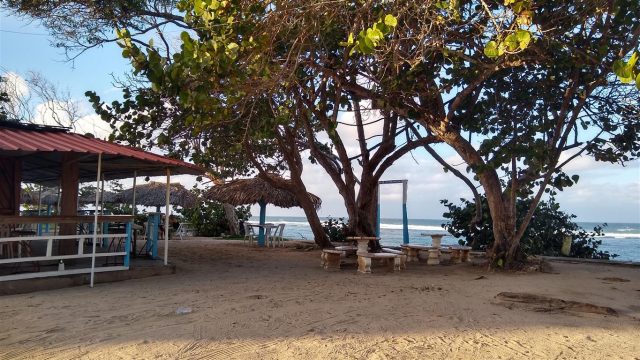
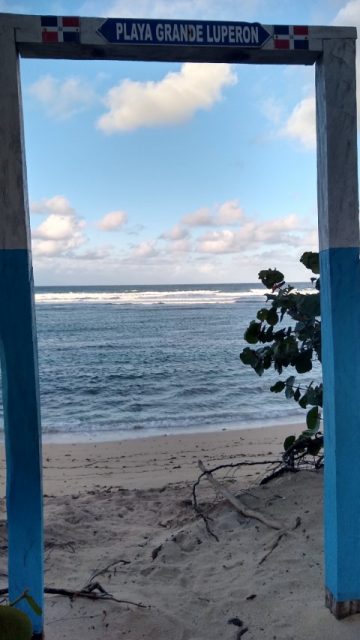
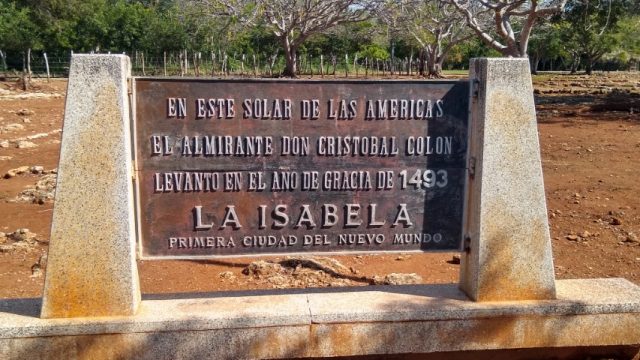
In 1494, explorer Christopher Columbus was on his second voyage to the American continents, landing in Hispaniola with a group of 1,500 settlers. The primary purpose of the expedition was to establish a colony in the Americas, but Columbus was also there to discover sources of precious metals. There on the north shore of Hispaniola, they established the first European town in the New World, called La Isabela after Queen Isabela of Spain, who supported his voyage financially and politically.
Three ships made the voyage over to the New World the Nina, Pinta, and Santa Maria. The largest ship, the Santa Maria, floundering and sinking to the bottom of the shallow waters in this bay. Columbus returned home in one of the smaller vessels, and ordered his men to build the town from the timbers, and salvage what they could.
For an early colony, La Isabela was a fairly substantial settlement. The settlers quickly built several buildings, including a palace/citadel for Columbus to live in, a fortified storehouse (alhondiga) to store their material goods, several stone buildings for various purposes, and a European-style plaza. Beautiful site.
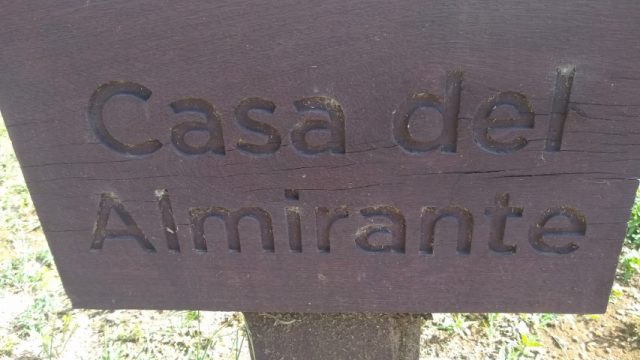
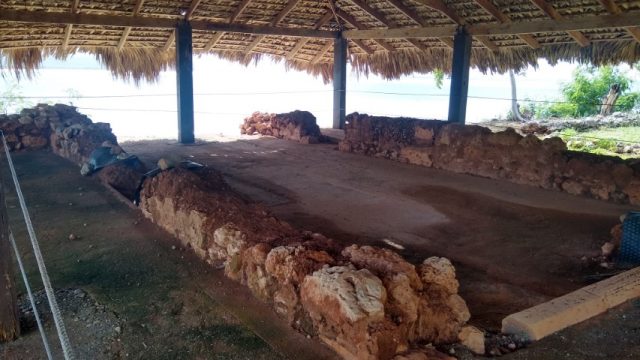
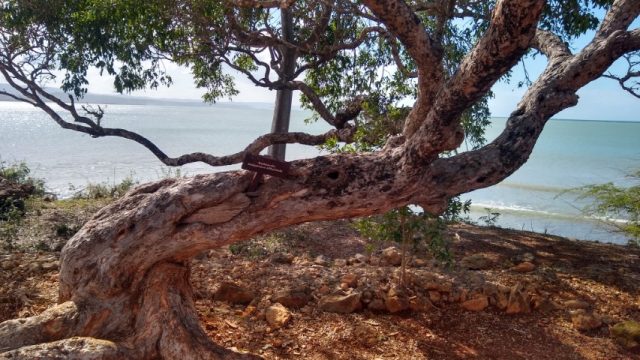
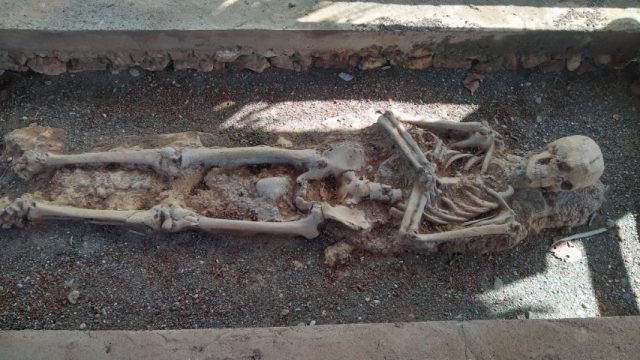

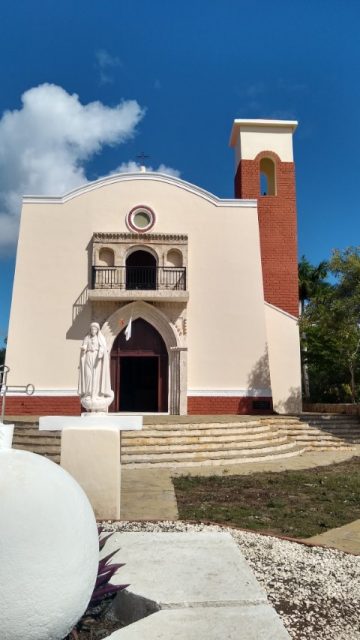
Replica of the first Church in the New World. Its located in the village just a block away from the ruins.
Puerto Plata old town
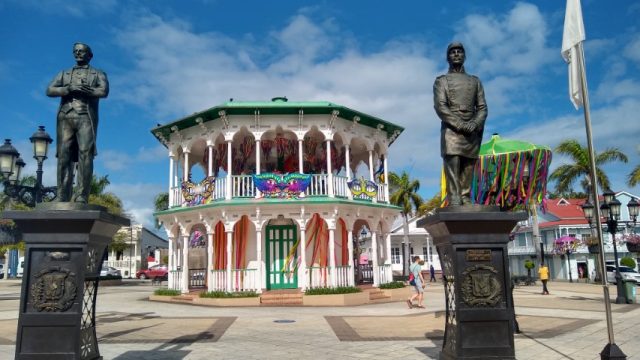
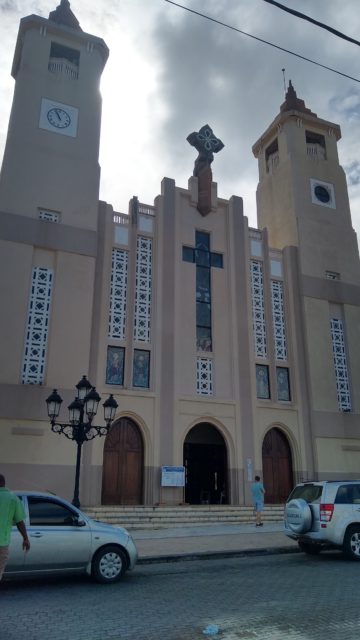
Puerto Plata Cathedral. Unfortunately, although its foundation dates to the year 1502, a fire caused by restorers completely destroyed it in 1863. The remodeling was not finished until 1956 and it now features a modern Victorian style.
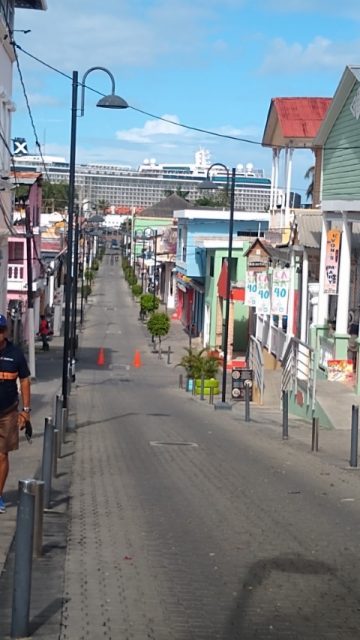
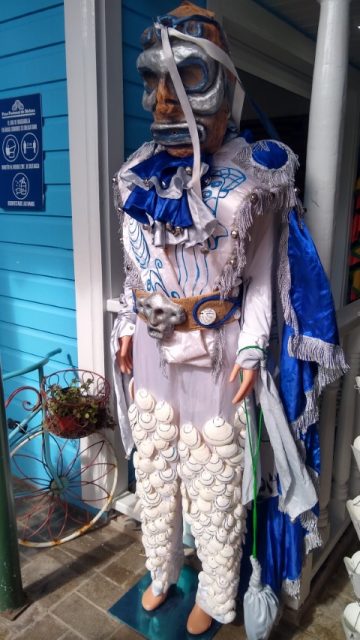
Shops in main street old town Puerto plata. Ready for Carnival? Look at the bottoms with all those shells. Beautiful to look at but definatelly looks heavy and hot to wear in the tropics!
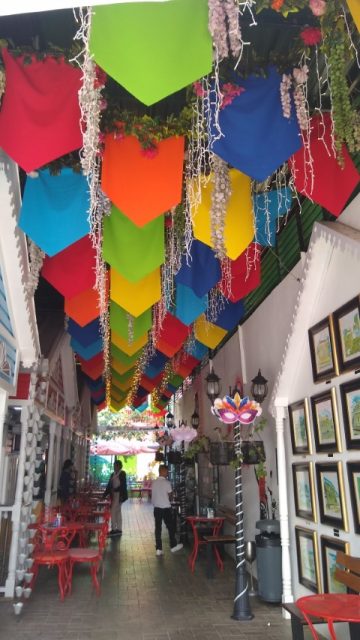
Famous Isabel de Torres National Park
At 800 metre high mountain, Pico Isabel de Torres is the highest point of Puerto Plata. Beautiful walks through the botanical garden and a replica of Christ the Redeemer though the statue is of a smaller size, but mountain itself is taller than that of Rio. The windy roads leading up the mountain are subject to large amounts of rain and are occasionally impassable. It was not raining driving up, but as soon as we arrived the fog came is and we got a bit of rain but not much. You can also hike up or take the cable car.
It was built as a look out and yes…..beautiful views, but what they didnt realize is that its in dense fog 80% of the time. We didnt get to see the panoramic views, but it was still a beautiful walk trough the gardens, some caves and a couple lagoons.
Buses full of turists get unloaded there from the Resorts in Puerto Plata, short drive up the hill. Great get away from the sunny hot beaches. Even busier on cruiseship days.
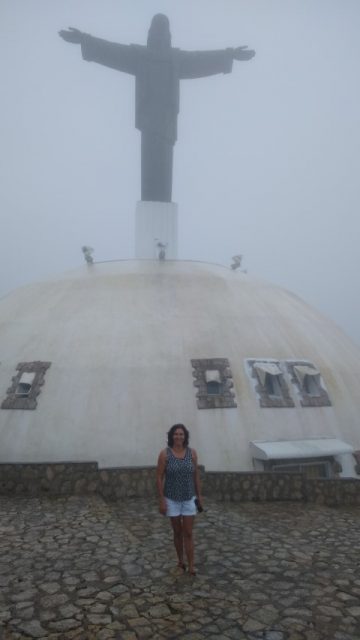
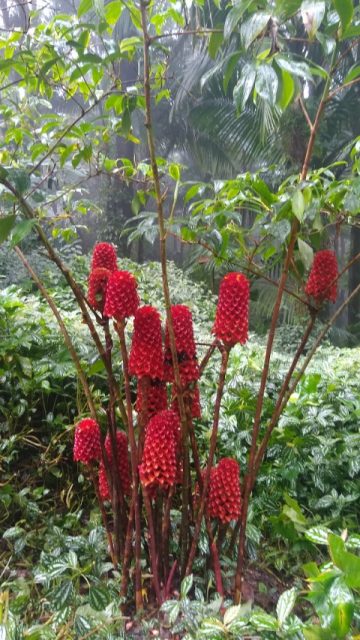
Isabel de Torres National Monument and the botanical gardens. The blooms above were so beautiful and unusual. I had never seen these red spiky ones before.
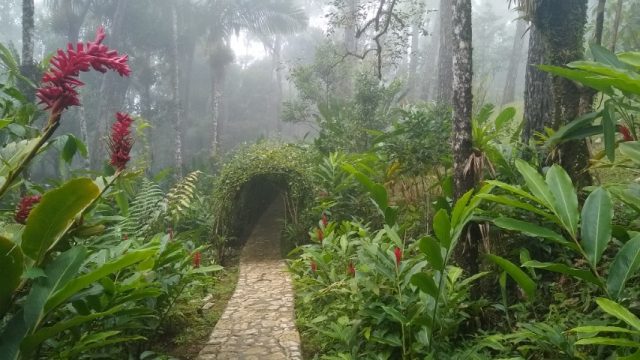
Dominican Republic really surprised us with somuch more to offer besides all their beaches and all inclusive Resorts!
27 Waterfalls of Damajagua.
What a surprise! a series of cascading waterfalls, canyons, and bright azure pools, to jump into, swim again some distance, and slide your on back down to another pool, walk through canyons and repeat!
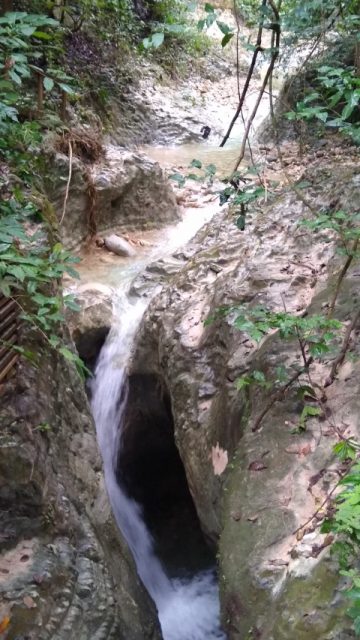
These falls have existed for a millennia but were only discoverd and opened to the public in 1994, and little by little, word got out about this amazing natural treasure and is now a big guiding industry for the local young men. Its very touristy with groups coming in buses from everywhere icluding the excursions from the Resorts.
We really did not know what to expect. We knew that you go in a group acompanied by a guide. Aparenly this group of 9 women on hollidays from the States knew even less than we did. A fabulous litle walk trough the rain forest takes you to the waterfalls. This picturesque walk should take only about 20 minutes. Well, took close to an hour. These ladies, were not expecting what they called a hike, and for some of them beeing out of shape, they were tired and had to take breaks, and often.
There were 2 ladies in the group we thought they were not goin to make it down the canyons. But the guides were amazing. The ladies had such great sense of humor and a will to finish. Or maybe the bailing out of it didnt look better, youre in the jungle. You would have to climb up a rope and hike up the hill to find the trail. It was a fun group. We had some good chats and laughs on the walk back to the parking lot, where they told us, they had no idea about this. They thought you just parked your car and look at the falls.
By now we had worked an apetite. The Park has a Restaurant where we enjoyed a buffet style lunch.
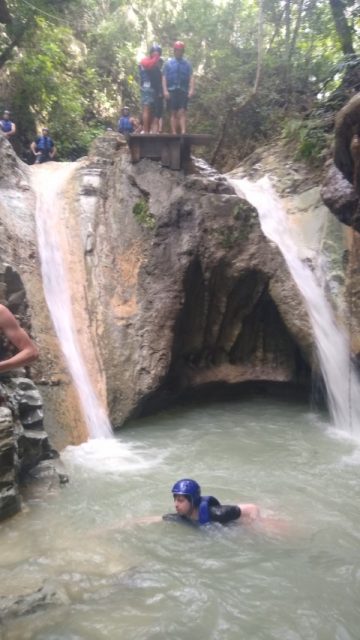

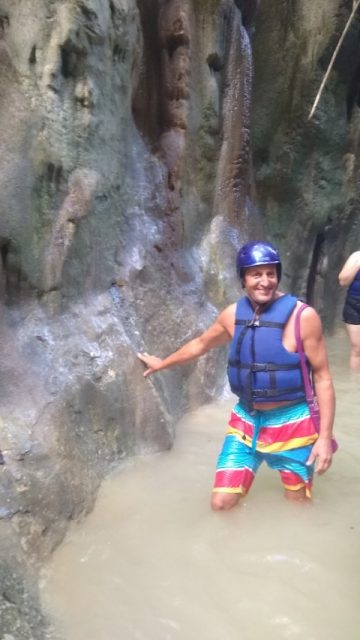
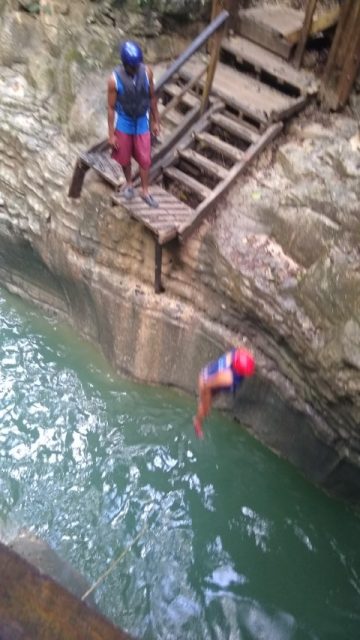
Ceu jumping in. Oh what a fun time!
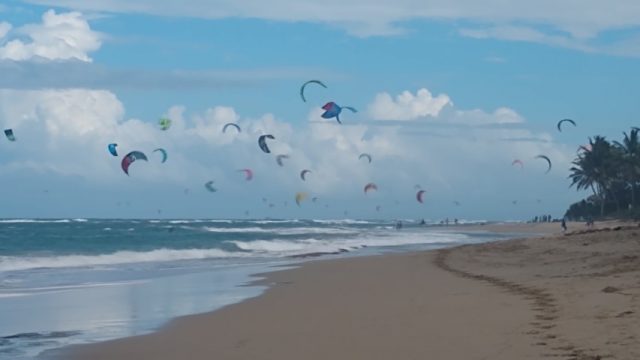
Cabaret beach
Cabarete is a resort town on the Dominican Republic’s northern coast. Cabarete Bay is protected by a coral reef. The calm waters, combined with breezy conditions on beaches like Cabarete and Kite, make it a center for water sports.
Sosua Beach
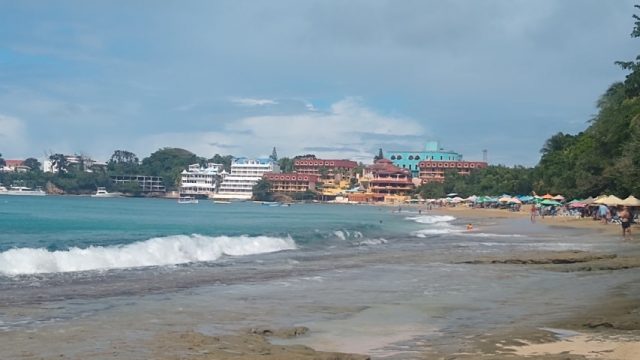
Another great stop on our road trip. Beautiful Sosua beach and seaside cute little village on the North side, about 15 km from Cabarete
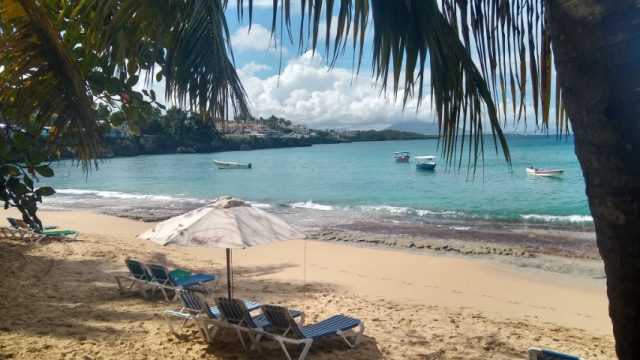
We enjoyed a nice lunch here in Playa Sosua and a very refreshing Mojito.

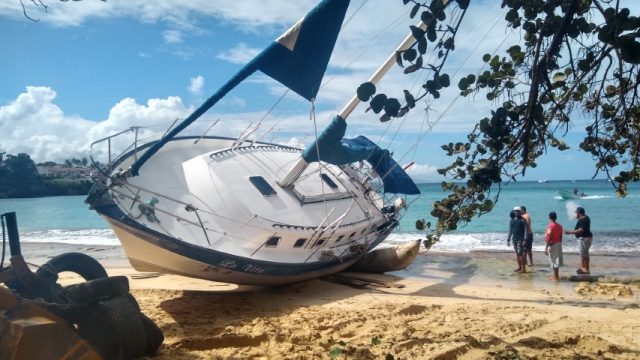
We were sad to see that this boat had just dragged on to the beach 2 days before. They had some workers there trying to bring it afloat with minimum damage to it. While were tucked in in the calm Bay of Luperon, we had some strong winds and rain, this boat on the North side was on a mooring ball that came loose during this weather.
Good times and experiences were had in DR. We felt good about having to speak some Spanish. It can easily be taken for granted that fact that everywhere you go they speak your language. But really, you just need to speak a lillte bit of Spanish, the rest is all smiles and hand language!!
We now have a very full pantry. We have a good weather window to leave to the Bahamas. We have been trying to get to the Bahamas for the last 2 years, but Covid and other circunstances has held us back. But Bahamas here we come!
Sail To Puerto Rico Chistmas and New Year 2022
Current Position: 18 1.26 N 067 10.68 W Click to view map.
Distance sailed since last post: 233 nautical miles. View the map of our voyage track here
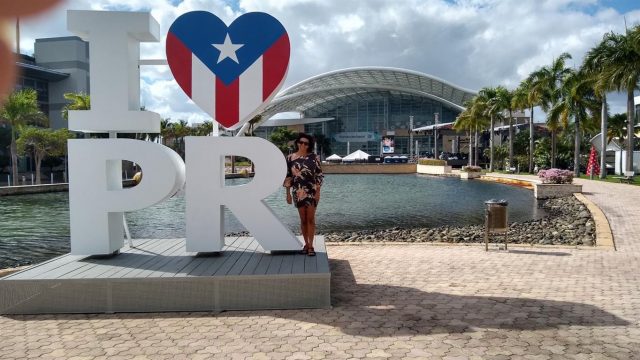
Puerto Rico here we come!
Sail from St Maarten
We left St Maarten on Dec 19, destination Culebra, PR, distance of about 130 nautical miles West.
We left at about 7 PM so we could arrive the next day through out the day.
The trip was great, we had full moon, yet we could still see the stars. Our favorite Orion as always, along with Sirius, Cassiopeia, 7 sisters ,Auriga ,Gemini, Taurus, Cygnus and more……(that we dont recognize…haha)
We had about 15 Knots of wind behind us, so it made for a much smoother passage than bashing into the wind. We were surfing the waves sometimes over 10 knots.
Early morning we had a squall, followed by no wind at all. Motored along for about an hour, along the coast of the USVI with the twinkling lights not very far. The wind fills in and we are sailing nicely again.
At 11am we could see our destination, island of Culebra, just off the East coast of Puerto Rico.
By 2 PM Dec 19th we were anchored, in the nice flat, peaceful Ensenada Honda, Ensenada is Spanish for a Bay. We went and Checked in at Customs and Immigration at the airport. The procedure was very slow but straight forward. As long as you are vaccinated, you Do not need a PCR test, so that made it even easier to visit coming from St Maartin.
Ensenada Honda is a large protected bay and a popular anchorage with cruisers. Culebra is part of the Spanish Virgin Islands and its beautiful. We did a circumnav for a few days exploring. Surrounded by many beautiful beaches and turquoise waters. Most of the beaches are empty, except for the one advertizing as one of the most beautiful beaches in the world, Flamenco beach. Yes. Nice beach but covered in chairs and bodies. We did take some pictures but moved on. Anchorages were quite empy as well, most of the time we were the only ones there and had the beach to ourselves. If its weekend, a few of the local families come out to swim and snorkle. A couple of other beaches are also a bit popular with tourists that come for a day trip, but after about 4pm everyone is gone.
Beautiful beach in Culebrita, a few people come visit in motor boats during the day but afet about 4pm it all ours to enjoy. First night we were the only boat here and the second night one boat joined us, a charter with a nice family from US. They were delighted to be on their own in such unspoiled beauty, especially after coming from the famous Flamenco beach, where not only was very busy but they charged them 2 US a person!
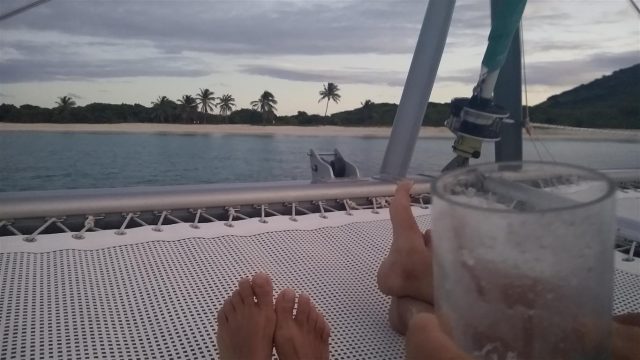
Beach in Culebrita

Christmas is here
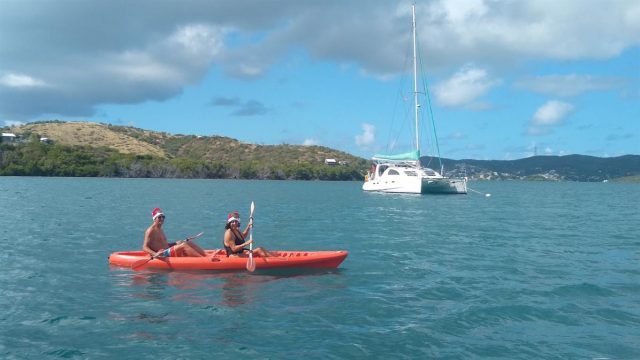
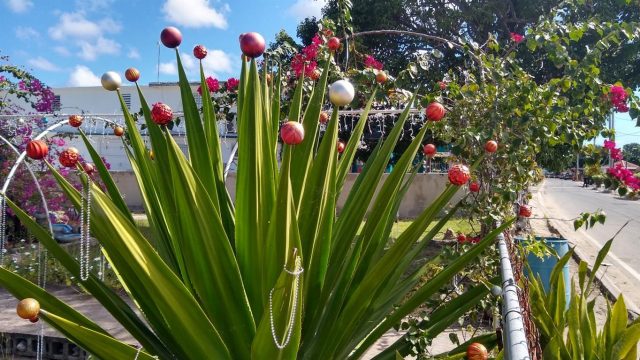
We met up with our friends from Grenada, along with another boat. All 3 Canadian boats, Jane and Jan, Bev and Bob, and us. On the 24th we met for some drinks and Mexican train and on Christmas day we had a floating party around Bob and Bev’s boat folowed by a potluck and some more drinks!!! Ahhh a really good rum punch from Bev.

Vieques, the true meaning of tropical bliss.
Between Christmas and New year we sailed around Vieques, again off the East coast of PR also part of the Spanish Virgin Islands.
What a beautiful beautiful island, quiet, luscious and uncrowded. This island is known for their tours to Mosquito Bay. One of the best Bioluminescent bays in the world. We can sure tell you that it was just Magical. The microorganisms in the water, give the water a glow when agitated. When you touch it all glows. Of course, no pictures as it is too dark.

We did not take the tour, better yet, we anchored just outside the bay. Wacthed the sunset , had a nice dinner and waited to get dark. Got the Kayak down and paddle about 150m into the bay. Wow, the paddles started to glow, just a big ball of light, the bow wave from the kayak was all glowing as well. Then we dropped the painter from the kyak and twirled it around for a lit-up snake. We were like kids enjoying something totally new and excitting. We sat quietly watching and hearing the twinkling sparkling organisms on top of the water and then we see that the fish are all glowing as well swiming around us. It was also a beautiful sky with all the stars out. There were a couple guided tours going on and the guide had a laser beam pointing out the constellations to the groups. The bay is surrounded by beaches and mangroves. People ask why its called Mosquito Bay. Well we dont know, but I wish it had a diferent name too. We saw no mosquitos.
We loved it so much that we went back the second night and it was just as magical. It must be dark and no full moon.
Vieques has many beaches and is trully unspoiled. The town of Esperanza is popular for the tours to Mosquito Bay, so we noticed more people there, mostly young people spending the afternoon before going the iluminescent bay.
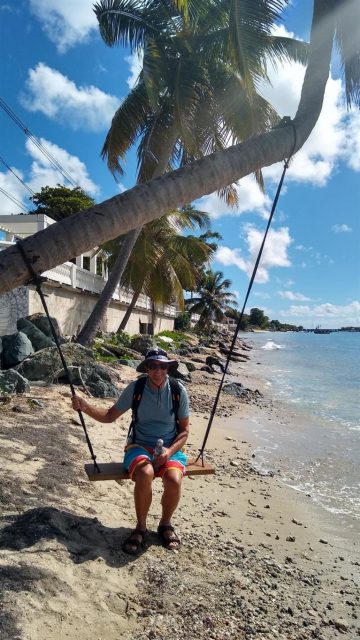
Old San Juan
With New Year around the corner we headed to San Juan , Capital and most populated in Puerto Rico. It was a 32 nautical mile sail from the island of Palominos were we spent the night.
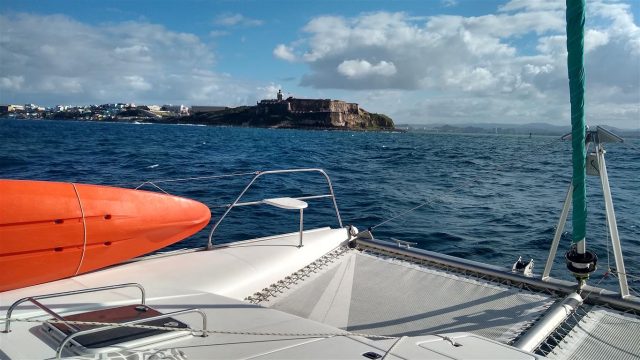
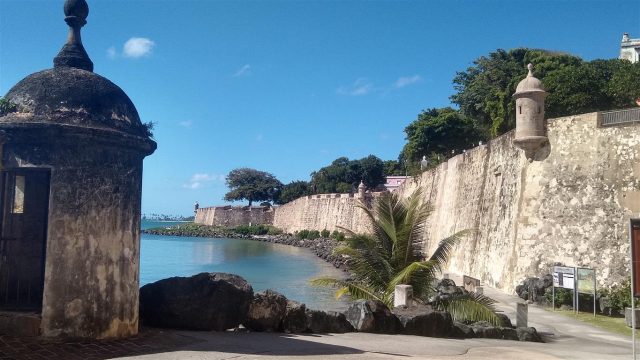
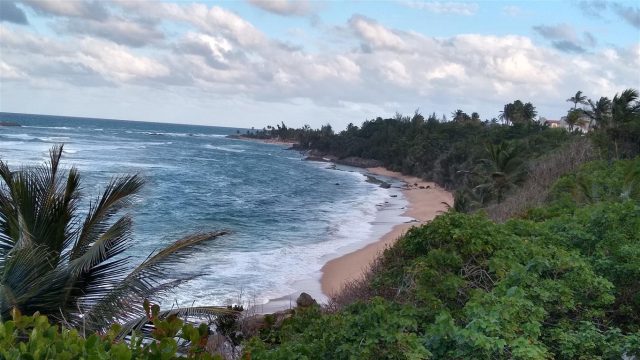
The old San Juan inside the Old San Juan is very charming with pastel colored homes, and cobbled stones streets and plazas surrounded by Restaurants, bars and shopping. Spanish colonial buildings and 16th-century landmarks including El Morro and La Fortaleza, massive fortresses with sweeping ocean views.
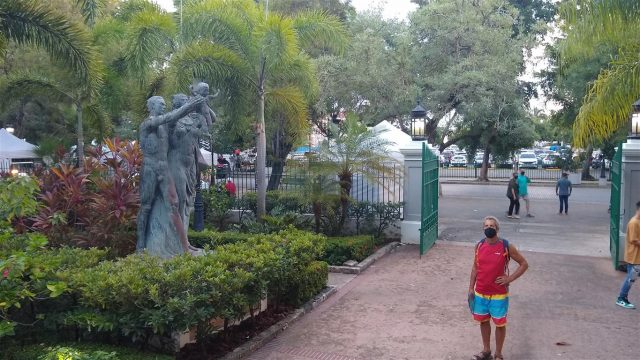

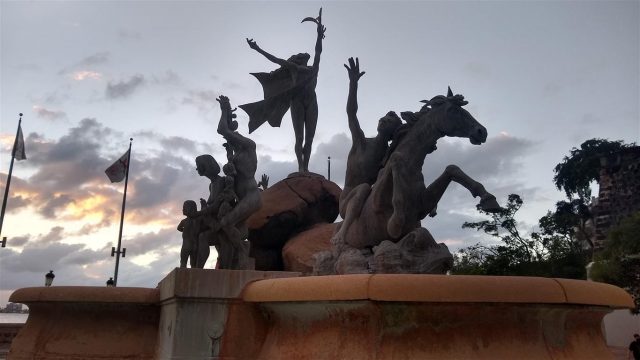
As we aproached the end of the Promenadewe came to this beatiful Statue right above the sea wall.
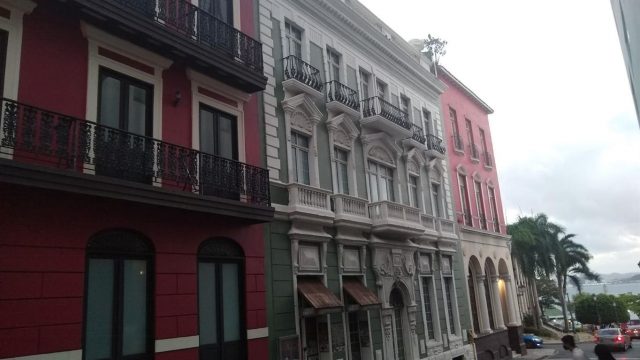
The old San Juan is situated inside the old fortress walls. It,s very charming with pastel colored homes, and cobbled stones streets and plazas surrounded by Restaurants, bars and shopping.



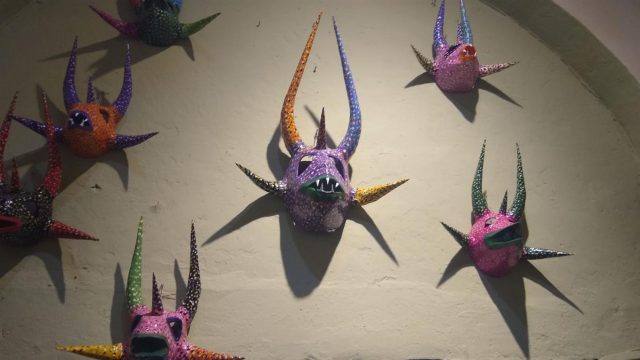
Purto Rican “The vejigante”
This Carnival tradition goes back to 12th century medieval Spain. The vejigante represented the evil Moors who were defeated by St. James. People dressed as demons (vejigantes) in a procession thrown to honor St james.
They start with a dry layer of paper, using the glue of flour and water only on the overlapping edges to secure them. This results in ease of removing it from the mold. Then layer after layer of paper. Adds the horns and teeth in stages. After each stage the mask must dry thoroughly in the sun. This method keeps the mask a bit lighter in weight. After the mask is complete and dry, it is painted.
Today, mask-makers will sometimes use plastic gallon milk jugs as their mold and papier-máche over them, but these are not form-fitting and can be uncomfortable, used more for display than wearing. For a better fit, artists will use foil to make a mold of the person’s face, and then add the layers of paper to that.
Monkey Island
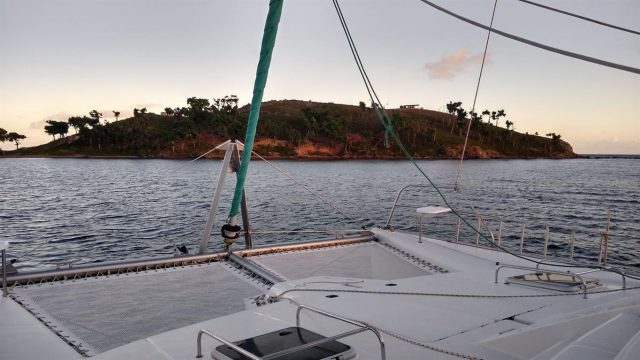
Our anchorage in Cayo Santiago, also known as the monkey island. They are wild and may bite, so no walks here!
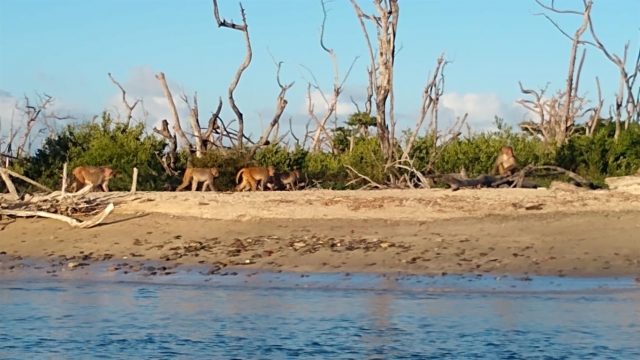
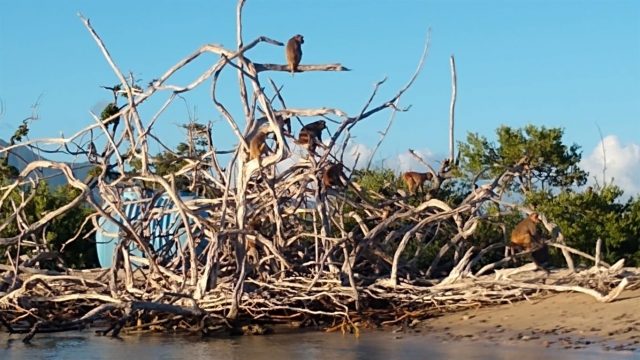
This remote small island is about a km away from land in the east coast of PR. It is home to a large troop of rhesus monkeys. It is the Caribbean Research Station and used by many scientists from all over the world. . The monkeys were brought in from India to New York in 1938 and then to Puerto Rico. Google says there are a 1000 monkeys but not clear if any died during Hurricane Maria in 2017. It didnt look like that many in this little island. Hurricane Maria in 2017 devastated most of the trees, the Lab, the feeding corrals and other structures around the island including the dock. We noticed they do have a new floating dock and the feeding corrals are up as well. Since the Hurricanes they are also studying their behaviour and how the hurricanes has affected their dynamics.
We kayaked around there and visited them for awhile far enough not to disturb them. Fascinating. Interesting behaviours, fighting and making up. The usual monkey business. The little ones were so cute and playfull.
In Puerto Patillas, we rented a car and drove throughn the mountains in narrow road and steep bends, to walks in the rainforest and water falls and a visit to the Lechoneras.
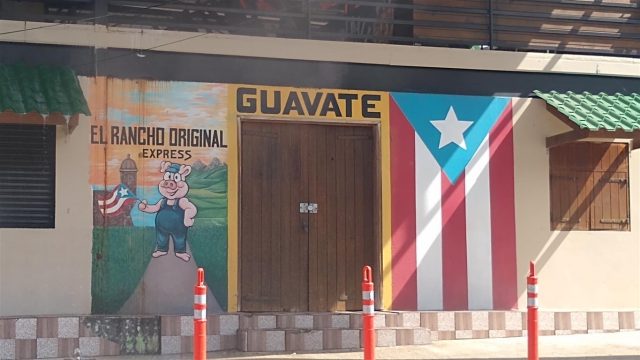
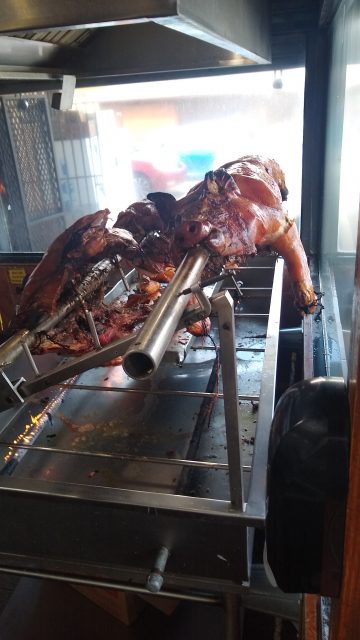
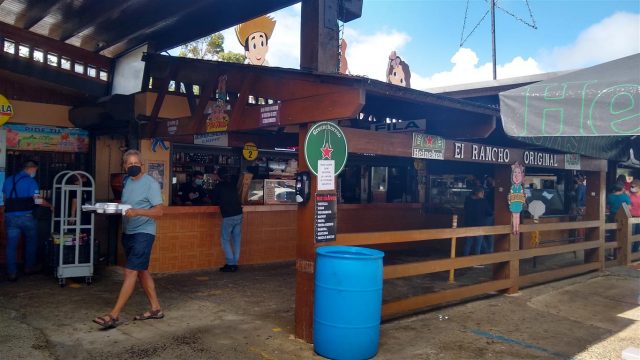
La Ruta del Lechón,the Porc Highway 184 is a roughly three-mile stretch located in a central area of Puerto Rico called Guavate. This winding road is lined with more than a dozen casual roadside restaurants, known as lechoneras, specializing in slow-roasted whole pig (lechón). Each restaurant uses a unique combination of spices to season the pig, which is then roasted over an open fire for 6-8 hours. If the roasted pig is not your thing, they also have chicken and ribs. The meal was very tasty. It is popular not just with the tourists, but also withthe locals. It’s usually buzzing with music and dancing. We did not notice it so much, perhaps due to Covid. It was busy, but not too bad. The secret is to get there and order your food before 12pm. We did see the dance floors, but we did not stay for the evening, not sure about any dancing happening during Covid.

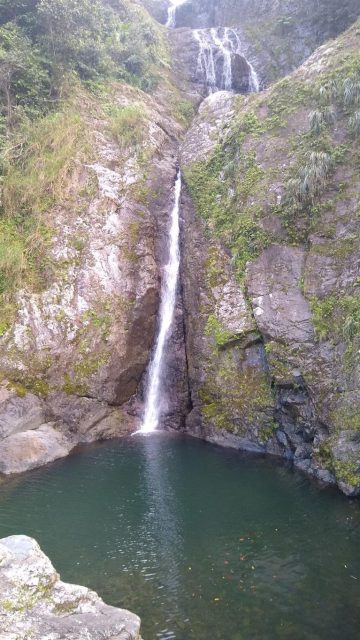

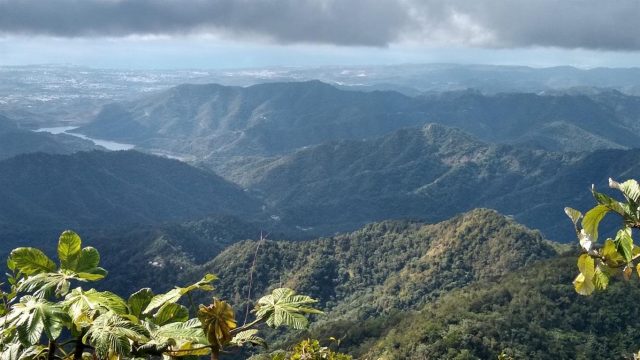
Found a few gems along the way. Cannot write or post photos of it all, but we really enjoyed PR
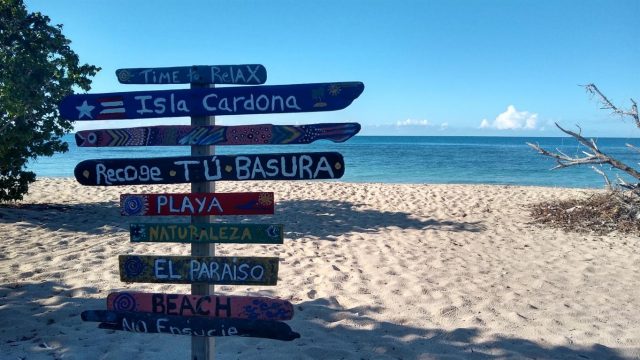
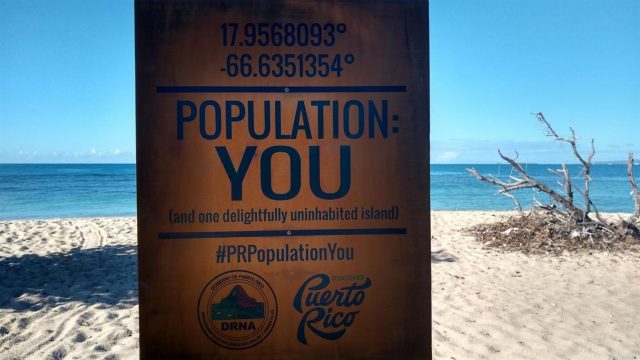
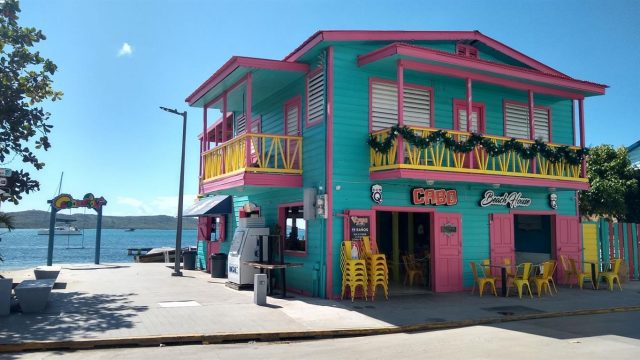
Puerto Rican love their bright colous, and their flag. Never been on a place where almost everyone is flying a flag in front of their house or its painted on the gate, fence, driveway, entyrance door and even the cement barriers on highways.


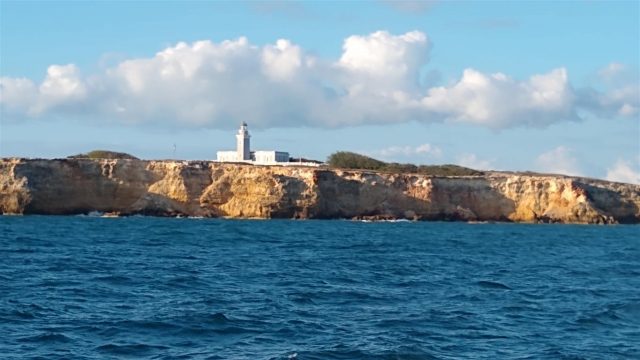
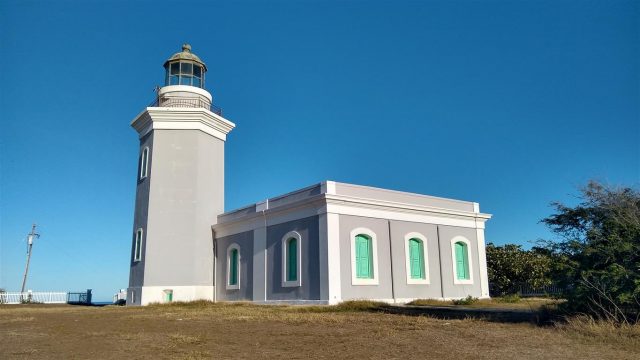
Cabo Rojo Lighhouse. This Historical lighthouse was built in 1882. It had 2 light keepers and an engineer living there with their families untill 1967. It was built by the Spanish Government to guide the Ships through the South entrance from the Caribbean sea through the treatcherous Mona Passage into the Atlantic. The cliffs surrounding the lighthouse drop down 200 feet. The other side overlooks beautiful beaches and salt water lagoons and marshes. We anchored just around the corner from here. The next morning we paddled ashore into a little beach where we left the kayak. Had to walk over some boulders to get into the trail. The views are magnificent. What a beautiful morning walk.
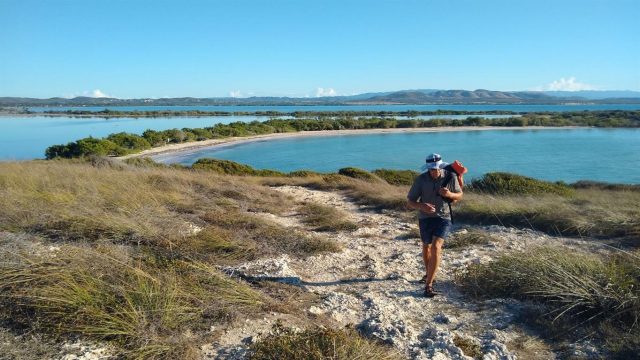
Feeling blessed
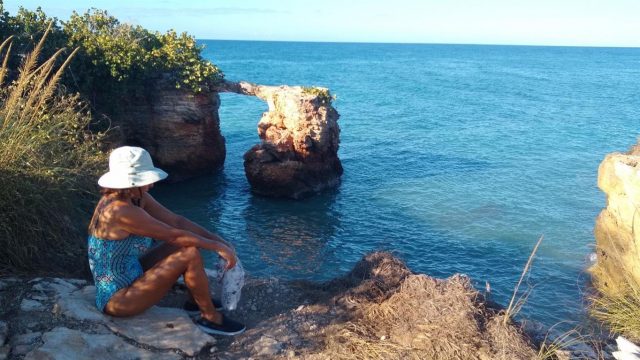
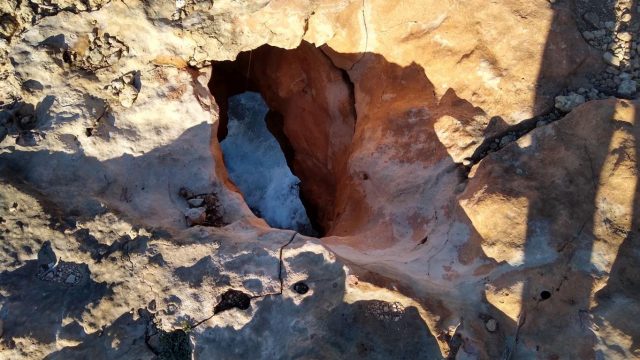
Caves, blow holes, cliffs and natural briges

A few miles up the coast we spent a day visiting Buqueron. A nice charming colorfull small town, with a nice beach and restaurants along the waterfront.
Here in Bouqueron we called customs to do the check out. They said they need to do that we can just go. But the problem with it is, that when you get to the next country they want to see your checkout documents from the previous port, which Puerto Rico does not provide. After explaining to the PR immigration, they actaully just emailed us a stamped and signed document show us as having checked out. The authorities in Samana were quite happy with that.
And so were were off…